
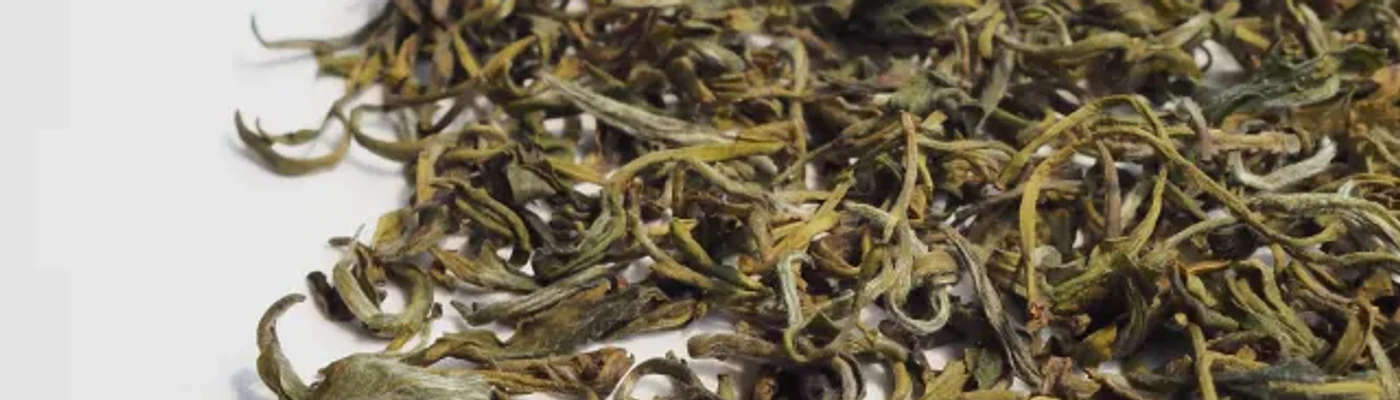
- White Tea
Aged White Tea in Dubai: What It Is, How It Transforms, and Why Collectors Are Paying Attention
Most teas are best drunk young. Green tea, fresh oolong, a new season Longjing: these are teas that lose something every month they sit on a shelf. Aged white tea is the opposite. It is one of the very few teas in the world that gets genuinely better over time, and the transformation it goes through over years of proper storage is one of the more fascinating things in Chinese tea culture. In Dubai, interest in aged white tea has been growing steadily among serious tea drinkers and collectors, and for good reason. This guide explains what aged white tea is, what happens to it as it ages, what it tastes like at different stages, and what to look for when buying it in the UAE.
The Chinese Saying That Defines This Tea
There is a phrase in Chinese tea culture that captures aged white tea better than any technical description: yi nian cha, san nian yao, qi nian bao. Translated, it means one year it is tea, three years it is medicine, seven years it is a treasure.
It is not just poetic. It describes a real and documented transformation that happens inside white tea leaves over time, one that modern food science has confirmed in considerable detail. The tea that you drink fresh is pleasant and delicate. The tea you drink after seven years of proper storage is something else entirely, deeper, warmer, more complex, and carrying properties that the fresh version does not have in the same measure.
This is why aged white tea has attracted collectors and serious drinkers in China for decades, and why it is now finding its way into specialty tea markets across the world, including the UAE.
What Actually Happens During Aging
Understanding why aged white tea tastes different requires knowing what is happening chemically inside the dry leaf over time.
White tea undergoes the least processing of any tea category. No pan-firing, no rolling, no shaping. Just withering and drying. This minimal processing means the leaf retains a large amount of active compounds in a relatively unchanged state, which is exactly what allows it to continue transforming slowly in storage.
The main changes that happen during aging involve four groups of compounds. Tea polyphenols, which are responsible for bitterness and astringency in fresh tea, gradually break down through oxidation and hydrolysis. As they decrease, the tea loses its sharpness and becomes progressively smoother and sweeter in the cup. Amino acids, which contribute to the umami and fresh sweetness of young white tea, also transform over time. Some decrease, while others like glutamic acid and pyroglutamic acid increase through protein hydrolysis, contributing to a warming, savory sweetness.
Soluble sugars increase as polyphenols and polysaccharides break down, which is why aged white tea is noticeably sweeter and fuller-bodied than the same tea drunk young. And the aromatic compounds, the volatile molecules that create the aroma in the cup, shift significantly. Research published in scientific journals on aged white tea identifies that alcohol-based aromatics dominate in the first one to five years, ester-based aromatics peak between seven and thirteen years, and aldehyde-based compounds become more prominent after sixteen years. Each phase produces a different aromatic character.
The result of all this slow transformation is a tea that starts fresh and floral and moves, over the years, through honey and dried fruit, then into deeper medicinal herbs, jujube, and woody warmth.
The Flavor at Each Stage
Understanding what aged white tea tastes like at different points helps you know what you are buying and what to expect.
In the first one to two years, white tea is in what most drinkers consider its fresh state. The character is clean, floral, and naturally sweet. A fresh Silver Needle smells like honeysuckle and fresh hay and tastes like the season it was picked in. A fresh White Peony has a bit more body and a gentle honey note. There is light astringency in some batches, and the color of the liquor is pale gold to nearly clear.
From three to five years, the transformation becomes noticeable. The floral freshness fades, and something warmer takes its place. Honey notes become more pronounced, dried fruit begins to appear in the taste, and the texture of the liquor thickens slightly. The liquor color deepens toward amber. The astringency that was present in the young version is largely gone, replaced by a smooth, mellow sweetness. A five-year White Peony from Fuding, stored carefully in airtight conditions, is one of the more satisfying everyday teas available anywhere.
From seven to ten years, the tea enters what Chinese collectors consider its most interesting phase. The medicinal quality that the Chinese saying describes becomes apparent: warm notes of jujube, dried dates, and a gentle herbal depth that some drinkers compare to aged Chinese medicine. The liquor is a deep amber, almost reddish in older batches, and the flavor is full, smooth, and long-lasting. The hui gan, or returning sweetness, becomes one of the defining features of this stage.
Beyond ten years, well-stored aged white tea from Fuding develops a complexity that rewards slow, attentive drinking. Scientific research on 10 to 16-year-old white teas identifies characteristic aromatic compounds like beta-damascenone and jasmine ketone that are specific to aged white tea and not present in fresh versions. The flavor at this stage is woody, mellow, and deeply warming.
Which Grade Ages Best
Not all white tea ages the same way, and understanding which grades are worth storing is useful if you are buying with aging in mind.
Silver Needle, made from buds only, ages into something exceptionally delicate and refined. The high amino acid content of the young bud means the smooth, sweet character of aged Silver Needle is unmatched in the white tea category. It is also the most expensive grade to begin with, which means aged Silver Needle carries significant value.
White Peony ages with the most balance. The combination of bud and two young leaves gives it enough structural complexity that it develops interesting layers over time without losing coherence. Many collectors consider aged White Peony to be the best practical expression of aged white tea because the price-to-quality ratio holds up well at most age points.
Shou Mei, made from larger, more mature leaves, is the most robust of the standard grades and the one that ages most dramatically. Young Shou Mei can be slightly rough and strongly flavored. After five to seven years, it becomes smooth, rich, and full-bodied with strong jujube and honey character. Aged Shou Mei pressed into cakes is particularly popular among people who like the experience of aged dark tea but prefer the cleaner character of white tea.
Pressed cakes are worth knowing about separately. White tea pressed into cake form ages differently from loose leaf. The compression creates an anaerobic environment in the center of the cake that slows oxidation slightly differently than loose leaf stored in paper, producing a different but equally interesting profile over time.
How to Store Aged White Tea Properly
Good storage is what separates a white tea that improves over the years from one that simply gets stale. The four rules that apply universally are: keep it dry, keep it dark, keep it away from odors, and keep it in a container that controls airflow.
Moisture is the main enemy. Humidity above 45 percent creates conditions where mold can develop, which ruins the tea. The ideal storage humidity is below 45 percent and ideally around 35 to 40 percent. Dubai’s dry climate is actually reasonably favorable for tea storage compared to humid tropical environments, but air conditioning that draws fresh air from outside during humid periods can introduce moisture, so an airtight container matters.
Light accelerates the degradation of the aromatic compounds in white tea, so opaque storage containers are preferable to glass. Ceramic or stainless steel jars with airtight seals work well for loose leaf. Original paper wrapping, used by most Fujian producers for aged white tea cakes, breathes slightly and is considered appropriate for long-term cake storage when kept in a dry, dark environment.
Strong odors, especially coffee, spices, or cleaning products, are absorbed very easily by dry white tea leaves. Store your tea away from anything with a strong scent and never in a kitchen cabinet near cooking ingredients.
The temperature should be stable, somewhere between 15 and 25 degrees Celsius. Drastic temperature swings encourage condensation inside the container, which introduces moisture. A climate-controlled environment is ideal, but consistent room temperature in a well-insulated space works fine for most situations.
Finding Aged White Tea in Dubai
Aged white tea is not as widely available in the UAE as fresh green tea or everyday oolong, but it is findable through the right channels.
Jade and Sakura carry aged white tea from Fuding as part of their Chinese white tea range, with UAE delivery. For buyers in Dubai who want confirmed Fujian origin and clear production year information, working with a specialist supplier that focuses specifically on authentic Chinese teas is the most reliable approach.
When evaluating any aged white tea before buying, the production year matters as much as the grade. Look for a clear harvest date, confirmed Fuding origin, and information about how the tea was stored between production and sale. Reputable sellers will provide this. If a seller cannot confirm the age or origin of an aged white tea, the claimed vintage is difficult to verify independently.
How to Brew Aged White Tea
Fresh and aged white tea are brewed differently, and understanding this makes a real difference.
Young white tea brews best at 80 to 85 degrees Celsius with gentle steeping. Aged white tea, particularly anything over five years, can handle water up to 95 to 100 degrees Celsius and benefits from it. The more mature compounds in aged white tea release fully at higher temperatures, and the warmer water draws out the honey and medicinal notes that define the aged character.
Use about 5 grams per 100ml for Gongfu brewing, or 4 grams per 150ml if you prefer slightly lighter extraction. Start with a rinse, five seconds, and discard, which is more important for aged tea than for fresh, because it clears any surface transformation that has accumulated on the dry leaf.
First infusion: 30 seconds. Each subsequent round can go longer. Aged Shou Mei in particular is often simmered in a small clay pot with boiling water for two to three minutes, producing a rich, full cup that comes across very differently from the brewed version. Both approaches are worth trying.
Dubai’s tap water flattens aged white tea noticeably. Use filtered water or good, still bottled water.
Final Thoughts
Aged white tea is one of those categories that rewards patience twice over: once when you are storing it and watching it develop, and once when you finally drink it and find something in the cup that the fresh version simply could not have delivered.
For anyone in Dubai who takes Chinese tea seriously, this is worth understanding and worth experiencing at least once across different age points. The transformation from one year to seven to fifteen is genuinely remarkable, and the best aged white teas from Fuding are among the most interesting cups of tea available anywhere in the world.
Share this article