
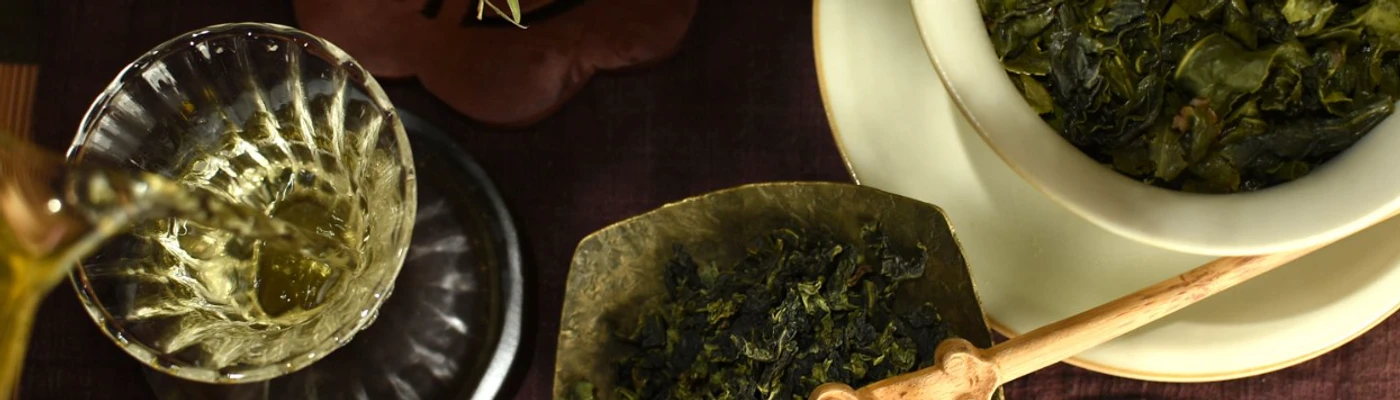
- Anxi Tieguanyin
- Tieguanyin in uae
- best Anxi Tieguanyin
Anxi Tieguanyin in the UAE:
There is a version of Tieguanyin that most people in the UAE have tasted, and there is a version that most people have not. The first is widely available, reasonably priced, and pleasant enough. The second comes specifically from Inner Anxi in Fujian Province, from villages at elevations where the red slate soil and misty mountain climate have shaped this tea for over three centuries, and it tastes noticeably different from everything else that shares the name. This guide is about understanding that difference, what Anxi Tieguanyin actually is, why the origin within Anxi matters, how the grades work, and what to look for when buying it in the UAE.
Why Anxi Specifically
Tieguanyin is produced in several places today. Fujian Province in mainland China is the origin, but the cultivar has also been planted in Taiwan, particularly in the Muzha area near Taipei, and is grown in smaller quantities in other Chinese provinces. All of these can legitimately carry the Tieguanyin name. But Anxi Tieguanyin is in a different category, and that difference is now formally recognized.
In 2006, Anxi Tieguanyin was granted Geographical Indication status in China, a protection equivalent to the French concept of terroir that recognizes both the landscape of a specific place and the accumulated human knowledge of how to work with it as the source of a product's quality. The European Union's geographical indications register also recognizes Anxi Tieguanyin specifically. Only tea produced within Anxi County in Fujian Province from the genuine Tieguanyin cultivar, processed according to traditional methods, qualifies under this protection.
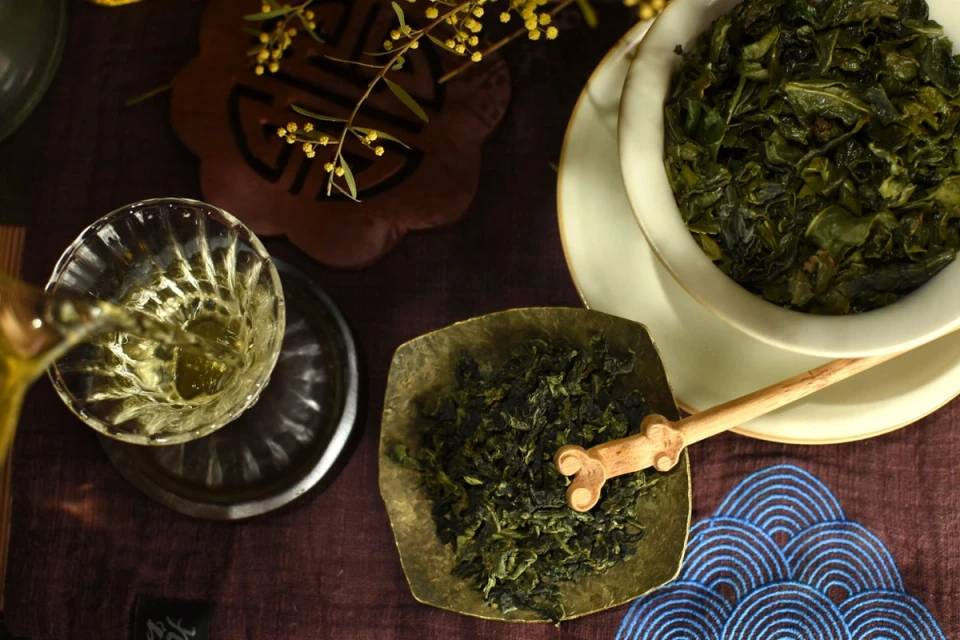
The Food and Agriculture Organization of the United Nations has additionally designated the Anxi Tea Culture System as a Globally Important Agricultural Heritage System, recognizing the landscape, the farming practices, and the cultural traditions that have shaped tea production in this region for centuries. This recognition puts Anxi in the same global category as other preserved agricultural systems considered worth protecting because of their ecological and cultural significance.
None of this means that Tieguanyin from elsewhere is bad tea. It means that the combination of Anxi's specific terroir, its red slate mineral soil, its mountain altitude, its humid climate, and the particular genetic characteristics of the original Tieguanyin cultivar grown there, produces something that cannot be fully replicated by growing the same cultivar somewhere else.
Inner Anxi vs Outer Anxi: A Distinction That Actually Matters
Within Anxi County itself, there is a further distinction that serious buyers pay attention to: Inner Anxi versus Outer Anxi.
Inner Anxi refers to the mountainous interior region of the county, surrounded by peaks on all sides and characterized by higher elevation, cooler temperatures, more consistent fog and mist, and the red slate soil that tea growers in the region consider the most important factor in producing quality Tieguanyin. The main production areas of Inner Anxi include Xianghua, Lutian, Longjuan, Xiping, Lantian, and Changkeng. Yuhu Village in the Changkeng area, whose name translates to Jade Lake, is one of the most respected individual villages in the Inner Anxi system, producing Tieguanyin that commands attention from collectors.
Outer Anxi, or Wai Anxi, sits at a lower altitude with more rainfall, higher temperatures, and faster-growing tea trees. The faster growth means higher yields and lower prices, but also less concentration of the aromatic compounds and amino acids that make high-quality Tieguanyin distinctive. Tea from Outer Anxi is not poor quality, but it rarely achieves the complexity and lasting aftertaste of well-made Inner Anxi Tieguanyin.
When buying Anxi Tieguanyin in the UAE, asking specifically about Inner Anxi origin is worth the effort. A seller who can confirm village-level sourcing from one of the recognized Inner Anxi production areas is offering something meaningfully different from a seller who can only confirm Anxi County in general.
:strip_icc():strip_exif()/tie-guan-yin-1-01KQD4MPA1YXQEYDQ507AY173M.png)
2025 Tie Guan Yin
95 AED
The Tieguanyin Cultivar and What Makes It Different
Tieguanyin is both the name of the tea and the name of the specific tea plant cultivar from which it is made. This is important because other tea plants grown in Anxi, including Mao Xie, Ben Shan, Huang Jin Gui, and Jin Guan Yin, produce their own oolongs using similar processing methods. These are good teas, but they are not Tieguanyin.
The genuine Tieguanyin cultivar has been grown in Anxi for over three centuries. Its genetic characteristics produce leaves with a particular combination of aromatic compounds that, when processed correctly, create what tea culture calls Guan Yin Yun, the Iron Goddess resonance. This is the quality that defines authentic Tieguanyin: an orchid-like fragrance, a smooth and naturally sweet taste, and a lingering nectar-like sweetness in the aftertaste that builds rather than fades across multiple infusions.
The cultivar has a distinctive appearance in the garden. The leaves are thick, dark green, and slightly waxy on the surface, with slightly serrated edges. The original Tieguanyin mother trees in Xiping village are still venerated as historical objects, descendants of the original bushes discovered in the early 18th century.
Processing: The Step That Determines Everything
Tieguanyin production is considered the most technically demanding of all Chinese oolong styles, and the critical step is called yaoqing, which means shaking or tossing the green. After the leaves are picked and withered to reduce moisture, they are placed in bamboo baskets and shaken vigorously in a repeated cycle. This deliberate bruising of the leaf edges initiates oxidation from the outside in, while the center of each leaf stays greener. The resulting leaf has oxidized, brownish-red edges and a still-green center.
This bruising step, done properly, is what creates the characteristic complexity of Tieguanyin. It is also the step where the skill of the tea maker is most visible. Too little tossing and the tea lacks complexity. Too much and the leaves oxidize unevenly, producing inconsistent flavor. Traditional producers in Inner Anxi speak of reading the leaves at each stage and making adjustments based on appearance, smell, and feel. This is knowledge that takes years to develop and cannot be automated or rushed.
After yaoqing, the leaves go through kill-green to stop further oxidation, then rolled into the characteristic tight balls, and finally dried. Roasted styles undergo additional charcoal or electric roasting after the initial drying, sometimes across multiple roasting sessions over several months.
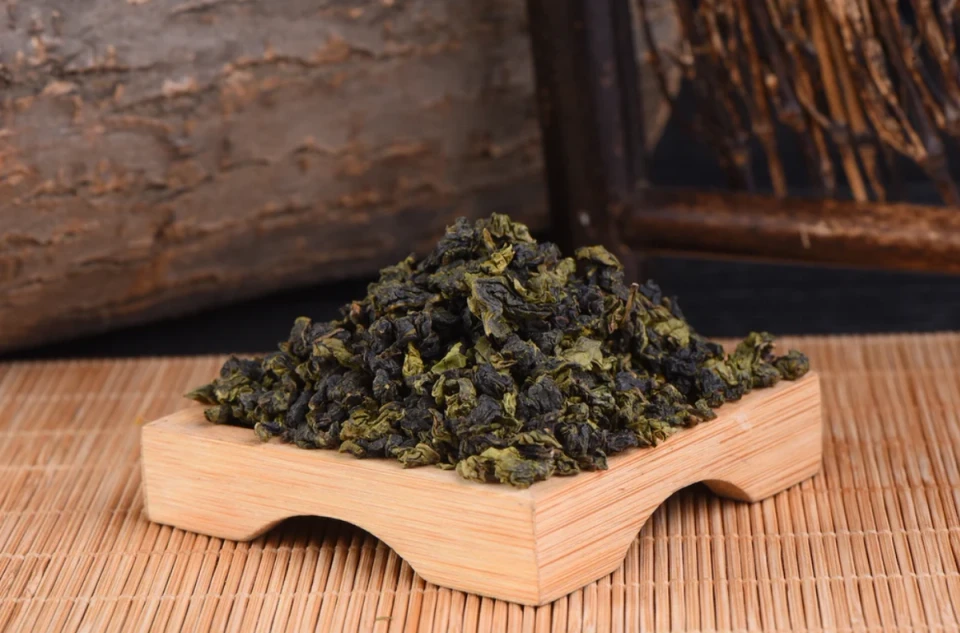
The official Chinese quality grading for clean fragrance Anxi Tieguanyin, registered under its Geographical Indication, recognizes four grades. Top grade has bold, round, tight balls with a deep jade green or frog green color, clean appearance, and an even, uniform look. Lower grades show progressively more yellow in the color, less uniform sizing, and less tight rolling. This grading standard gives buyers a framework for evaluating what they are looking at before steeping.
The Two Styles and When to Drink Each
Anxi Tieguanyin comes in two clearly distinct processing styles, and knowing which one you are buying is as important as knowing the origin.
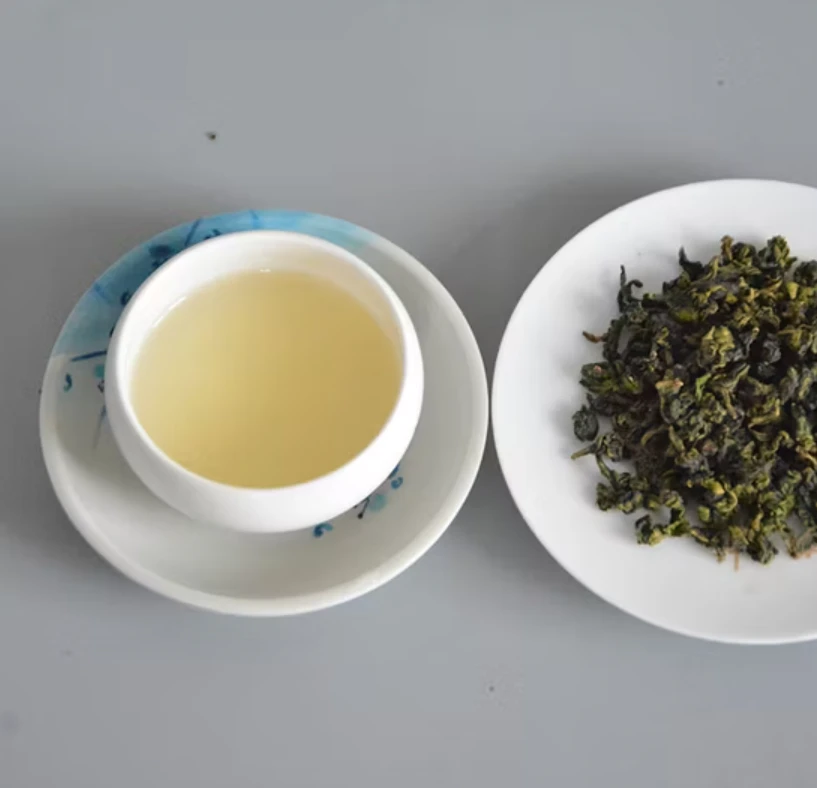
Qing Xiang, or clean fragrance style, is the lighter and more modern version. The leaves undergo minimal roasting after the initial drying, preserving a fresh, bright character. The cup is pale golden-green, intensely floral, and smooth with a creamy texture. The orchid note is immediate and clean. This style has dominated the market since the 1990s and is what most people encounter when they order Tieguanyin in a Chinese restaurant or tea shop. It is excellent for morning drinking, warm weather, and for people new to oolong who want an immediately appealing cup.
Nong Xiang, or thick fragrance style, is the traditional version that preceded the green style by centuries. After the initial processing, the leaves are roasted, traditionally over charcoal, sometimes across multiple sessions over months. The result is a tea with significantly more body, warmth, and depth. The orchid fragrance is still present but is now accompanied by toasted honey, warm caramel, and a richer sweetness. The liquor is a deeper amber. This style takes more patience to appreciate but rewards that patience considerably, particularly for afternoon or evening drinking.
There is a third category gaining interest among collectors: aged or re-roasted Tieguanyin, where green-style tea from past harvests is periodically re-roasted over several years. The result sits between the two main styles with added complexity that neither fresh version can match. This category has attracted serious collector interest in China and is beginning to appear in specialty tea circles elsewhere.
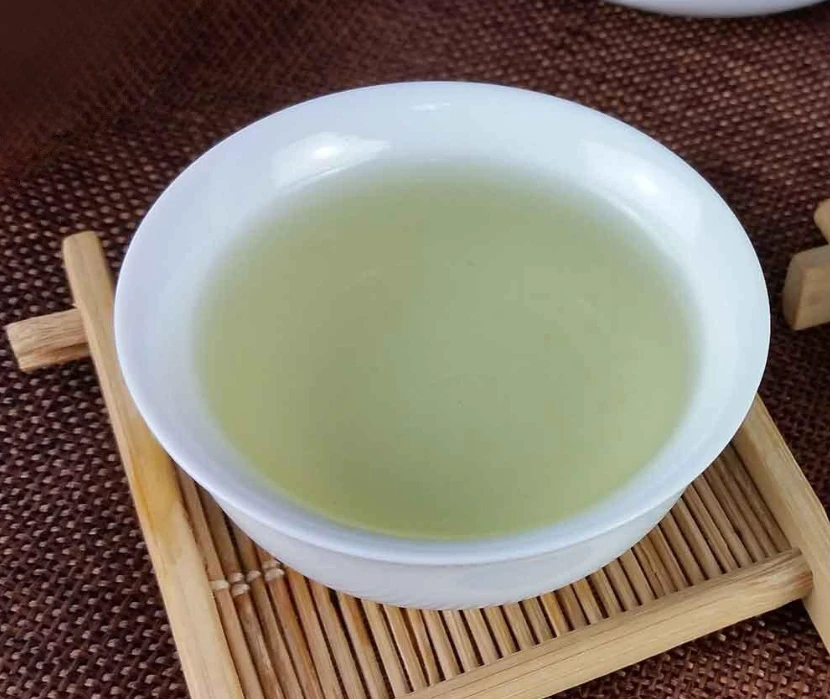
How to Brew It Properly
A small porcelain gaiwan of 100 to 120ml works best for Anxi Tieguanyin. Use 5 to 7 grams of rolled tea per 100ml. The tight balls need room and enough leaf material to expand fully in the vessel.
Water should be at 90 to 95 degrees Celsius. Start with a quick rinse: pour water over the leaves, wait five seconds, and discard. The rinse warms the balls and begins opening them. First infusion: 15 to 20 seconds only. Pour completely. By the third or fourth infusion, the balls are fully open, and the full character of the tea is present.
One particularly useful technique for evaluating quality: after pouring out each infusion, smell the empty gaiwan lid while it is still warm. The fragrance concentrated on the warm lid surface is one of the most effective ways to assess the quality and complexity of a Tieguanyin. Traditional tea masters in Anxi use this method when grading, and the stronger, more complex, and longer-lasting the lid fragrance, the better the tea.
Good Anxi Tieguanyin from Inner Anxi gives seven to ten comfortable infusions, with the character evolving noticeably across each round.
Dubai's tap water is heavily treated and will noticeably affect the delicate orchid fragrance of Qing Xiang style Tieguanyin. Filtered or still bottled water is genuinely worth using for this tea specifically.
Final Thoughts
Anxi Tieguanyin carries three centuries of accumulated knowledge, a formally protected geographical indication, and a flavor profile that no other oolong has managed to replicate. The combination of the original cultivar, Inner Anxi's specific terroir, and the skill of the yaoqing step produces something with the longest flavor arc of any oolong variety, changing and developing across more infusions than most teas manage.
For anyone in the UAE who takes Chinese oolong seriously, understanding the difference between Inner Anxi and generic Tieguanyin, and between the Qing Xiang and Nong Xiang styles, is the beginning of appreciating what this tea is genuinely capable of.
:strip_icc():strip_exif()/tie-guan-yin-1-01KQD4MPA1YXQEYDQ507AY173M.png)
Share this article