
- Oolong Tea
- Tea Education
Best Chinese Oolong Tea in Dubai: For Tea Lovers in the UAE
Dubai is a city that takes quality seriously, and that same standard has quietly extended into the world of specialty tea. Over the last several years, a growing number of tea lovers in the UAE have moved past generic teabags and started exploring what genuine Chinese oolong actually tastes like. And once you've had a proper cup of Da Hong Pao or a fragrant Tieguanyin brewed correctly, there's no going back.
The good news is that finding authentic Chinese oolong tea in Dubai has never been easier. Between dedicated tea retailers, online stores with UAE-wide delivery, and specialty shops scattered across the city, you have real access to some genuinely excellent teas. This guide walks you through everything you need to know, which Chinese oolongs are worth buying, where to find them in Dubai, and how to brew them at home so that the first cup actually lives up to what you paid for.
What Is Chinese Oolong Tea and Why Does It Stand Apart?
Before getting into where to buy, it's worth spending a moment on what makes Chinese oolong different from everything else on the shelf.
Oolong is a semi-oxidized tea, sitting between green tea and black tea in terms of processing. The degree of oxidation can range anywhere from about 8 percent up to 85 percent, and that wide range is exactly why oolong as a category is so interesting. A lightly oxidized oolong tastes almost like a floral, creamy green tea. A heavily oxidized one can be dark, roasted, and mineral, closer in body to a black tea but with an entirely different character.
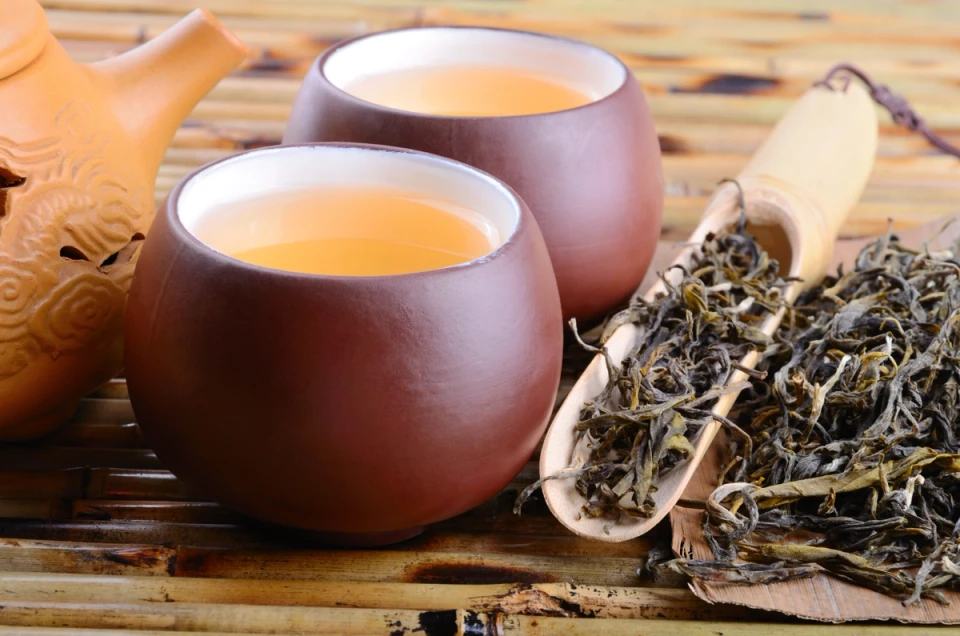
Chinese tea professionals often call oolong "qing cha" or blue-green tea, a nod to the fascinating color range of the leaves themselves. What separates Chinese oolong from generic oolong blends found in supermarkets is origin, cultivar, and craft. The best Chinese oolongs come from specific mountains and regions, made from specific tea plant varieties, processed by hand using methods that haven't changed in centuries.
The name "oolong" translates from Mandarin as "black dragon," and if you've ever watched the dark twisted leaves unfurl slowly in hot water, you'll understand immediately how the name came about.
The Four Main Chinese Oolong Regions You Should Know
Chinese oolong production is centered in a few key regions, and knowing where a tea comes from tells you a lot about what to expect in the cup.
Northern Fujian is home to the most famous oolongs in the world. The Wuyi Mountains in this region produce what's known as Yan Cha, or rock tea, a category of heavily oxidized and often charcoal-roasted oolongs grown in a dramatic landscape of cliffs and rocky soil. Da Hong Pao is the most celebrated name here, but Rou Gui (Cinnamon Rock Tea) and Shui Xian (Narcissus) are equally revered among serious tea drinkers.
Southern Fujian, particularly Anxi County, is where Tieguanyin comes from. This is one of the most recognized Chinese teas in the world and one of the best starting points for anyone new to oolong. It tends to be lighter in oxidation, noticeably floral, and available in both green (lightly roasted) and roasted styles.
Guangdong Province gives us Phoenix Dan Cong, also known as Fenghuang Dancong, a category of oolongs that's unlike anything else in the tea world. These teas come from single bushes grown in the Phoenix Mountain area and are known for their ability to naturally mimic distinct aromas, including honey orchid, almond, grapefruit, osmanthus, and even a famous cultivar cheekily called "Duck Shit Fragrance" (Ya Shi Xiang), which is far more appealing than the name suggests.
Taiwan produces its own celebrated oolongs, with Alishan high mountain oolong and Dong Ding being well known globally, though these are technically not Chinese mainland teas. Many sellers in Dubai carry both Chinese and Taiwanese oolongs, so it's worth knowing the difference when you're browsing.
The Best Chinese Oolong Teas Worth Looking For in Dubai
Not every oolong on the shelf is worth your time. Here are the varieties that consistently deliver, and that you can actually find through sellers operating in the UAE.
Da Hong Pao (Big Red Robe)
Da Hong Pao is the crown jewel of Chinese oolong. Grown in the Wuyi Mountains of Fujian Province, it carries the distinctive "yan yun" or rock rhyme, a mineral, almost earthy quality that comes from tea bushes growing in rocky cliff-side soil. The flavor profile typically includes dark fruit, roasted wood, warm mineral notes, and a deep sweetness that lingers well after the cup is empty.
The legend behind the name says that a scholar on his way to the Imperial examinations fell ill near the Wuyi Mountains. Monks from a nearby temple brewed him tea from four bushes growing on a cliff, which restored his health. He went on to pass his exams and returned to drape his red robe over those bushes in gratitude, calling them Da Hong Pao.
Quality Da Hong Pao is incredibly resilient to multiple steepings, often giving you seven or eight good infusions, each one slightly different from the last. Several sellers in Dubai carry it, including Cantata UAE and MyPekoe, and it's one of the most reliable choices for both beginners and experienced drinkers.
Tieguanyin (Iron Goddess of Mercy)
Tieguanyin is probably the most widely available Chinese oolong in Dubai and a natural starting point if you're just getting into the category. It comes from Anxi County in southern Fujian and is one of China's ten most famous teas.
The name refers to Guanyin, the Buddhist goddess of mercy, and there's a story that a poor farmer who maintained her neglected roadside temple was rewarded with a cutting from a special tea plant growing behind the statue.
Modern Tieguanyin comes in two main styles. The green or "qingxiang" style is lightly oxidized, producing a pale gold cup with a strong orchid and gardenia fragrance, refreshingly clean with very little astringency. The roasted or "nongxiang" style has more body, a warmer toasty sweetness, and a deeper color.
Dan Cong (Phoenix Single Bush Oolong)
If you want something that will genuinely surprise you, Dan Cong from Guangdong's Phoenix Mountain is the answer. These teas are harvested from individual bushes, each producing its own distinct aromatic character. The most accessible variety for newcomers is Mi Lan Xiang, which means Honey Orchid Fragrance. It brews up with an extraordinary floral-sweet aroma that genuinely smells like fresh orchids, with a round, full body and a clean honeyed finish.
MyPekoe in Dubai carries Dan Cong with tasting notes of honeyed orchid aroma, brown sugar, and sweet fruity notes, starting from around AED 35. It's one of the more affordable gateways into truly high-quality Chinese oolong and consistently gets good responses from people trying it for the first time.
Milk Oolong (Jin Xuan)
Milk Oolong is technically a Taiwanese cultivar, but it's worth including here because it has become one of the most popular Chinese-style oolongs available in Dubai across multiple sellers. The creamy, buttery aroma of genuine milk oolong comes naturally from the Jin Xuan cultivar and not from any added flavoring, though cheaper versions do add milk flavoring artificially, so it's worth buying from a reputable source.
Both MyPekoe and Cantata UAE carry milk oolong from Fujian, China, with creamy and buttery flavor profiles. It's a very approachable tea with broad appeal, especially for people who enjoy floral teas or are transitioning away from milky beverages.
Rou Gui (Cinnamon Rock Tea)
Rou Gui is one of Wuyi Mountain's most celebrated teas and a step deeper into the world of Chinese oolong for those who've already tried Da Hong Pao. The name means cinnamon, and while the tea doesn't taste exactly like the spice, there is a warm, spicy, aromatic quality to it alongside the mineral rock rhyme and a deep sweetness that high-quality Rou Gui carries beautifully.
It's less commonly stocked than Da Hong Pao in Dubai retail channels but worth seeking out if you find a seller who carries it, as it's considered by many collectors to be among the finest expressions of Wuyi rock tea craft.
Tung Ting (Dong Ding)
Tung Ting, or Dong Ding, is a medium-roasted oolong with smooth, sweet notes of caramel and chestnut alongside a gentle floral background. It's one of the more balanced options in the oolong world and works well as an everyday tea that doesn't demand a lot of attention to enjoy.
How to Brew Chinese Oolong Tea Properly at Home
Buying good tea is only half the equation. Brewing it correctly is what actually makes it worth drinking.
The best method for Chinese oolong is Gongfu style, using a small gaiwan (a lidded bowl) or a compact clay teapot of around 100 to 150ml. Use approximately 5 to 7 grams of tea per session, which sounds like a lot for a small vessel but is correct for Gongfu brewing.
Always start with a quick rinse: pour water that's just off the boil (around 90 to 95 degrees Celsius) over the leaves, let it sit for about five seconds, and discard. This rinse awakens the leaves and removes any loose dust. It's a standard part of the process, not an indication that the tea is dirty.
For the first steeping, pour hot water over the rinsed leaves and wait just 15 to 20 seconds before pouring into your cup. Early infusions of high-quality oolong tea are frequently the most flowery and aromatic. You can progressively increase steeping time with each round, adding 10 to 15 seconds per steep.
A well-made Da Hong Pao or Tieguanyin will give you six to eight good infusions, sometimes more. The flavor shifts noticeably across those rounds, which is one of the genuinely pleasurable aspects of Gongfu brewing. Each cup is a slightly different experience.
If you don't have a gaiwan, a simple ceramic teapot or a glass teapot works fine. Avoid metallic steepers if possible, as they can affect the taste of delicate oolongs.
Water quality matters more than most people expect. Dubai's tap water is heavily treated and will affect the flavor of a fine tea. Using filtered water or a good bottled still water makes a noticeable difference.
What to Look for When Buying Chinese Oolong in Dubai
Not everything labelled oolong on a shelf in Dubai is worth your money. A few things to check before buying:
Origin matters. Genuine Chinese oolongs should clearly state their region of origin, whether Wuyi Mountains (for rock tea), Anxi County (for Tieguanyin), or Phoenix Mountain (for Dan Cong). Generic "Chinese oolong" without any specific origin listed is usually a lower-grade blend.
Avoid artificially flavored oolongs if you're after authentic taste. Several mass-market products add milk flavoring to simulate milk oolong or floral extracts to mimic Dan Cong. The natural version is noticeably cleaner and more complex. Sellers like MyPekoe and Cantata are generally transparent about their ingredients.
Loose leaf is almost always better than teabags for Chinese oolong. The leaves need room to fully expand in water, and the quality of the leaves used in teabags is typically much lower than what you'd find loose. For the varieties listed in this guide, always go loose leaf if you can.
Price is a reasonable quality signal for Chinese oolong. This doesn't mean you need to spend hundreds of dirhams, but anything priced very cheaply is unlikely to be single-origin high-quality leaf. In Dubai, decent loose-leaf Chinese oolong starts from around AED 35 for smaller quantities, with premium options going higher depending on grade and origin.
Health Benefits Worth Knowing
Chinese oolong has been consumed for its health properties for centuries, and modern research has backed up several of the traditional claims.
The polyphenols in oolong tea support heart health by helping reduce LDL cholesterol and improving circulation. The combination of L-theanine and caffeine in oolong promotes a calm, alert mental state that many people find preferable to the sharp edge of coffee. Research has also shown that oolong can support metabolism and fat oxidation, which is why it's long been associated with weight management in East Asian wellness traditions.
Oolong is gentler on the digestive system than black tea and carries more antioxidants than a typical black tea blend. The fluoride and polyphenols in the leaves also contribute to oral health, something traditional Chinese tea culture recognized long before Western medicine caught up.
One thing worth noting: the caffeine content in oolong varies depending on oxidation level and brewing time. Lighter oolongs tend to have less caffeine, while heavily roasted rock teas can carry more. It's generally moderate compared to coffee, making oolong a reasonable choice across different times of day.
Final Thoughts
Chinese oolong tea in Dubai is no longer a niche pursuit reserved for expat tea enthusiasts who know where to look. Between online retailers offering next-day delivery and a growing number of quality-focused shops across the city, accessing genuine Da Hong Pao, proper Tieguanyin, or a fragrant Dan Cong is genuinely straightforward now.
The varieties covered in this guide represent a wide range of styles, from the light floral character of green Tieguanyin to the dark mineral depth of Wuyi rock tea. Starting with one or two and learning what you enjoy is the best approach, and most of the sellers listed here are happy to guide first-time buyers toward something that matches their preferences.
If you've only ever had generic oolong teabags, trying a properly sourced, well-brewed Chinese oolong for the first time is one of those small experiences that quietly resets your expectations for what tea can actually be. Dubai now gives you every reason to find out for yourself.
Share this article