
- Bai Hao Yin Zhen in the UAE
- China's Most Prized White Tea
- Prized White Tea
Bai Hao Yin Zhen in the UAE: China's Most Prized White Tea
Bai Hao Yin Zhen is a name that comes up every time someone serious about Chinese tea starts talking about white tea. It is China's most celebrated white tea, built around a single idea: take only the finest spring buds, process them as gently as possible, and let the tea speak entirely for itself. In the UAE, it is becoming more accessible as specialty tea culture grows, and for anyone who hasn't tried it yet, this guide covers everything you need to know before your first cup.
Breaking Down the Name
Bai Hao Yin Zhen is written as 白毫银针 in Chinese. Each part of the name describes something you can actually see in the dry tea.
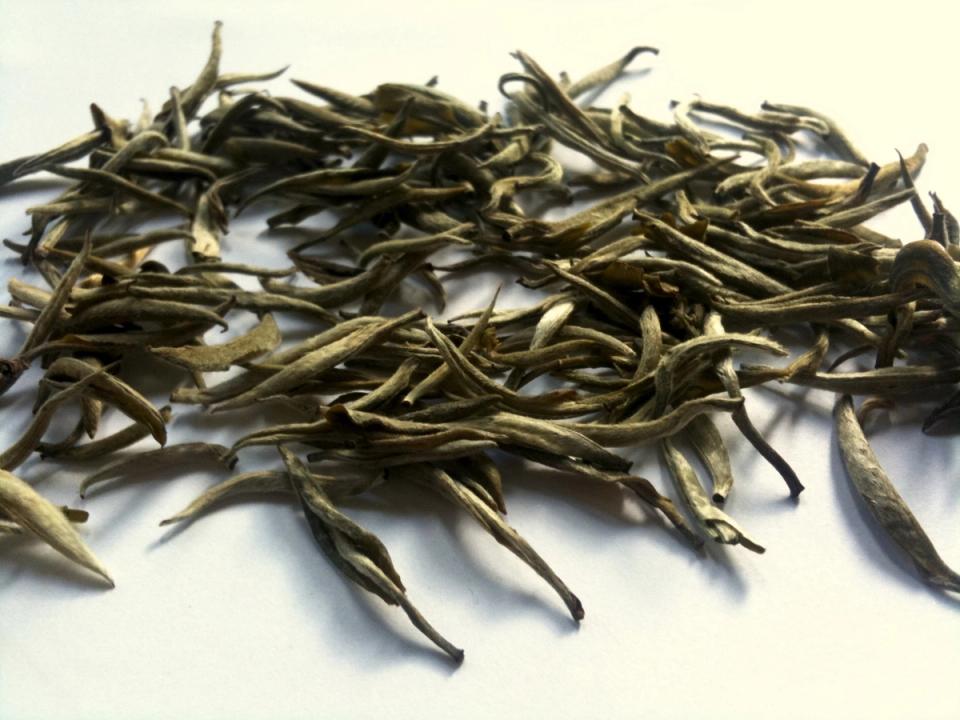
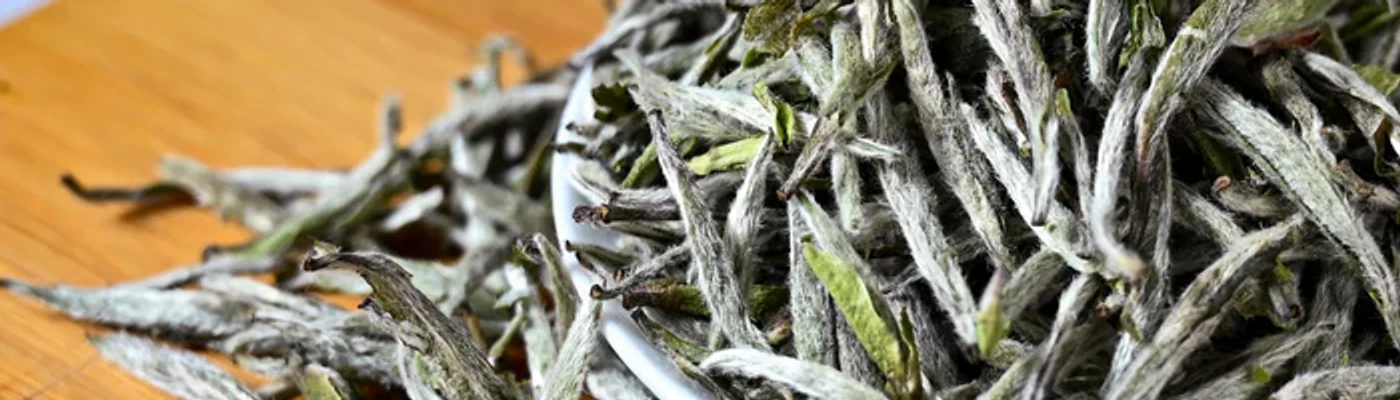
Bai Hao means white hair. The young buds of the Da Bai cultivar, the large white tea plant native to Fujian Province, are covered in fine silvery-white hairs that remain intact when the tea is properly dried. These hairs are called pekoe in Western tea terminology, a word derived from the Cantonese pronunciation of bai hao. They catch the light when you look at the dry tea and give it a frosted, almost luminous appearance.
Yin Zhen means silver needle. The dried buds are slender, straight, and tapered at both ends, shaped exactly like a sewing needle. When you hold a well-made batch of Bai Hao Yin Zhen, you are holding dozens of individual spring buds, each one roughly two to three centimeters long, each one picked by hand and dried without being rolled or shaped.
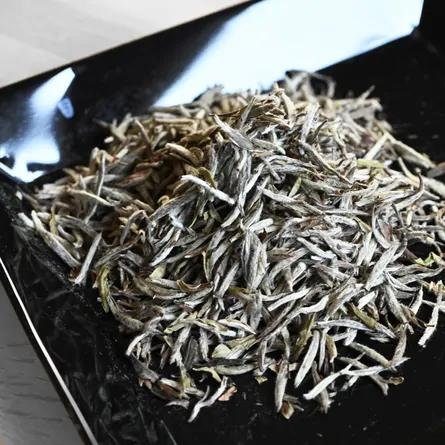
The combination of these two visual qualities, the white fuzz and the needle shape, is how you can quickly assess whether a Bai Hao Yin Zhen is genuine and well-made before you even steep it. Plump buds, abundant silvery hairs, and a consistent needle shape are what you are looking for. Broken pieces, dull coloring, or a lack of visible hairs are signs that the quality is lower than it should be.
The Cultivar that makes it Possible
Not every tea plant can produce Bai Hao Yin Zhen. The tea depends on a specific group of cultivars known collectively as the Da Bai family, meaning large white. The two most important of these are Fuding Da Bai, native to Fuding City in northeastern Fujian, and Zhenghe Da Bai, from Zhenghe County further north.
What distinguishes the Da Bai cultivars from ordinary tea plants is the size and character of their spring buds. The buds are notably larger than those of common tea varieties, fat and full of moisture, and they are densely covered in the white hairs that give the tea its name. When these buds are dried slowly without heat, those hairs remain intact and give the finished tea its characteristic frosted appearance and soft, slightly viscous texture in the cup.
The first Bai Hao Yin Zhen was made around 1796 using an older, smaller cultivar that produced a tea that was rarer and harder to produce at any meaningful scale. The shift to the Fuding Da Bai cultivar around 1857 transformed the tea. The larger buds produced more leaves per harvest and a noticeably superior flavor, and from that point forward, the Da Bai family became the foundation of all serious Fujian white tea production.
Fuding and Zhenghe: Two Styles Worth Knowing
Bai Hao Yin Zhen is primarily produced in two regions of Fujian, and the teas from each region taste noticeably different from each other. Understanding this distinction helps you make sense of what you are buying.
Fuding-style Silver Needle, sometimes called Northern Style, is made from the Fuding Da Bai cultivar and processed with a lighter touch. The buds are typically withered in shade or under diffused sunlight, which results in a lower degree of oxidation and a tea that is lighter in color with a more delicate, floral character. The cup is pale gold, the aroma is clean and fresh, and the flavor tends toward honey and fresh flowers. Fuding is widely regarded as the original home of white tea, and teas from this region carry considerable prestige both within China and internationally.
Zhenghe-style Silver Needle uses the Zhenghe Da Bai cultivar and typically undergoes a slightly longer or more exposed withering process. The result is a tea with a fuller body, a slightly deeper color, and a flavor that is a little richer and rounder than the Fuding style. Neither is superior in an absolute sense. They are simply different expressions of the same basic tea, shaped by different cultivars, different terroirs, and different processing approaches. Collectors and serious drinkers often enjoy both for their distinct personalities.
How Bai Hao Yin Zhen Is Processed
The processing of Bai Hao Yin Zhen is deliberately simple, and that simplicity is its entire point.
After picking, the buds are spread in a single layer on bamboo drying trays. They are never piled on top of each other because uneven airflow would cause them to oxidize unevenly. The withering process takes between 36 and 72 hours, depending on the weather, humidity, and the specific approach of the producer. During this time, the buds lose the majority of their moisture, anywhere from 85 to 90 percent, and undergo a slow, non-enzymatic oxidation that gives white tea its character without crossing into the more significant oxidation of green or oolong tea.
No heat is applied during withering in the traditional method. The leaves are not pan-fired, not rolled, not bruised, not shaped. After the long withering, many producers finish the tea with a very gentle low-temperature baking to stabilize the remaining moisture and ensure the tea stores well. This final step is brief and does not fundamentally change the character of the leaf.
What this process preserves is the bud in its most concentrated state. All of the amino acids, catechins, and other natural compounds that the plant packed into that first spring bud remain largely intact. This is why Bai Hao Yin Zhen consistently shows up among the highest antioxidant teas when tested, and why the flavor is so naturally sweet without any processing technique creating that sweetness artificially.
The Flavor, Described Honestly
Bai Hao Yin Zhen is not a tea that makes an immediate strong impression. It asks for attention, and it rewards that attention differently from most other teas.
The aroma of the dry leaves is soft and slightly sweet, sometimes described as fresh hay or dried flowers. When water is poured, and the buds begin to wilt and release the liquor, the aroma shifts and becomes more floral. Common comparisons include honeysuckle, linden blossom, and very faintly, something fruity in the direction of apricot or green apple.
The taste of the brewed tea is light and naturally sweet, with a round, slightly viscous mouthfeel that is different from the thinner texture of most green teas. The sweetness is not sugar-like. It is more like the sweetness of a ripe pear or clean spring water, present but soft.
The aftertaste is where Bai Hao Yin Zhen distinguishes itself from simpler teas. A clean, cooling sweetness lingers at the back of the throat long after each sip. Chinese tea drinkers call this hui gan, returning sweetness, and consider it one of the qualities that defines a tea worth drinking. In a well-made Bai Hao Yin Zhen, it appears clearly and stays for some time.
The liquor itself is a very pale gold, almost water-clear in the early infusions, with a warm tone that deepens slightly as steeping progresses.
Health Properties of Bai Hao Yin Zhen
Because so little processing happens between the garden and the cup, Bai Hao Yin Zhen retains a high concentration of the compounds present in fresh tea leaves.
The catechins in white tea are the same antioxidants studied extensively in green tea research, and because Bai Hao Yin Zhen goes through no kill-green step, they are preserved at levels comparable to or higher than many green teas. These compounds help protect cells from oxidative damage and have been associated with reduced inflammation and cardiovascular support in population research.
The L-theanine content is one of the distinguishing features of bud-only teas like Bai Hao Yin Zhen. Theanine concentrations are highest in young buds and decrease as the leaf matures.
:strip_icc():strip_exif()/silver_needle_2024_1-01KNCG8W6B4677NTZ3K3WFC8RA.png)
2024 Fujian Silver Needle White Tea
From 59 AED
Because Silver Needle uses only the youngest buds, it contains notably more theanine than teas made from mixed bud-and-leaf pickings. Theanine moderates the way caffeine affects the nervous system, producing calm alertness rather than agitation.
Caffeine content in Bai Hao Yin Zhen is moderate and lower than in green or black tea, making it a reasonable choice for people who are sensitive to caffeine but still want the clarity that comes from a proper cup of tea.
In traditional Chinese medicine, white tea is cool in nature and is associated with clearing internal heat, supporting the liver, and calming the mind. It has historically been regarded as both a beverage and a medicine, particularly valued during hot seasons or for people whose constitution runs warm.
Where to Find It in the UAE
Bai Hao Yin Zhen is available from several specialty tea sellers operating in the UAE. MyPekoe carries it in both loose pouch and tin formats sourced from Fujian Province, with delivery across all emirates, including Dubai, Abu Dhabi, and Sharjah. Teatraders.co also stocks it with UAE delivery.
Jade and Sakura carry Bai Hao Yin Zhen as part of their Chinese white tea range, with direct sourcing from Fujian and delivery across the UAE. For buyers who want clear origin information and confidence in sourcing, working with a seller that focuses specifically on authentic Chinese teas is worth the extra step.
When evaluating any Bai Hao Yin Zhen before buying, look for clear Fujian origin labeling, spring harvest information, and a description of the cultivar if available. Visual quality in the dry tea matters more with Silver Needle than almost any other tea because the minimal processing means there is nowhere for lower-grade leaf to hide.
How to Brew It Properly
Temperature matters more with Bai Hao Yin Zhen than almost any other tea. Use water between 75 and 85 degrees Celsius. Water that is too hot scalds the delicate buds and drives the flavor flat. If you do not have a temperature-controlled kettle, boil water and leave it uncovered for three minutes before pouring.
Use 3 to 4 grams per 150ml of water. A glass cup or glass teapot is ideal because it lets you watch the buds slowly sink and release the pale liquor, which is a quiet pleasure worth experiencing.
Steep for 3 to 5 minutes on the first infusion. Increase steeping time by about 30 seconds per subsequent infusion. Good quality Bai Hao Yin Zhen gives four to five infusions before the flavor fades noticeably. Some producers recommend a brief rinse before the first steep, though this is optional and a matter of personal preference.
Cold brewing also works exceptionally well with this tea. Place 5 grams in 500ml of cold filtered water and refrigerate overnight. The result is a clean, sweet, and very lightly floral cup that is particularly refreshing in the UAE's warmer months.
Dubai's tap water is heavily treated and will reduce the delicacy of this tea significantly. Filtered water or a good still bottled water is genuinely worth using.
Final Thoughts
Bai Hao Yin Zhen rewards the kind of attention that most daily life does not encourage. It is not a tea that impresses immediately or loudly. It opens slowly, infusion by infusion, and the more quietly you approach it, the more it gives back.
For anyone in the UAE who takes quality tea seriously, this is one of the teas worth going out of your way to find and brew properly at least once.
Share this article