

#nannuotea
Mountain Puerh Tea
Nannuo Mountain Puerh Tea
Nannuo Mountain Puerh Tea: Everything You Need to Know
There are tea mountains in Yunnan, and then there is Nannuo Mountain. It occupies a different kind of place in the world of puerh tea, one that serious collectors and everyday tea drinkers keep coming back to, decade after decade. The teas from this mountain carry something that's hard to put into words until you've actually tasted one: a gentleness, a natural sweetness, and a depth that doesn't announce itself loudly but quietly stays with you long after the cup is empty.
If you've been curious about Nannuo Mountain puerh tea and want to understand what makes it genuinely special, this guide covers everything from its history and geography to its flavor, how it's made, and how to brew it properly at home.
Where Is Nannuo Mountain?
Nannuo Mountain, written as 南糯山 in Chinese, sits in Menghai County of Xishuangbanna Prefecture in the far southwest corner of Yunnan Province. It's roughly 22 kilometers from Jinghong city and about 20 kilometers from the town of Menghai, which is the heart of puerh tea production in China.

The mountain stands at an average elevation of around 1,400 meters above sea level, with the prized ancient tree gardens reaching as high as 1,700 to 1,800 meters in certain areas. At this altitude, the temperature stays mild year-round, averaging around 16 to 18 degrees Celsius, and the mountain receives around 1,500 to 1,750mm of rainfall annually. Fog rolls in heavily, with roughly 150 foggy days per year, and this moisture-rich, cloud-filtered light is one of the key reasons the tea from Nannuo develops such a complex and layered flavor.
The name "Nannuo" itself comes from a local ethnic Dai word meaning "bamboo sauce," a nod to the traditional fermented bamboo condiment that the Hani people who live here have made for centuries. Long before tea made this mountain famous, bamboo defined it.
The History: Over a Thousand Years of Tea
The history of tea cultivation on Nannuo Mountain stretches back further than most people realize. According to historical records, the Bulang ethnic people first began cultivating tea here during the Three Kingdoms period, and organized cultivation is confirmed as far back as the Tang Dynasty around the 7th century AD. When the Bulang people eventually moved south due to regional conflicts, they left behind their tea gardens, which were then inherited and expanded by the Hani tribe.
The Hani people, also known locally as the Aini or Akha, have been cultivating tea on Nannuo for over 1,100 years, across 57 to 58 generations. This isn't just a number, it's a way of life passed from parent to child without interruption, each generation learning from the one before how to tend the trees, when to harvest, and how to process the leaves properly.
By the time of the Qing Dynasty, Nannuo Mountain was producing more than 300 tons of dry tea per year, shipped to processing hubs like Menghai and Yiwu. The mountain was also the site of a historically significant moment in modern Chinese tea: in 1938, a man named Bai Mengyu established the first mechanized tea factory in southern Yunnan right here, importing machinery from British India to begin producing Dianhong (Yunnan red tea) at scale. This was considered a major achievement, happening during a period of Japanese occupation.
Today, over 700 hectares of ancient tea gardens still exist on Nannuo, making it one of the most intact and historically significant tea-growing regions in all of Yunnan.
The King of the Tea Trees
No article about Nannuo Mountain would be complete without mentioning its most famous resident: the ancient tea tree known as the "King of the Tea Trees".
This tree is estimated to be around 800 years old. It stands nearly 12 to 15 meters tall, with a trunk over a meter wide and a circumference of roughly 2.4 meters. It's protected behind a fence and has become something of a pilgrimage site for tea lovers visiting Yunnan.
The tree is currently cared for by a local family, the Cainiang family, who harvest its leaves each year. In 2023, the 2.4 kilograms of dry tea it produced were sold in China for 300,000 Chinese yuan to an anonymous buyer, which gives you some idea of how seriously collectors take this mountain.
Why Nannuo Puerh Tea Tastes Different?
If you've ever tasted a Nannuo sheng (raw) puerh and then gone back to a generic plantation puerh, the difference is immediately obvious. But what creates that difference?
Several things work together here.
- First, the trees themselves. Many of the tea trees on Nannuo are ancient arbor trees, towering old-growth trees with roots that reach deep into the mineral-rich soil of the mountain. Unlike flat plantation tea hedges that are pruned low and harvested aggressively, these trees grow freely, produce fewer leaves, and concentrate more flavor and complexity into each bud and leaf. The trees on Nannuo are largely treated without pesticides or fertilizers. They grow alongside bamboo, wild insects, and small parasitic plants, all signs of a living, untouched ecosystem that no conventional plantation could replicate.
- Second, the microclimate. That combination of high altitude, heavy fog, mild temperatures, and consistent rainfall creates ideal conditions for slow, steady leaf development. Leaves that grow slowly under diffused light tend to accumulate more of the compounds that give tea its sweetness, aroma, and long-lasting aftertaste.
- Third, the processing. The Hani people's technique of pan-frying or "kill-green" (shaqing) is done carefully by hand, a skill refined over generations. The most important step, according to local producers, is this very process, which locks in the character of the leaf. Done well, it preserves the floral notes and sweetness. Done poorly, it mutes them.
What Does Nannuo Puerh Actually Taste Like?
This is the question most people want answered before they spend money on something unfamiliar.
Nannuo puerh has what experienced drinkers often call "Menghai character," a reference to the broader region, but with its own distinct personality. The tea is known for being on the gentle side rather than aggressively bitter or heavily astringent, which sets it apart from teas coming from nearby Bulang Mountain, for example.
Young raw (sheng) Nannuo puerh typically opens with a light astringency, something that bites gently but doesn't linger unpleasantly. This gives way fairly quickly to a notable sweetness, often described as honey-like or orchid-floral, that rises from the back of the throat. The brewed liquor typically appears as a bright, clear golden-green shade.
The aftertaste, known in Chinese as huigan, is one of Nannuo's calling cards. It's wide and lasting, a creamy sweetness that stays on the palate well after swallowing. Teas from the Bama village area are particularly known for being soft, sweet, and full, with fruity and honey notes. Teas from Ya Kou village tend to be a bit more layered, with a richer body and slightly more complexity.
As a Nannuo sheng puerh ages, it shifts beautifully. The initial brightness and floral quality mellows, and flavors of dried fruits, stewed apples, apricot, and stone fruits begin to emerge. Well-aged Nannuo puerh can develop a smooth, complex depth that rivals much more expensive teas from other mountains.
The Villages of Nannuo: Each One Is Different
Nannuo is not one uniform place. The mountain is home to several distinct villages, each producing teas with their own character based on elevation, tree age, soil, and microclimate.
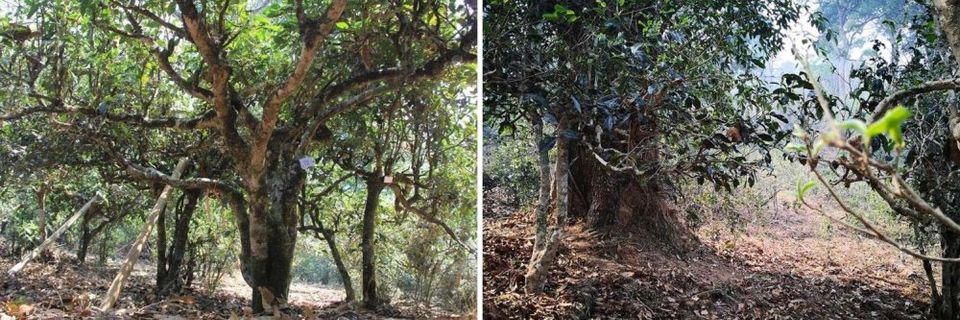
Bama village sits at around 1,600 meters and is considered the most classic expression of the "Nannuo taste." The trees here have long leaves and tight, plump buds. The flavor is soft, sweet, and distinctly floral, not bitter, with a honey and fruity fragrance that has made Bama teas among the most sought-after on the mountain.
Shitou (Stone Village) is another prominent area, located on the western side of the Banpo ridge at around 1,700 meters. Teas from here tend to be softer and sweeter, with a fuller mouthfeel. Several respected small-batch producers work out of this village.
Banpo and Ya Kou are located on the eastern side of the Banpo ridge and tend to produce teas that are more floral, slightly more bitter and astringent, and considered by some collectors to age particularly well.
Each of these villages produces genuinely distinct teas, and experienced puerh drinkers will notice the differences.
How Nannuo Puerh Is Processed?
The journey from leaf to cake is worth understanding because the processing is what makes puerh different from every other tea category.
After spring buds and leaves are hand-picked from the ancient trees, they are withered slightly in the open air to reduce moisture. Then comes the kill-green step, where leaves are pan-fired in large iron woks at high heat by hand. This step deactivates the enzymes that would cause full oxidation. The leaves are then rolled by hand to shape them and release oils, then laid out to dry in the sun.
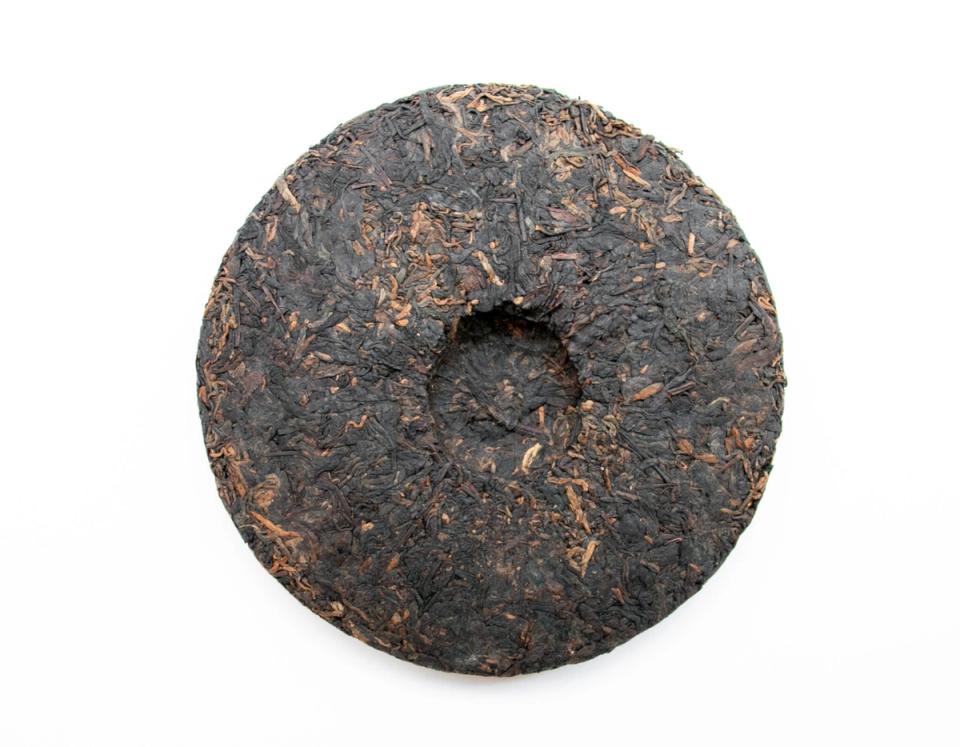
At this stage, the tea is called maocha, loose raw tea. It can be consumed as-is or pressed into cakes, bricks, or other shapes using stone molds and steam. Most high-quality Nannuo puerh ends up pressed into cakes for aging, as this format allows the tea to transform slowly and beautifully over time.
The best Nannuo tea is still entirely handmade at every stage, which is one of the reasons quantity is limited and prices reflect the labor involved.
How to Brew Nannuo Mountain Puerh Tea at Home?
Brewing a quality puerh properly makes a noticeable difference, and the method is simpler than it might seem.
Use a small gaiwan or Yixing clay teapot if you have one. A 100 to 150ml vessel works well. Use about 5 to 7 grams of tea, and always start with a quick rinse: pour boiling water over the leaves, swirl, and pour it out after just a few seconds. This opens the leaves and removes any surface dust, especially important for pressed or aged puerh.
For the first few infusions, brew for just 10 to 15 seconds with freshly boiled water at around 95 to 100 degrees Celsius. Nannuo sheng puerh rewards shorter, lighter steepings in the beginning and slowly reveals more depth as you continue. A good quality ancient tree tea can comfortably give you 8 to 12 infusions, sometimes more.
If you want to experiment, try steeping a little longer in later rounds. You'll notice the honey sweetness becomes more pronounced and the body fuller as the session progresses.
One important note: the first rinse infusion is generally discarded, not for flavor reasons, but as a traditional practice of preparation. After that, each cup is yours to enjoy slowly.
Sheng or Shou: Which Nannuo Puerh Should You Try?
Most of the attention on Nannuo centers on sheng (raw) puerh, and for good reason. The mountain's terroir expresses itself most clearly in raw tea, where the natural flavors of the trees come through with minimal intervention.
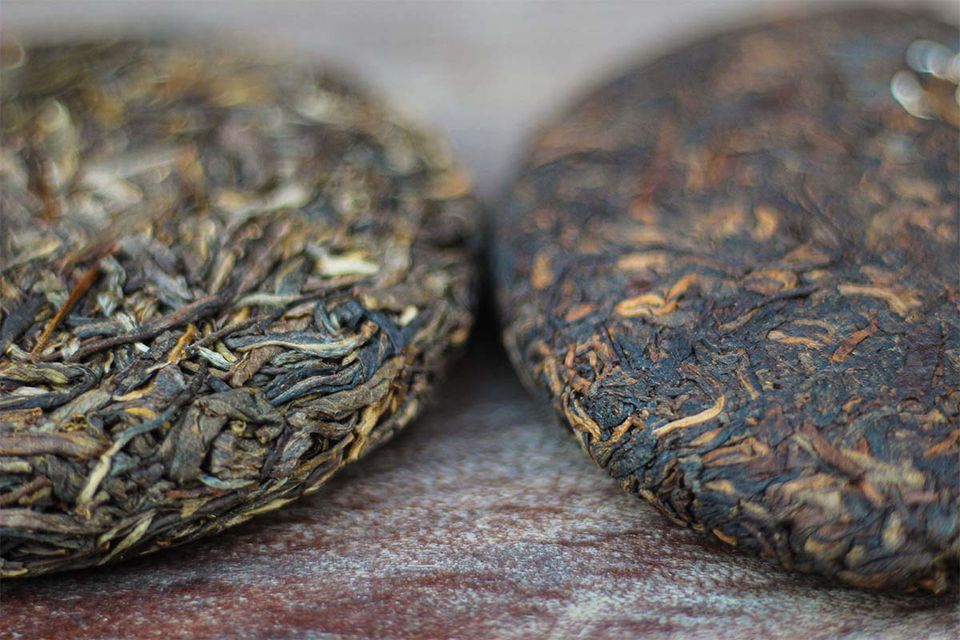
That said, shou (ripe) puerh from Nannuo also exists and tends to be notably smoother and more approachable for people new to puerh. The earthy, dark character of shou puerh is softened here by the natural sweetness that the Nannuo terroir contributes to the leaf. It makes a gentler entry point if you're not yet sure whether you enjoy the bitterness that young sheng can carry.
If you're buying for the first time, a young sheng from Banpo Village is an excellent starting point. If you want something more approachable and lower maintenance, look for a shou puerh from the same region.
Why the Price Gap Exists?
Ancient tree puerh from Nannuo Mountain covers a wide price range, and understanding why helps you shop smarter.
The most expensive teas come from identified single-family gardens with very old trees, harvested only during spring, processed entirely by hand, and sold in small batches with full traceability. The price of tea from Nannuo jumped dramatically in the late 1990s and early 2000s, going from just a few dollars per kilogram to several hundred dollars, as Chinese collectors began discovering what the Hani had always known.
Plantation-grown or younger tree teas from the broader Nannuo area are significantly more affordable and still carry some of the regional character, just with less complexity and aging potential.
If a Nannuo puerh is priced very cheaply, it's worth asking where the leaves actually came from and whether they're genuinely from ancient arbor trees on the mountain itself.
Final Thoughts
Nannuo Mountain is one of those places in the tea world that earns its reputation. The combination of ancient trees, a thousand years of unbroken cultivation by the Hani people, a near-perfect microclimate, and a distinct terroir that gives every tea a natural sweetness and lasting finish: it all adds up to something worth paying attention to.
Whether you're new to puerh or already deep into the rabbit hole, a good Nannuo sheng puerh from an old-growth garden is one of those cups that changes how you think about what tea can be. It doesn't shout. It doesn't overwhelm. It just opens up slowly, infusion by infusion, and keeps giving.
That quiet generosity, more than anything else, is what Nannuo Mountain tea is really about.
Share this article