
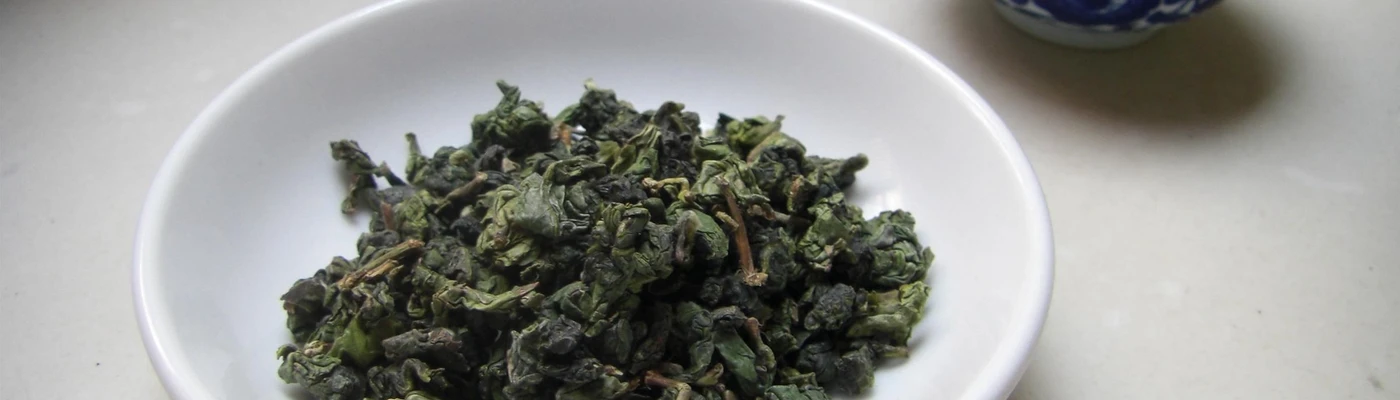
- Tie Guan Yin in the UAE
Everything You Need to Know About Iron Goddess Oolong Tea
Few teas in the world carry a name with as much weight as Tie Guan Yin. Among China's ten most famous teas, among the top three oolongs globally, and the single variety most non-Chinese drinkers encounter first when exploring the world of proper oolong, it has a reputation built over centuries and earned honestly. In the UAE, it is one of the more accessible premium Chinese teas, and yet most people who have tried it have only encountered one version of what is actually a broad and fascinating category. This guide covers the full picture: the name, the legends, the two main styles, what each tastes like, how the quality is assessed, and how to brew it properly at home.
:strip_icc():strip_exif()/tie-guan-yin-1-01KQD4MPA1YXQEYDQ507AY173M.png)
2025 Tie Guan Yin
95 AED
What the Name Actually Means
Tie Guan Yin is written as 铁观音 in Chinese. The three characters break down simply. Tie means iron. Guan Yin refers to Guanyin, the Bodhisattva of compassion in Chinese Buddhist tradition, revered across China, Japan, Vietnam, and much of Southeast Asia as a figure of mercy and grace. Yin here is part of that name rather than a separate word.
The iron in the name has two explanations that have circulated within tea culture for generations. One is that the leaves of the original tea plant flickered with an iron-like sheen in sunlight, particularly when the light caught the edges of the mature leaves.
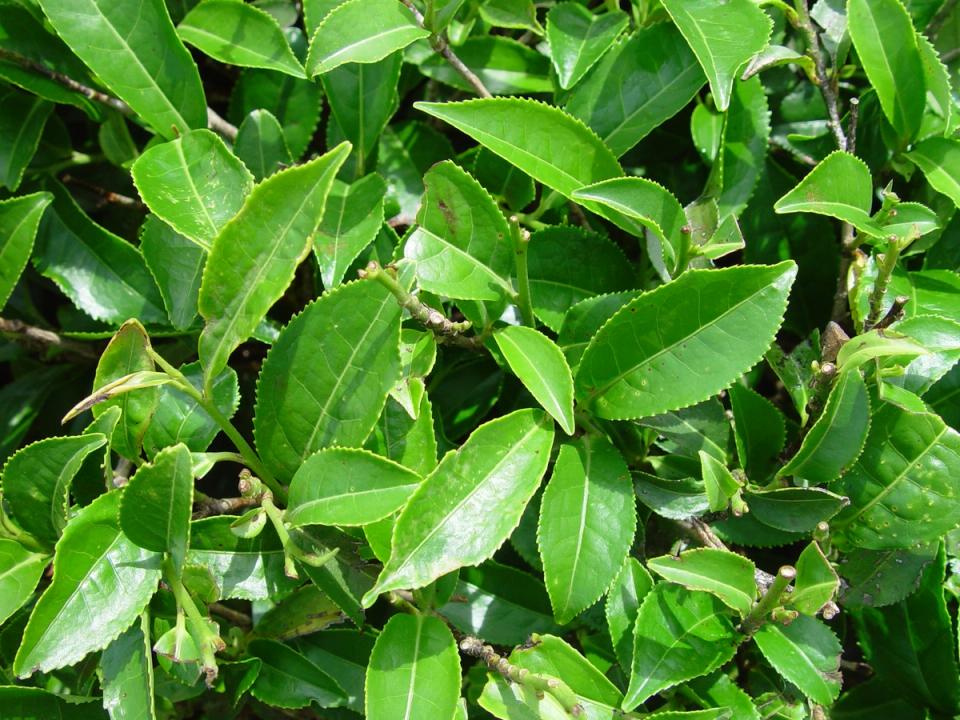
The other is that once the tea is processed and the leaves are oxidized, they turn a dark tone described in older texts as brown as iron. Both explanations describe real observable qualities of the plant and the leaf, and both are likely true in different ways.
In English, the tea is most commonly called Iron Goddess of Mercy, though Iron Guanyin and Ti Kuan Yin are also widely used. In the UAE, you will find it listed under all of these names, depending on the seller.
Two Legends, One Tea
There are two origin stories attached to Tie Guan Yin, and both have been told so many times across so many generations that separating history from legend has become genuinely difficult. Both stories share a central element: the tea is connected to Guanyin herself.
The first story centers on a poor farmer in Anxi County named Wei Yin, sometimes written as Wei Yin Lao. He passed a neglected, crumbling Guanyin temple every day and felt compelled to clean and maintain it, burning incense and sweeping the floor, doing small acts of care for the goddess out of simple respect. One night, Guanyin appeared in his dream and told him of a treasure hidden in a cave behind the temple. The next morning, he went to the cave and found a single tea shoot growing in a stone crevice. He carefully dug it out, planted it, and over time cultivated it into an extraordinary bush. The tea he eventually produced from it, he named Tieguanyin in gratitude.
The second story involves a scholar and government official named Wang Shirang during the reign of the Qianlong Emperor in the Qing Dynasty. He discovered a tea bush growing near a Guanyin rock that produced exceptional leaves, cultivated it, and eventually presented the tea to Emperor Qianlong himself. The emperor was reportedly so moved by both the fragrance and the flavor that he gave it the name Tieguanyin, connecting the iron quality of the leaf with the mercy of the goddess.
Both stories place the origin in Anxi County in Fujian Province during the Qing Dynasty, roughly between the late 17th and early 18th centuries. Tea farming in Anxi dates back over a thousand years to the Tang and Song Dynasties, so the cultivar's discovery built on a region that already knew its tea deeply.
The Terroir of Anxi
Anxi County sits in the mountains of southern Fujian, in what locals call Inner Anxi, a mountainous interior region surrounded by peaks on all sides and covered in clouds and mist for a significant part of the year. The terrain is steep, the altitude ranges from 600 to over 1,000 meters in the premium growing areas, and the mineral-rich soil, combined with the soft, diffused mountain light, creates conditions particularly suited to the Tieguanyin cultivar.
The higher-quality villages, including Xiping and Yuhu Village in the Changkeng area, sit at elevations where temperatures are consistently cooler and the growing season slightly longer. Leaves that develop more slowly under these conditions accumulate more of the aromatic compounds and amino acids that give Anxi Tie Guan Yin its characteristic fragrance. The village of Yuhu, whose name translates to Jade Lake, covers about ten square kilometers and has built an entire local economy around Tieguanyin production across generations of farming families.
The two main styles and how they differ
This is where most buyers in the UAE get confused, because Tie Guan Yin is not one flavor. It is two clearly distinct styles, processed differently, tasting different, and serving different drinking occasions.
2025 Tie Guan Yin
95 AED
The Qing Xiang style, which means clear fragrance or green fragrance, is the lighter and more modern version. The leaves are lightly oxidized, around 10 to 20 percent, and roasted only minimally or not at all. The resulting cup is bright, fresh, and intensely floral. Orchid is the most common comparison for the aroma, and the taste is clean, naturally sweet, and almost creamy in texture. The liquor is a pale golden-green. This style was developed in the 1990s and has become the dominant version of Tieguanyin available globally because of its immediate appeal. It is the style most commonly found in UAE specialty shops and online stores.
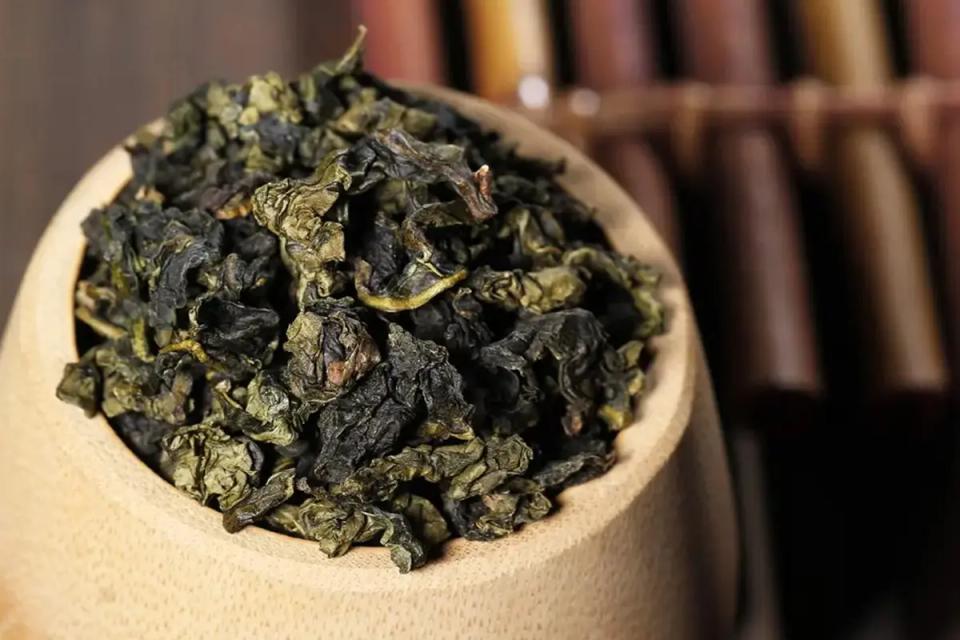
The Nong Xiang style, meaning thick fragrance or roasted fragrance, is the traditional version that predates the green style by centuries. The leaves undergo more oxidation and are then roasted over charcoal, sometimes across multiple roasting sessions over several months. The result is a tea with noticeably more body and depth.
The cup is a warm amber rather than pale gold. The orchid aroma is still present but is now accompanied by toasted honey, caramel, and a lingering warmth. It is richer, less immediately floral, and takes slightly more attention to appreciate, but it rewards that attention considerably. Traditional Tieguanyin drinkers, particularly older generations in Fujian and among the Chinese diaspora across Southeast Asia, strongly prefer the roasted style.
There is a third emerging category worth knowing: aged or roasted Tie Guan Yin, where green-style Tie Guanyin from past harvests is put through periodic re-roasting over several years. This produces something between the two main styles but with additional complexity that neither fresh style can match. Aged Tieguanyin has attracted growing collector interest in China.
Guan Yin Yun: The Quality That Defines Authentic Tie Guan Yin
Among tea drinkers who take Tieguanyin seriously, there is a term that comes up constantly: Guan Yin Yun, written as 观音韵. Yun means resonance or rhyme, and the full phrase describes a specific combination of orchid fragrance and a deep, nectar-like sweetness in the aftertaste that is considered the defining mark of genuine high-quality Tie Guan Yin.
Guan Yin Yun is not something you can describe precisely to someone who has not experienced it. It is the quality that stays with you after each sip, a particular resonance in the throat and on the palate that is soft but persistent. It comes from the specific aromatic compounds that the Tieguanyin cultivar produces when grown in Inner Anxi's mountain terroir and processed correctly. Teas grown from the same cultivar in lower-altitude outer Anxi areas, or from similar but different cultivars, simply do not produce the same quality in the same measure.
When buying Tie Guan Yin in the UAE, this quality is what separates a genuinely excellent tea from one that is competent but unremarkable. The Guan Yin Yun shows clearly in a well-sourced Inner Anxi Tieguanyin and is far less present in lower-grade material.
How to Evaluate Quality Before Buying?
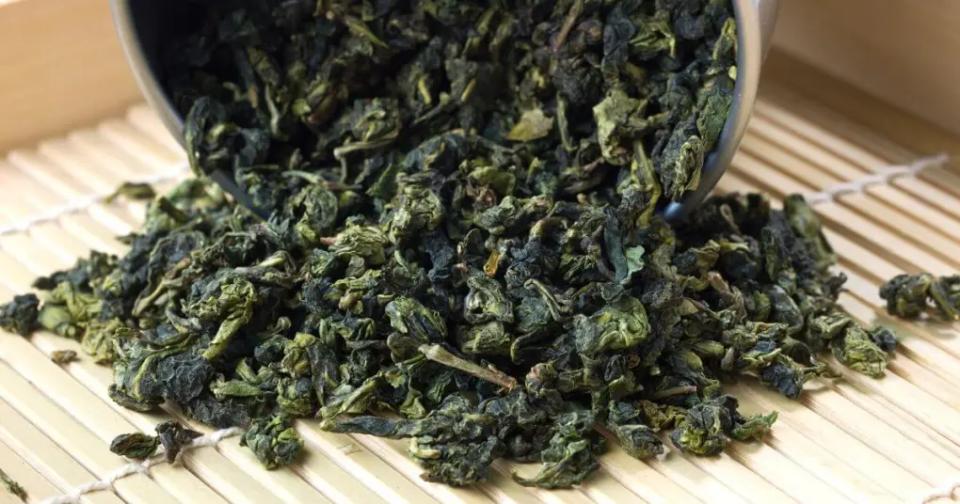
Visual assessment helps with Tieguanyin more than most teas. Good quality green-style Tie Guan Yin has tightly rolled balls that are deep green in color, uniform in size, and feel slightly heavy for their volume. The characteristic processing step called yaoqing, heavy tossing of the leaves in bamboo baskets, bruises the leaf edges and creates the distinctive green-center, red-edge appearance that is a marker of authentic production. Light, hollow balls, dull coloring, or a lot of broken pieces all suggest lower-quality material.
For roasted style Tieguanyin, look for dark, tightly rolled balls with a consistent dark brown or amber-brown color. The aroma from the dry leaves should be warm, toasty, and sweet rather than burned or harsh.
Spring harvest and autumn harvest are both prized for Tieguanyin, and both are worth seeking. Spring Tieguanyin tends to be more floral and delicate. Autumn Tieguanyin has a slightly stronger character with a fuller, sometimes fruitier profile that many experienced drinkers prefer.
How to Brew Tie Guan Yin Properly
Gongfu brewing with a small gaiwan or porcelain teapot of around 100 to 120ml produces the most from a quality Tie Guan Yin. Use 5 to 7 grams of rolled tea per 100ml of water. The tightly rolled balls need room to expand fully, which is why a small vessel with proportionally more tea works better than a large teapot with a few balls rattling around.
Water temperature should be 90 to 95 degrees Celsius for both styles. A quick rinse, five seconds, and then discard, is particularly important for Tieguanyin because it warms the tightly rolled balls and begins opening them before the first proper infusion.
First infusion: 15 to 20 seconds. Pour completely and drink. The balls will still be mostly closed. Add 10 seconds per round. By the third or fourth infusion, the balls are usually fully open, and the full complexity of the tea is present. Good Anxi Tieguanyin gives seven to ten comfortable infusions.
For those who prefer Western-style brewing, use 4 grams per 200ml, steep for two to three minutes at 90 degrees Celsius, and drink straight without milk. Tieguanyin does not need anything added to it.
Dubai's treated tap water noticeably affects the delicate orchid fragrance of green-style Tieguanyin. Filtered or still bottled water is genuinely worth using.
Final Thoughts
Tie Guan Yin has earned its reputation across three centuries and in the cups of enough serious tea drinkers around the world to make its standing indisputable. The green-style version is an excellent starting point for anyone new to oolong because the floral character is immediate and appealing. The roasted style is where the tea shows its full historical depth and complexity.
:strip_icc():strip_exif()/Box_Main_2-01KQF0F0PH6E89FZMH4H5RX6SD.png)
Discovery Box
89 AED
For anyone in the UAE who has only ever had one version, trying the other is worth the effort. The two styles are different enough that it is genuinely like encountering two separate teas, and both are worth knowing well.
Tie Guan Yin
:strip_icc():strip_exif()/tie-guan-yin-1-01KQD4MPA1YXQEYDQ507AY173M.png)
Share this article