- Rare yellow tea in the UAE
- yellow tea
- tea world dubai
- uae tea world
Rare yellow tea in the UAE
Yellow tea is the category most tea drinkers have heard of but never actually tasted. Sitting between green and white tea in the traditional Chinese six-category system, it is produced in only a handful of locations across China and made by so few skilled producers today that the category is genuinely at risk of disappearing. Outside China, it is nearly invisible. In the UAE, finding authentic yellow tea requires knowing exactly what you are looking for. This guide covers what makes yellow tea different, why it is rare, and why Pingyang Huangtang from Zhejiang Province is the variety worth seeking out.
:strip_icc():strip_exif()/Yellow_1-01KSDESE1N96HQWWX3B134HQYB.png)
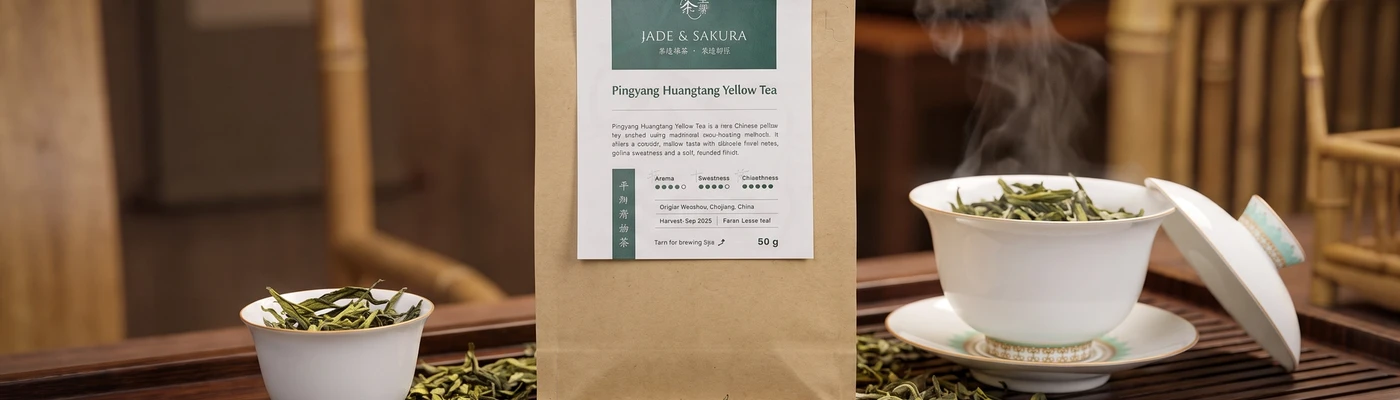
2025 Pingyang Huangtang Yellow Tea
From 45 AED
Why is yellow tea genuinely rare?
The word rare gets used loosely across the tea market. Yellow tea earns it honestly.
At the beginning of the 21st century, only three yellow teas were still in regular commercial production anywhere in China. Against the background of over a thousand commercially produced green teas, this number says everything. The category has not always been this small. Yellow tea was once produced across multiple regions and was revered enough to serve as a tribute tea to the imperial court. What happened to it is almost entirely a story about production difficulty.
Yellow tea requires a step called menhuang, or sealed yellowing, that has no equivalent in any other tea category. After the initial kill-green step that stops oxidation, the warm, slightly damp leaves are wrapped in paper or cloth and allowed to sit in their own moisture and warmth. This controlled, slow transformation over 24 to 72 hours removes the grassy sharpness of green tea and develops a warm, mellow character that is unique to yellow tea. Done correctly, it produces something genuinely special. Done slightly wrong, it produces either green tea or something starting to deteriorate.
The skill required to execute this step properly takes years to develop.
2025 Pingyang Huangtang Yellow Tea
From 45 AED
Most farmers in yellow tea regions have found it simpler and more economically rational to process their leaves as green tea instead. The result is that the knowledge itself is vanishing. An estimated 95 percent of producers in traditional yellow tea regions now make green tea rather than yellow tea, and the number of people who can still execute the sealed yellowing correctly is shrinking with each generation.
What makes pingyang huangtang different
Of the small number of yellow teas that still exist, Pingyang Huangtang from Pingyang County in Wenzhou City, Zhejiang Province, stands apart for several reasons.
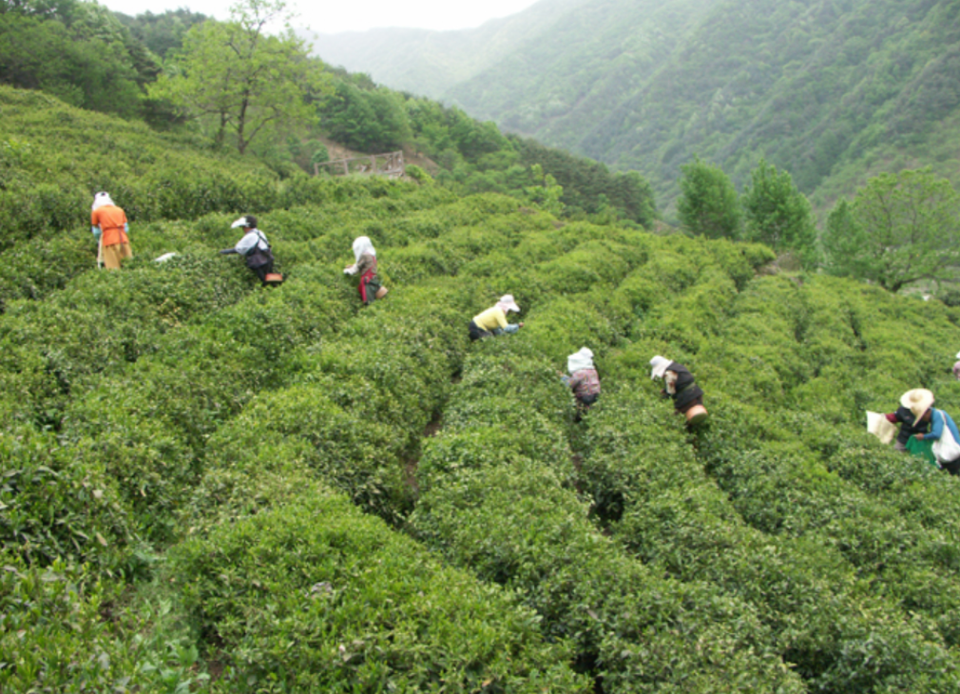
The first is the cultivar. Pingyang Huangtang is made from the Pingyang Tezao variety, a cultivar native to this specific county. Tezao means early budding, and the variety is known for producing tender early spring shoots with a naturally sweet character that other cultivars do not replicate. The combination of this specific cultivar and the sealed yellowing process produces a flavor profile unique to Pingyang: roasted corn warmth, a toasted hazelnut quality, and a clean honey sweetness in the finish.
The second is the terroir. Pingyang County sits in coastal southeastern China, where warm, humid air from the East China Sea creates consistent mist and cloud cover across the mountain slopes. The growing elevation sits at around 400 meters, where temperature variation between day and night is large enough to slow leaf development and concentrate natural amino acids and aromatic compounds. This temperate, moisture-rich environment has shaped Pingyang Tezao tea cultivation for centuries.
The third is history. Tea records from Pingyang County date back to the Tang Dynasty, and during the reign of Emperor Qianlong in the Qing Dynasty, Pingyang Huangtang was recognized as a tribute tea sent to the imperial court. Today, it remains one of the very few places in China still producing authentic yellow tea, carrying the weight of that history alongside the rarity of genuinely traditional production.
The three yellows standard
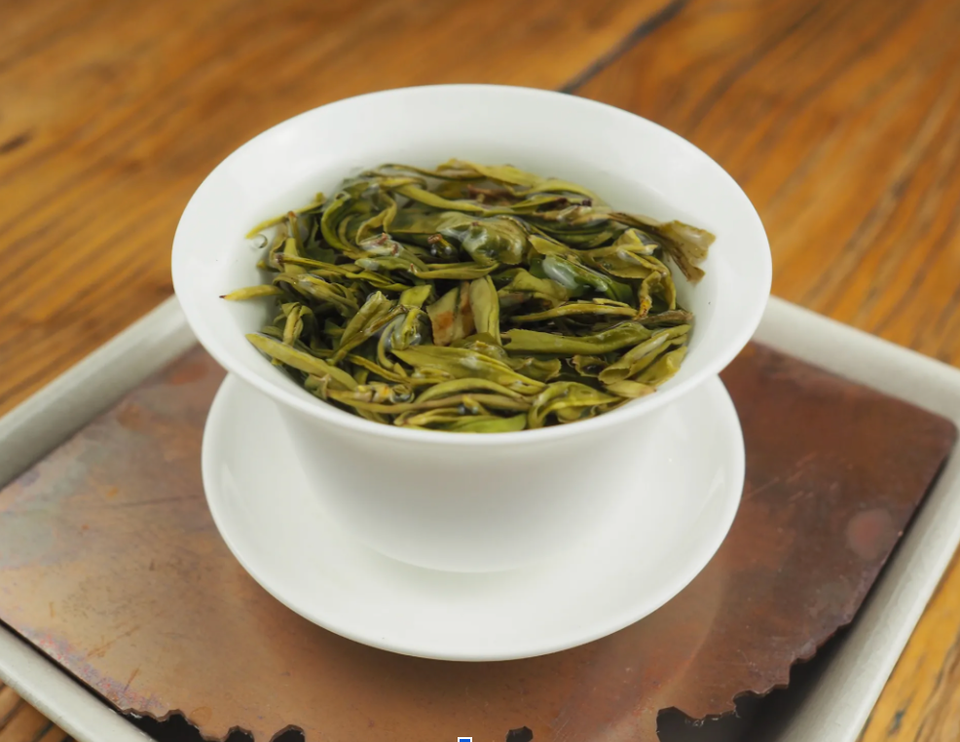
Pingyang Huangtang is traditionally evaluated by what is called the san huang standard: three yellows. The dry leaf, the brewed liquor, and the spent infused leaf should all carry the same warm golden hue after proper processing. This consistency across all three stages is the visible mark of correctly executed sealed yellowing and the quality standard that separates genuine Pingyang Huangtang from yellow teas that were processed incorrectly or incompletely.
The 2025 spring harvest from Jade and Sakura meets this standard clearly. The dry leaves carry a yellowish-green tone from the transformed leaf. The brewed liquor is a bright apricot-yellow, clear and luminous in the cup. The infused leaves after steeping show the consistent warm yellow-green that the three yellows standard describes. Each of these is a visible, immediate quality marker that a buyer can check before finishing the first infusion.
What does the 2025 pingyang huangtang tastes like
The 2025 spring harvest brews a cup that is the opposite of what most people expect when they hear yellow tea described as sitting between green and white. It is not thin, it is not pale, and it is not trying to be anything other than exactly what it is.
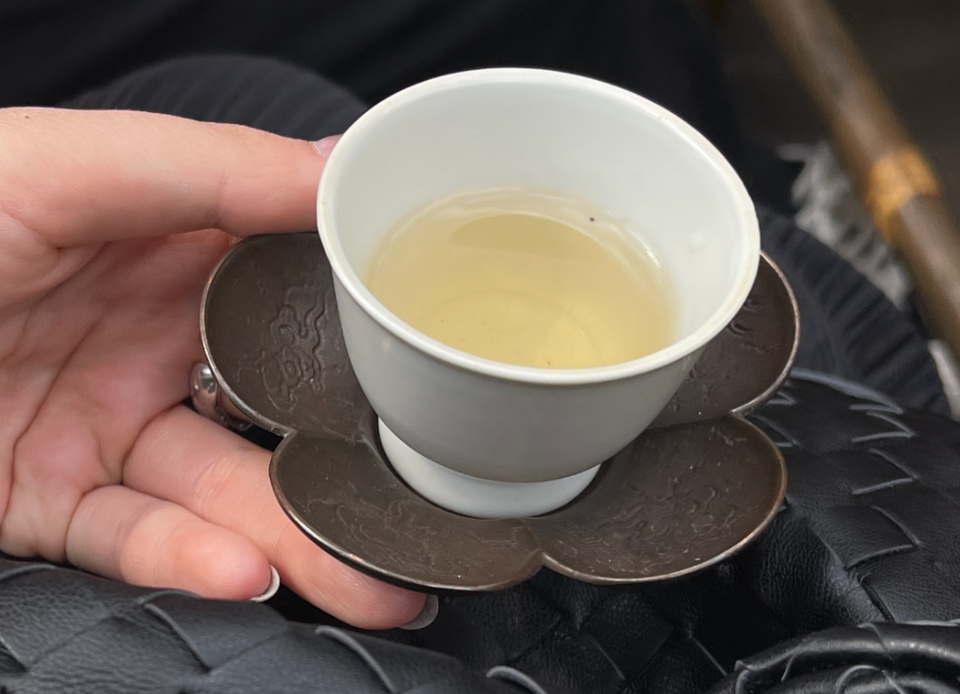
The aroma from the dry leaves carries a warm, slightly sweet grain note, the characteristic corn fragrance that defines Pingyang Huangtang and distinguishes it immediately from any green tea. When hot water is added, this fragrance rises and shifts toward something slightly toasted, like hazelnut or roasted grain, with a honey undertone that sits underneath rather than on top.
The taste in the cup is smooth from the first sip. There is no bitterness at any point in the infusion, no astringency, and no grassy edge. What is there instead is a clean, mellow sweetness that is warm rather than bright and fills the mouth evenly. The roasted corn character is present in the taste but is softer than in the aroma, and the hazelnut quality comes through clearly in the middle of each sip. The honey finish lingers well after swallowing and is the quality that makes you reach for the next cup.
The liquor color, a bright apricot-yellow with clear clarity, is worth pausing to appreciate in a glass cup before drinking. It is one of the more visually distinctive teas in the Chinese tradition, and the color itself confirms that the sealed yellowing worked as intended.
Health properties
Yellow tea retains a high concentration of the natural compounds present in fresh tea leaves because of its minimal processing. Research on yellow teas, including Pingyang Huangtang, has found that the category preserves approximately 85 percent of its natural bioactive substances through production, including polyphenols, amino acids, and soluble sugars that contribute to antioxidant properties and anti-inflammatory effects.
The amino acid content of yellow tea is consistently found to be higher than in comparable green teas, contributing both to the smooth sweetness in the cup and to the calming quality associated with L-theanine. The caffeine content is moderate, typically lower than green or black tea, making Pingyang Huangtang accessible for people who are sensitive to caffeine but still want the mental clarity that L-theanine and moderate caffeine together provide.
In traditional Chinese medicine, yellow tea is cool in nature and considered gentle on the stomach. It is recommended for people who find green tea too sharp or who have sensitive digestion, and it can be drunk on an empty stomach without discomfort in a way that green tea sometimes cannot.
How to brew it at home
Pingyang Huangtang brews best at 85 to 90 degrees Celsius. This is slightly warmer than most other yellow teas and reflects the character of the Pingyang Tezao cultivar, which holds up well to a little more heat than the more delicate bud-only varieties. Water hotter than 90 degrees will not ruin the tea, but may slightly reduce the clarity of the corn fragrance in the aroma.
Use 3 to 5 grams per 200ml of water. A glass cup is particularly worth using here because watching the leaves open in the apricot-yellow liquor is part of the experience. No rinse is needed before the first infusion. Steep for 30 seconds on the first round and add 5 seconds per subsequent infusion. The 2025 Pingyang Huangtang from Jade and Sakura gives up to four comfortable infusions, with the corn fragrance most vivid in the early rounds and the honey sweetness becoming more prominent as the session continues.
For anyone brewing yellow tea for the first time, the most important thing to avoid is over-steeping the early infusions. Starting at 30 seconds and keeping the early rounds short allows the natural sweetness to come forward without any flatness or heaviness developing in the cup.
Dubai's tap water is heavily treated and will noticeably affect the delicate corn fragrance and clean clarity of this tea. Filtered or still bottled water makes a genuine difference here.
Finding it in the UAE
The 2025 Pingyang Huangtang yellow tea is available from Jade and Sakura at AED 45, with free next-day delivery across the UAE on orders over AED 50. It comes in a 10g bag and a 50g bag, making the smaller size a practical option for anyone trying yellow tea for the first time before committing to a larger quantity.
For anyone in the UAE who has been curious about yellow tea but found it impossible to source locally, this is a straightforward entry point. Confirmed Pingyang County origin, spring 2025 harvest, Pingyang Tezao cultivar, and traditional sealed yellowing processing are all clearly stated, which is exactly the level of sourcing transparency that genuine yellow tea deserves.
Final thoughts
Pingyang Huangtang is disappearing from the world not because it is difficult to enjoy, but because it is difficult to make. What remains is a category carried forward by a small number of producers in a small number of places who still know how to execute the sealed yellowing correctly. The 2025 spring harvest is one expression of that surviving tradition, and the cup it produces, smooth, naturally sweet, warm with corn and hazelnut, and entirely free of bitterness, is worth experiencing at least once.
For anyone in Dubai who takes specialty tea seriously, this is the rare yellow tea to start with.
:strip_icc():strip_exif()/Yellow_1-01KSDESE1N96HQWWX3B134HQYB.png)
Share this article