
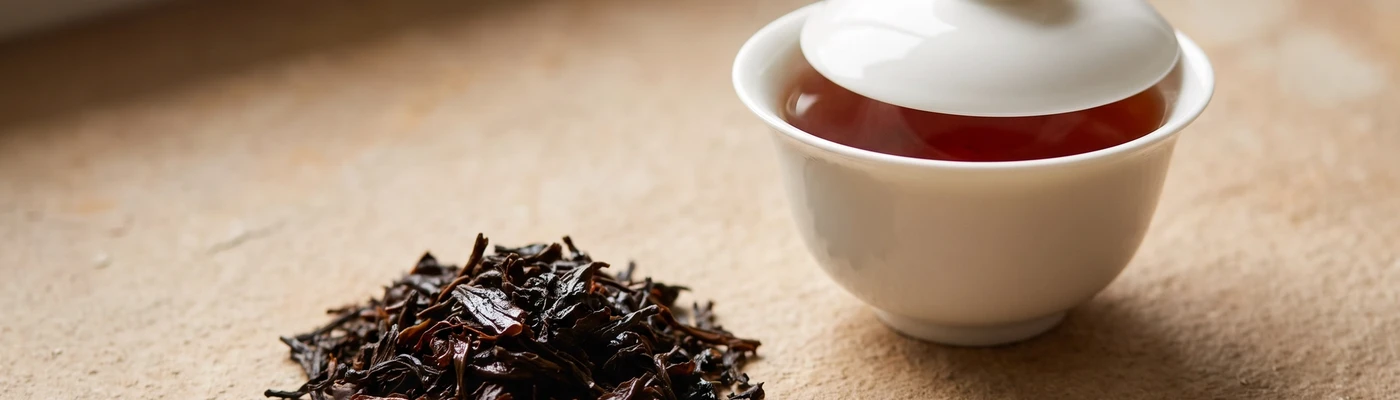
- Ripe Pu-erh
- shou puerh UAE
- pu-erh tea Dubai
Ripe Pu-erh Tea in the UAE: A Beginner's Guide to Shou Puer
Pu-erh is the one Chinese tea that intimidates people before they have even tasted it. The stories about cakes aged for decades, the auction prices, and the talk of fermentation all make it sound like a category reserved for experts. Most of that reputation belongs to one half of the pu-erh world. The other half is one of the easiest and most forgiving teas you can drink, and it is a far better place to begin. Ripe pu-erh, or shou puer as it is called in China, is dark, smooth, naturally sweet, and ready to drink the day you buy it. This guide covers what ripe pu-erh is, how it differs from the raw version, what it tastes like, its health properties, and how to brew and buy it in the UAE.
Raw and Ripe: The Split That Defines Pu-erh
Pu-erh comes in two forms, and understanding the split is the first thing that makes the whole category easier to navigate. Both are made from the large-leaf tea trees of Yunnan Province in southwest China, but they are processed in completely different ways after the initial picking.
Raw pu-erh, or sheng, is the traditional form. It is pressed into cakes while still young and green, then left to age slowly over years and often decades, changing gradually as it sits in storage. Young raw pu-erh can be sharp and bitter, and the good examples are prized precisely because of how they soften and deepen with age. The Nannuo Mountain pu-erh that many collectors seek out is a raw tea of this kind.
Ripe pu-erh, or shou, is the modern answer to the long wait. It was developed in 1973 at the Kunming and Menghai tea factories, when producers worked out a way to speed up the transformation that aging normally does on its own. Instead of waiting years, they could produce a dark, mellow, aged-tasting tea in a matter of weeks. This is the tea that most people in the UAE will meet first, and it is the one that needs no patience at all.
What the Pile Fermentation Actually Does
The process that turns green leaves into ripe pu-erh is called wo dui, which means wet piling. The picked and dried leaves are gathered into large piles, moistened with water, covered, and left in a warm and humid room. Over roughly forty to sixty days, the pile is turned regularly to keep the fermentation even and to stop it from overheating.
During this time, natural microbes do the real work, breaking down the bitter polyphenols in the leaf and converting them into a group of compounds called theabrownins. These are what give ripe pu-erh its dark reddish-brown liquor, its smooth body, and its deep sweetness. The sharpness and astringency of the fresh leaf disappears almost entirely, which is why ripe pu-erh is so gentle to drink.
Done well, wo dui produces a clean, sweet, earthy tea. Done badly, it produces a musty or fishy smell that never fully clears. That smell is the single most useful warning sign when you are judging quality, and a good ripe pu-erh should never have it.
What Ripe Pu-erh Tastes Like
Ripe pu-erh pours a deep reddish-brown, often so dark it is nearly black in the cup. The texture is thick and silky, closer to the weight of coffee than to a light green tea, and there is no bitterness or astringency to speak of.
The flavor is earthy and warm, with notes that drinkers commonly describe as wet forest floor, dark wood, dried dates, and dark chocolate. Younger ripe pu-erh can carry a stronger earthy edge that some people call the pile taste, a trace of the fermentation that fades with a few years of resting. Older and better-rested ripe pu-erh settles into a clean, rounded sweetness with a finish that lingers.
It is a tea for the cooler end of the day and the cooler end of the year. It sits well after a meal, pairs easily with food, and is one of the few teas that most people enjoy immediately without needing to acquire a taste for it.
Tangerine Pu-erh and the Different Shapes
Ripe pu-erh is sold in several forms. Loose leaf is the most convenient for everyday drinking. Compressed shapes are the traditional format, and the most common are the round cake, called bing, the small nest-shaped tuo, and the flat brick. Compression was originally a way to transport and store tea more easily, and it also shapes how the tea ages over time.
One form worth knowing specifically is tangerine pu-erh, known as gan pu or chen pi pu-erh. Ripe pu-erh is packed inside a hollowed and dried mandarin peel from Xinhui in Guangdong Province, and as the two age together, the citrus oils in the peel slowly infuse the tea. The result combines the deep, earthy sweetness of shou pu-erh with a bright, slightly medicinal citrus lift. Aged mandarin peel, or chen pi, is valued in traditional Chinese medicine in its own right, which is part of why this pairing has such a long history.
Health Properties Worth Knowing
Ripe pu-erh has a strong reputation in China as a tea to drink after heavy or oily meals, and it is traditionally associated with supporting digestion. Research into pu-erh has looked at its effects on cholesterol and lipid levels, with the theabrownins formed during fermentation being the compounds of most interest.
Like all true tea, ripe pu-erh contains caffeine alongside L-theanine, which together produce a steady, calm alertness rather than a sharp spike. Because it is fully fermented and very low in astringency, many people find it sits more gently on the stomach than green tea or coffee. In traditional Chinese medicine, ripe pu-erh is considered warming in nature, which is why it is favored in colder weather and after rich food.
How to Brew Ripe Pu-erh
Ripe pu-erh is the most forgiving tea to brew, which is another reason it suits beginners. It is almost impossible to oversteep into something unpleasant.
Gongfu brewing gives the best results. Use a gaiwan or small clay pot of around 100 to 120ml, and 6 to 8 grams of tea. Because ripe pu-erh is usually compressed and always benefits from waking up, rinse it first: pour boiling water over the leaves, wait five to ten seconds, and discard. For a tightly compressed cake, a second quick rinse is worth doing.
Use water at a full boil, 95 to 100 degrees Celsius. The first proper infusion needs only 10 to 15 seconds. Pour it out completely and drink, then add a few seconds to each round after that. Good ripe pu-erh gives eight to fifteen infusions, staying sweet and smooth for most of them.
For something richer, ripe pu-erh can also be simmered gently in a pot for a few minutes, which produces a thick, dark cup that works well on a cold day. For everyday ease, the grandpa method also works: put two to three grams in a large mug, top it up with hot water, and keep refilling. Dubai's treated tap water dulls the depth of a good ripe pu-erh, so filtered or still bottled water is worth using.
How to Buy Ripe Pu-erh in the UAE
When buying ripe pu-erh, the smell of the dry leaf tells you most of what you need to know. It should be clean, sweet, and earthy, with no fishy, sour, or heavily musty note. A clean aroma is the clearest sign that the fermentation was handled well and the tea has been stored properly since.
Beyond that, look for a stated origin in Yunnan, a production year, and a seller who can tell you whether the tea is loose or compressed and how it has been kept. Well-made ripe pu-erh from a reliable source is inexpensive to start with compared to aged raw pu-erh, which makes it a low-risk way to get to know the category.
Jade and Sakura carry ripe shou pu-erh, including the tangerine form, with delivery across the UAE. For anyone in Dubai who wants a first pu-erh that is smooth, dependable, and ready to drink now, ripe pu-erh is the natural place to start.
Final Thoughts
Pu-erh has a reputation for being complicated, expensive, and slow, and all of that belongs to the raw, aged side of the category. Ripe pu-erh is the opposite on every count. It is affordable, consistent, forgiving to brew, and enjoyable from the first cup.
Start here, get comfortable with the dark, sweet, earthy character that makes pu-erh what it is, and the rest of the category opens up from there. For a tea this easy to drink and this hard to get wrong, there is very little reason not to.
Share this article