
:strip_icc():strip_exif()/2024-tangerine-1-01KQD5FT1CX516KE6KX9PAT8GW.png)
:strip_icc():strip_exif()/2024_Tang_2-01KRB2KK5XZEM5DHQMTHWX89M9.png)
:strip_icc():strip_exif()/2024_Tangerine_Ripe_Shou_Puer-01M0NJSXS0VMTP4HH5YNN2N6HA.png)
2024
2024 Tangerine Ripe (Shou) Pu'er
Qualifies for free shipping
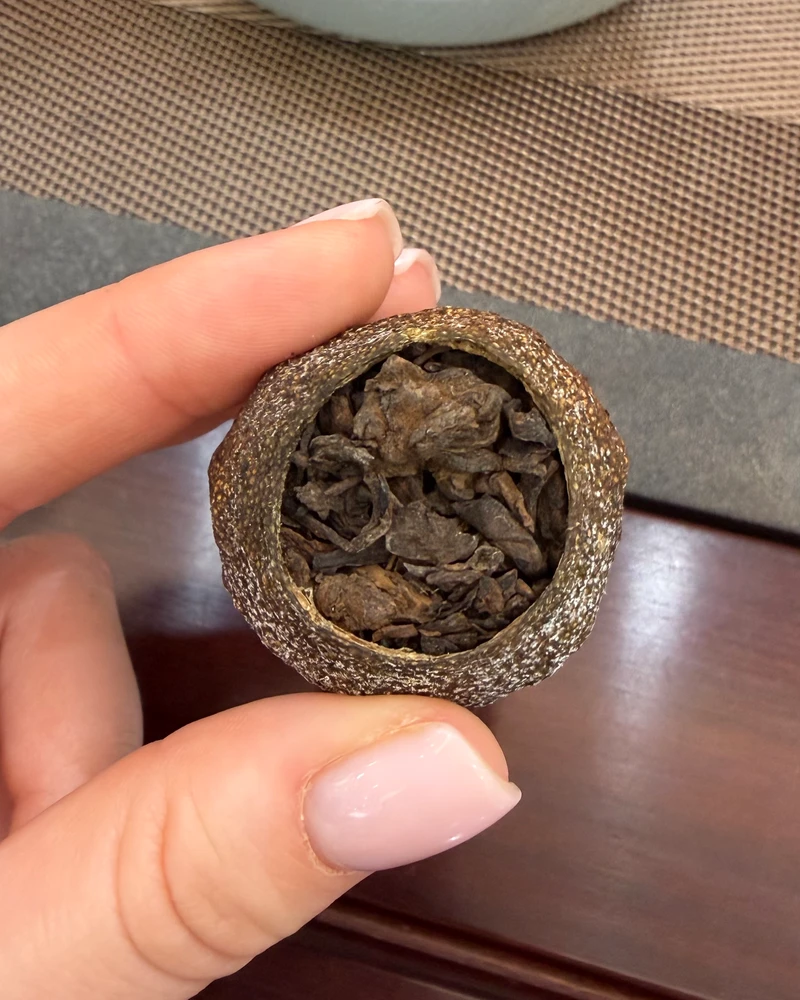
Whole Xinhui tangerines stuffed with ripe pu'er and aged together. The tangerine smells like sunshine off the dry fruit. The cup carries that brightness without going sweet.
Questions? Message us on WhatsAppDirect from the farm
Bought in person from the farmer who made it, on a yearly sourcing trip to China.
Tasted before bought
We taste every lot ourselves before we buy, often against alternates from the same village.
Small lots, single origin
Every tea is named by its village, farmer, and harvest year. Never a warehouse blend.
What is Tangerine Pu'er?
This is one whole Xinhui tangerine, hollowed out and packed with ripe (shou) pu'er, then dried and sealed. Xinhui is the famous chenpi region in Guangdong. The tangerine peel from this area has been an aged-ingredient and traditional medicine staple for a long time, and wrapping shou pu'er inside it is a common pairing in southern China. The fruit and the leaf age together inside the wrapper, and the flavours move into each other over time.
Open the package and the tangerine aroma is the first thing you notice. The dry fruit smells very sweet, far brighter than most tangerine pu'ers we've tasted. The cup is more restrained. You don't get a sugary infusion, you get a clean orange brightness over the woody shou underneath.
Our Note
We went looking specifically for a Xinhui tangerine pu'er. We'd tasted the format before and wanted to find a farmer doing it well. The one we ended up with is a woman in Xinhui who's been making these for years. She showed us how to brew them: pour the hot water into the small hole at the top, then circle the kettle around the outside of the tangerine to draw flavour from the peel as well as the leaves.
The aroma off the dry fruit was the thing that surprised us. We'd had tangerine pu'er before but nothing close to this on the smell. The cup follows the aroma in a different direction. Less sugary than the dry fruit suggests, brighter and cleaner. She described it as "sunshine in the cup," and that's the one we kept coming back to.
"Sunshine in the cup" is how the farmer described it. We haven't found a better way to put it.
Why this tea
- 01
One whole Xinhui tangerine per piece
Not chunks or crumbs. The peel comes from Xinhui, the chenpi region in Guangdong
- 02
The aroma is the first thing
We've tasted tangerine pu'er before. None of them came close to the sweetness of this one off the dry fruit
- 03
Bright cup, not sugary cup
The orange sits over the shou rather than running through it. "Sunshine" is the word the farmer used, and it fits
- 04
Direct from a Xinhui farmer
Same family who introduced us to our Tieguanyin, originally from Anxi and now settled in Xinhui.
Tasting Notes
Bright orange aroma off the dry fruit. The cup is woody and earthy from the shou, with a clean orange brightness running over the top. Not sweet, despite what the smell suggests.
Oxidation
Stimulation
Fermentation
Body
Brewing Instructions
- Amount
- 1 pieceper 200 ml
- Temperature
- 100°C212°F
- Infusion Time
- 20–30 sec
- Infusions
- Up to 20
Rinse the leaves once with hot water before the first steep.
Aging & Storage
Keep the package sealed in a cool dark cupboard, away from heat, light, and anything strong-smelling. The tangerine peel keeps the tea well on its own, and both the fruit and the leaf age together inside the wrapper.
Origin
Origin
Xinhui, Guangdong
Cultivar
Chazhi Gan
Elevation
100 meters
We went looking specifically for a Xinhui tangerine pu'er. We'd tasted the format before and wanted to find a farmer doing it well. The one we ended up with is a woman in Xinhui who's been making these for years. She showed us how to brew them: pour the hot water into the small hole at the top, then circle the kettle around the outside of the tangerine to draw flavour from the peel as well as the leaves.
The aroma off the dry fruit was the thing that surprised us. We'd had tangerine pu'er before but nothing close to this on the smell. The cup follows the aroma in a different direction. Less sugary than the dry fruit suggests, brighter and cleaner. She described it as "sunshine in the cup," and that's the one we kept coming back to.
"Sunshine in the cup" is how the farmer described it. We haven't found a better way to put it.
:strip_icc():strip_exif()/tie-guan-yin-1-01KQD4MPA1YXQEYDQ507AY173M.png)
From the same family
2025 Tie Guan Yin
Light Anxi Tieguanyin from the same family who makes this tangerine pu'er. Different category, same hands.
See it:strip_icc():strip_exif()/0001-01KJ0QQDGQ6TVNQXDS4MTVSCMC.png)
:strip_icc():strip_exif()/0001-01KJ0QQE0NEBCQCJB2FSZAM6DG.png)
:strip_icc():strip_exif()/Wild_Ancient_1-01KSD1CNMKTC1E65CTJE4KY89R.png)
:strip_icc():strip_exif()/WL_Longjing_2025_3-01KN21XBCMFEQJRXFDT3SB00FN.png)