
- Scented green tea
- Scented green tea in uae
- best Scented green tea
Scented green tea in the UAE
Scented green tea is a category that exists almost nowhere outside China in its authentic form, and yet it has quietly become one of the most requested teas among specialty buyers in the UAE. The idea sounds simple: green tea with a flower's fragrance worked into it. The reality is a centuries-old craft involving fresh blossoms, precise timing, and a process that has more in common with perfumery than with simple flavoring. This guide covers what scented green tea actually is, how the scenting process works, the main varieties available, and how to find and brew genuine versions in the UAE.
What scented tea actually means
Scented tea exists in a meaningful sense only in China. It is not simply tea mixed with dried flowers, and it is not tea sprayed with fragrance oil, though both shortcuts exist in the wider market under the same name.
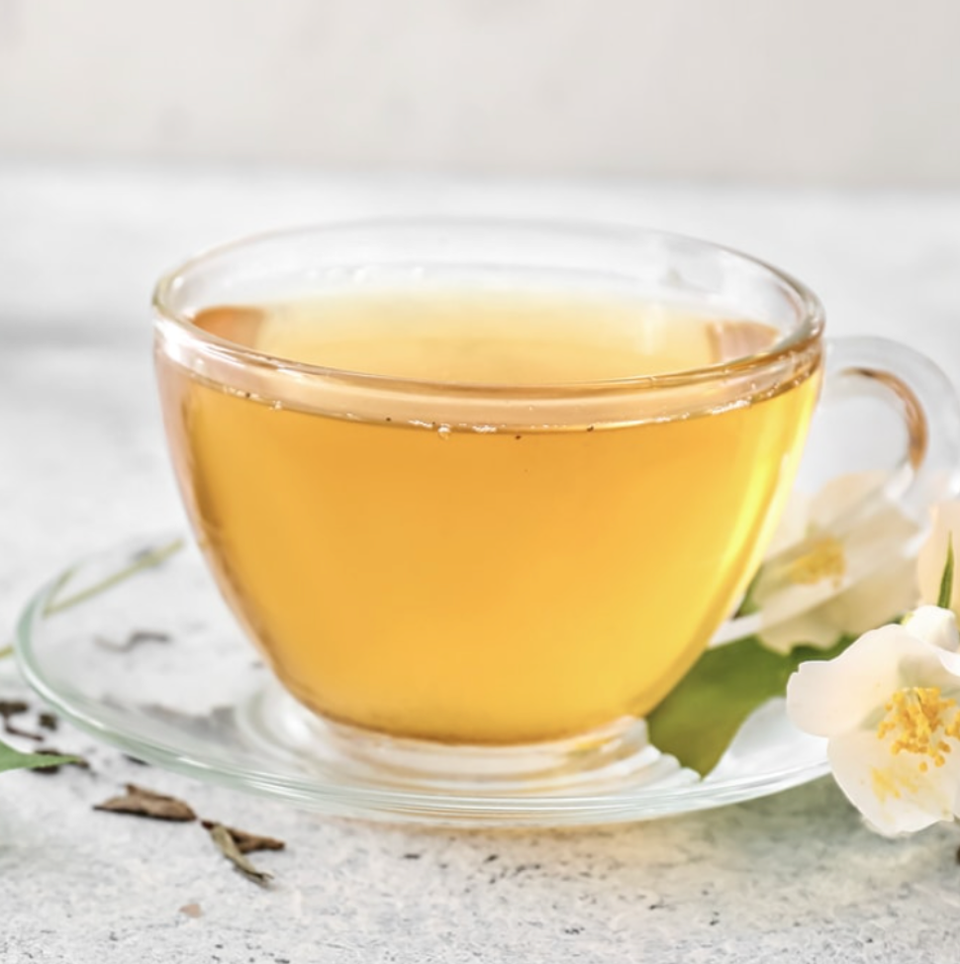
Genuine scented green tea is made by layering fresh flowers directly with dry green tea leaves. Tea leaves have a loose, porous structure that makes them naturally absorbent, drawing in the aromatic compounds flowers release as they breathe and slowly wilt. After several hours, the spent flowers are removed, and the tea is dried again before fresh flowers are added for another round. This cycle is repeated multiple times depending on the grade. Three rounds are standard. Six to nine rounds, taking up to a month, produce considerably greater complexity and are associated with the most prized batches.
The skill required to do this correctly was formally recognized by China in 2022, when the traditional jasmine green tea scenting craft was listed as an Intangible Cultural Heritage practice, acknowledging the more than 200 individual steps and over 60 days of work that go into producing a top-grade batch.
Scientific research backs up what tea makers have understood through experience for centuries. Studies using gas chromatography to analyze the aromatic compounds in scented tea have confirmed that the number of scenting cycles directly affects aroma quality, and that genuine flower-scented green tea develops specific volatile compounds, including linalool, benzyl acetate, and various ionones, that are simply not present in tea flavored through spraying or blending.
:strip_icc():strip_exif()/0001-01KJ0QPZ49N5TQ67BBJ8DD6X40.png)
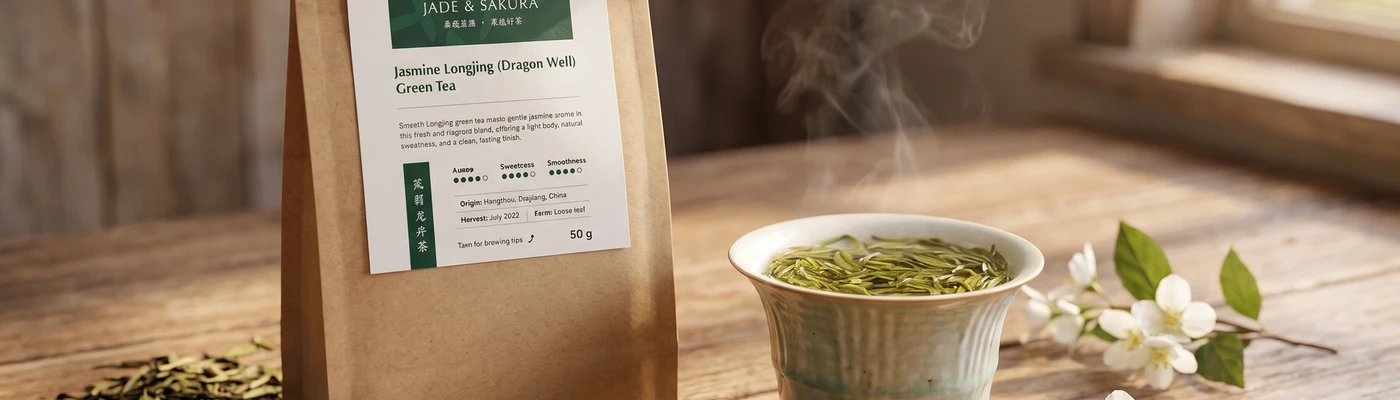
2025 Jasmine Longjing (Dragonwell) Green Tea
From 45 AED
Why green tea specifically
Green tea has been the preferred base for scenting throughout Chinese history, and there is a practical reason for this beyond tradition. Green tea undergoes minimal processing and retains a particularly open, porous leaf structure after the kill-green step that halts oxidation. This structure is what makes green tea such an effective carrier for absorbed fragrance. White tea and lightly oxidized oolong also work well for the same reason, while more heavily oxidized and rolled teas absorb fragrance less efficiently.
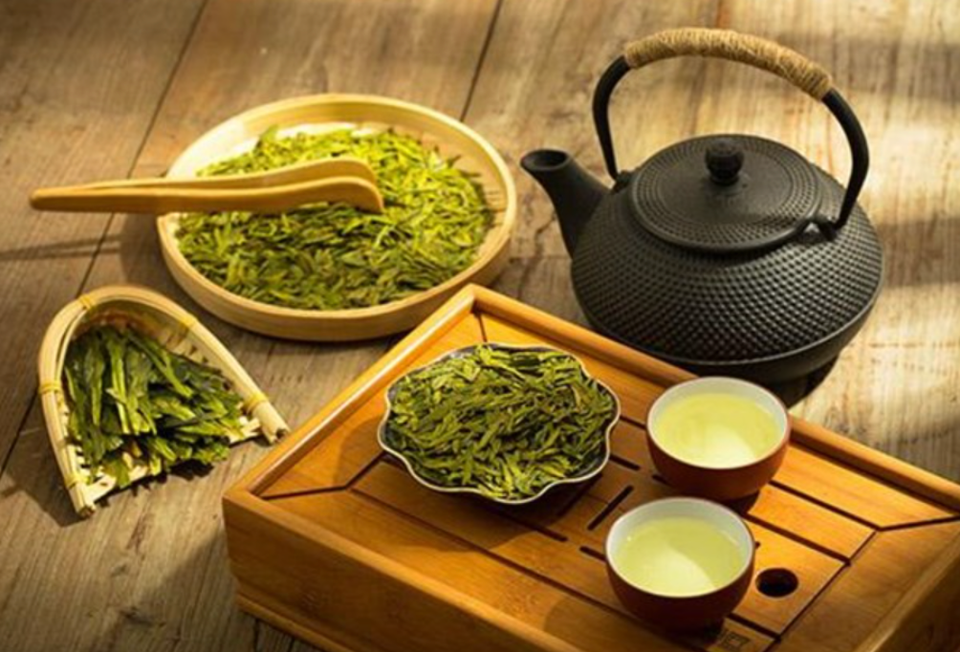
The historical record places the earliest jasmine and osmanthus scenting in the late Song Dynasty, around the 12th century, in the region now known as Guangdong Province. By the Ming Dynasty, scented tea had become genuinely fashionable, driven by a broader cultural obsession with floral imagery across porcelain, painting, and textiles. Jasmine became one of the first scented teas exported from China to the West during the late 1800s, and remains the most internationally recognized example today.
The main flowers used in scented green tea
Jasmine is the original and most famous scented flower, using the Jasminum sambac variety. Jasmine only releases its strongest fragrance at night after the buds open, so harvesting and scenting follow a strict nocturnal schedule: flowers picked in late afternoon while closed, kept cool, then layered with leaves in the evening once petals open. A traditionally scented jasmine green tea made through four proper rounds produces a cup that is fresh, sweet, and only delicately perfumed, the mark of a well-executed batch.
Osmanthus is the second most significant scenting flower for green tea, using the small golden blossoms of the Osmanthus fragrans tree. The fragrance carries a sweetness toward ripe apricot and peach, unlike jasmine's lighter floral character. Research comparing osmanthus-scented green tea against plain green tea found a clear, measurable increase in floral and coconut-like aroma notes. Osmanthus-scented green tea is best consumed within a year, since the fragrance fades over time and, unlike puerh, does not improve with age. Other flowers used historically include Michelia alba, with a sweet, slightly spicy fragrance, and pearl orchid, prized for a more delicate floral note than jasmine.
What genuine scented green tea tastes like
A properly scented jasmine or osmanthus green tea should never taste like flowers floating on top of tea. The goal, as Chinese tea makers describe it, is fragrance absorbed into the bones of the leaf, meaning the floral character and the tea's own natural flavor are fully integrated rather than sitting as two separate things in the same cup.
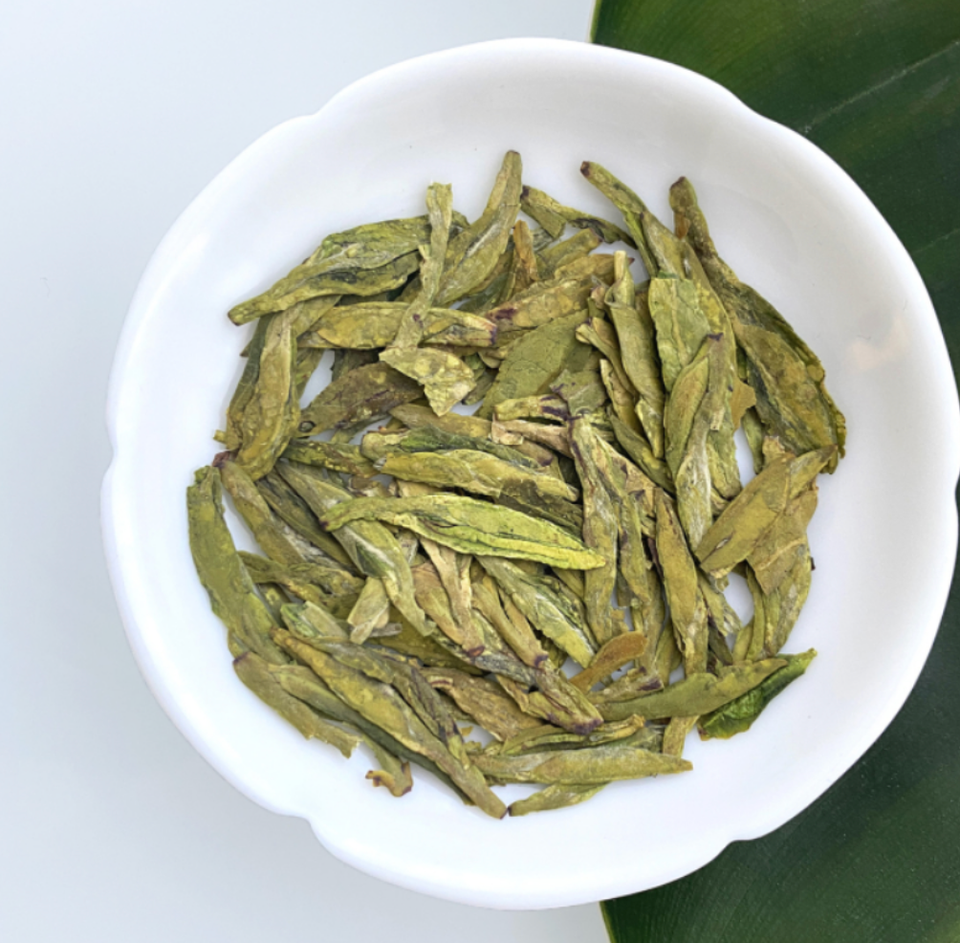
Jasmine green tea brewed properly produces a light, clean cup with a sweetness that builds gradually, a soft floral aroma that never tips into perfume, and a fresh vegetal base from the green tea showing through clearly underneath. Osmanthus green tea has a rounder, fruitier sweetness, with the apricot-like character of the flower complementing rather than masking the tea's freshness. Both should hold their fragrance across at least three infusions, with the floral character typically most pronounced in the second steep once the leaves have fully opened.
The base tea quality matters as much as the scenting itself. A scented tea made from a fine spring green tea will always taste noticeably better than one made from lower-grade summer leaf, regardless of how many scenting rounds it went through. This is why the best scented green teas specify both the flower and the base tea grade.
How to spot the real thing
A handful of practical checks separate genuine scented green tea from artificially flavored versions sold under the same name.
The aroma of genuine scented tea is natural, layered, and slightly subdued rather than sharp or immediately overpowering. Artificial flavoring tends to smell more intense at first contact but fades quickly once water is added, and it often carries a flat, one-note chemical quality rather than the complexity of a real flower's fragrance.
Genuine scented tea is almost never sold with dried flower petals visible in the mix, since the petals themselves are removed after each scenting round and discarded. Tea sold with visible petals mixed in is typically a blended product rather than a properly scented one, and the petals contribute little fragrance of their own once dried.
:strip_icc():strip_exif()/WL_Longjing_2025_3-01KN21XBCMFEQJRXFDT3SB00FN.png)
2025 West Lake Longjing (Dragon Well) Green Tea
From 45 AED
Checking the ingredient list helps as well. A genuine product will list only tea and the named flower. If "natural flavoring" or "flavoring" appears as a separate ingredient, the tea has been sprayed rather than traditionally scented.
Finding scented green tea in the UAE
Genuine scented green tea is becoming more available in the UAE as specialty suppliers source directly from China rather than relying on generic flavored blends.
Jade and Sakura carry jasmine green tea made through traditional multi-round scenting with confirmed sourcing and UAE delivery. For buyers who want a genuinely scented product rather than one sprayed with extract, working with a supplier who can describe the number of scenting rounds and the base tea origin is the most reliable way to buy with confidence.
When evaluating any scented green tea in the UAE, ask specifically how many rounds of scenting were used and what base tea grade was scented. A seller who can answer in detail is very likely offering a genuine, traditionally made product.
How to brew scented green tea
Brewing temperature should match the green tea base rather than the flower, since the flower contributes aroma rather than structure to the brewing process. Use water at 75 to 80 degrees Celsius. Hotter water will scald the delicate leaves and produce a flat, slightly bitter cup that buries the floral fragrance rather than showcasing it.
Use about 3 grams per 150ml of water. A glass cup is worth using for jasmine pearls specifically, since watching the rolled buds slowly unfurl is part of the experience. Steep for one and a half to two minutes on the first infusion. Genuine scented green tea gives three to four good infusions, with the floral character often most vivid in the second steep once the leaves have fully opened and released their absorbed fragrance.
Dubai's heavily treated tap water noticeably affects the delicate aromatic compounds in scented tea. Filtered or still bottled water makes a real and immediate difference here, more so than with almost any other tea category.
Final thoughts
Scented green tea represents one of the more quietly impressive crafts in Chinese tea culture, a process that takes weeks of careful, repeated work to achieve something that, when done well, tastes effortless. The difference between a properly scented jasmine or osmanthus green tea and a sprayed imitation is not subtle once you know what to look for.
For anyone in the UAE curious about this category, starting with a confirmed multi-round jasmine green tea is the most reliable way to understand what genuine scenting actually delivers.
Share this article