
- Beginner's Guide
- Tea Education
The Best China Teas: A Guide to Popular Varieties and Their Benefits
China has been growing and drinking tea for thousands of years, and that history shows in the sheer variety available today. From light, floral whites to deep, earthy Pu-erh, Chinese tea covers more ground than almost any other beverage category in the world. If you've been curious about where to start or want to understand what separates one type from another, this guide covers everything you need to know.
One Plant, Six Very Different Teas
Here's the thing most people find surprising: every traditional Chinese tea comes from the same plant, Camellia sinensis. What creates the differences between a delicate green tea and a bold black tea isn't the plant itself. It's entirely about how the leaves are processed after picking.
The degree of oxidation allowed before the leaves are dried or fired determines the color, flavor, and character of the final cup. Chinese tea is traditionally divided into six categories based on this, and understanding them gives you a working map of the entire world of Chinese tea.
Green tea stops oxidation almost immediately through pan-firing or steaming, locking in freshness and a clean, vegetal sweetness. White tea is simply withered and dried with minimal intervention, resulting in a delicate, honey-sweet character. Yellow tea goes through a unique sealed yellowing step that removes the grassy edge of green tea while keeping a smooth, mellow quality. Oolong is partially oxidized anywhere from 10 to 85 percent, giving it an enormous range from light and floral to dark and roasted. Black tea is fully oxidized, producing a strong, full-bodied cup with natural sweetness. And dark tea, including Pu-erh, undergoes post-fermentation through microbial activity and genuinely improves with age, like fine wine.
China's Most Famous Teas Worth Knowing
Within these six categories, ten teas have earned a special status in Chinese culture for their quality, history, and regional character.
West Lake Longjing
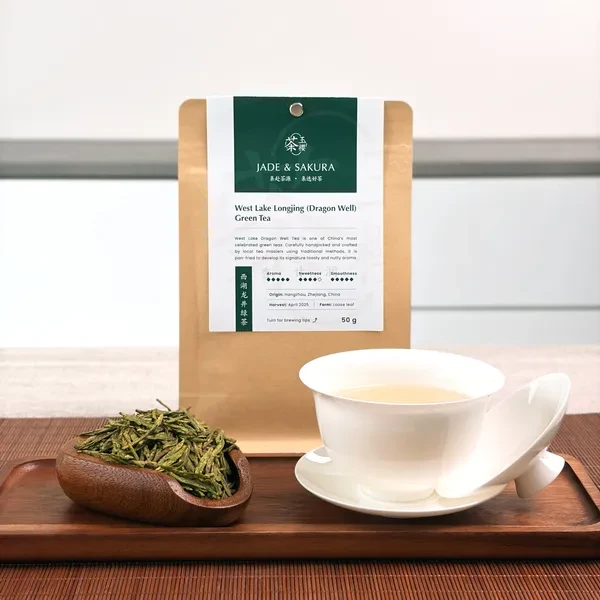
Longjing, also called Dragon Well, is China's most celebrated tea. Grown in the hills surrounding West Lake in Hangzhou, Zhejiang Province, it has been served to emperors and foreign dignitaries for centuries. The flat, jade-green leaves brew a warm, nutty cup with hints of toasted beans and a clean, sweet finish. There's no bitterness in well-made Longjing, just a smooth warmth that explains why it has stayed at the top of Chinese tea culture for so long. Brew it at around 75 to 80 degrees Celsius to keep the delicate flavor intact.
Dongting Biluochun
Biluochun grows alongside fruit trees on Dongting Mountain in Suzhou, and the tea actually absorbs the natural floral fragrance from the surrounding peach and plum blossoms. The tightly rolled leaves open beautifully in water and deliver a fresh, slightly fruity taste with a light sweetness. Emperor Kangxi of the Qing Dynasty gave this tea its current name after encountering it on an imperial tour and being struck by its fragrance.
Wuyi Rock Tea (Yancha)
Wuyi rock teas from the mountains of Fujian Province are among the most complex and sought-after oolongs in the world. The mineral-rich rocky soil of the Wuyi Mountains gives these teas a quality called "yan yun," or rock rhyme, a distinctive mineral depth that you don't find anywhere else. Da Hong Pao is the most famous variety within this category, with roasted, woody notes and a lingering orchid sweetness that stays on the palate long after each sip. A quality Yancha easily gives seven or eight infusions.
Anxi Tieguanyin
Tieguanyin, named after the Buddhist goddess of mercy, is probably the most recognized Chinese oolong tea internationally. It comes from Anxi County in Fujian and is available in two main styles. The light-roasted version is fresh and intensely floral with an orchid fragrance that hits immediately. The traditional roasted version has more body and a toasty warmth with a deep lingering sweetness. Both styles share what tea drinkers call "guanyin yun," a quality resonance in the aftertaste that defines genuine Tieguanyin.
Keemun Black Tea
Keemun comes from Qimen County in Anhui Province and is one of the world's great black teas. First produced in 1875, it has a unique aroma that tea professionals describe as a blend of orchid, rose, and sometimes dried fruit, a quality so distinct it's referred to as "Keemun fragrance." The liquor is a deep amber-red color, smooth and full-bodied, with a naturally sweet aftertaste and no harshness. It's an ingredient in several classic English breakfast blends and has historically been favored by the British Royal Family.
Junshan Yinzhen
Junshan Yinzhen is China's most prized yellow tea, grown on the small Junshan Island in the middle of Dongting Lake in Hunan Province. The humid, mist-filled micro-climate of the island creates ideal conditions for the tender spring buds from which this tea is made. Each needle-shaped bud yields a golden liquor with a mellow, honey-sweet taste and a smooth, clean finish. It's rare even within China, and finding a genuine version outside the country takes some effort.
Huangshan Maofeng
Grown at high altitude in the famous Yellow Mountain region of Anhui Province, Huangshan Maofeng is a top-grade green tea with a soft, rounded character that sets it apart from pan-fired varieties. The slightly curled leaves produce a fresh, gently floral cup with a smooth sweetness and no bitterness. The mountain fog, clean mineral soil, and cool growing conditions at over 800 meters elevation give the leaves a complexity that lower-altitude teas simply can't match.
Xinyang Maojian
One of the few famous Chinese teas grown north of the Yangtze River, Xinyang Maojian from Henan Province, has a more robust character than most southern green teas. The colder growing season concentrates flavor in the young buds, resulting in a rich, fragrant cup that holds its own against better-known varieties. It ranks second in market value among Chinese green teas, which reflects how seriously it's regarded within the country, even if it's less visible internationally.
Lu'an Guapian
Lu'an Guapian is genuinely unusual in the world of Chinese tea because it uses no buds at all, only the second leaf from the branch with the central vein carefully removed. Almost every premium Chinese tea places great value on tender buds, so this approach produces a distinct flavor profile, richer in amino acids and with a deeper body than bud-only teas. The flat, oval leaves look exactly like melon seeds, which is what the name means in Chinese.
Dianhong and Yunnan Black Tea
Dianhong from Yunnan Province represents a different side of Chinese black tea, characterized by its golden tips and a flavor that runs toward chocolate and malt with a natural sweetness and full body. Yunnan's ancient tea trees, some hundreds of years old, contribute a depth and richness to the leaves that makes Dianhong stand apart from both Chinese and Indian black teas.
Health Benefits That Go Beyond the Cup
Traditional Chinese medicine has always understood tea as both a beverage and a medicine, and each category is associated with specific properties. Green tea is cold in nature, clears internal heat, and is one of the most studied teas for its cancer-preventive antioxidants. White tea is cool in nature and associated with liver health. Yellow tea is cool and easy on the digestive system. Oolong is neutral and associated with weight management and smooth digestion. Black tea is warm and supports cardiovascular health and stomach function. Dark tea and Pu-erh are warm in nature and have been used for centuries to support digestion, cut through dietary fat, and warm the body in cold climates.
Modern nutritional science has confirmed many of these traditional associations. The polyphenols, catechins, and L-theanine found across Chinese tea categories contribute to everything from reduced oxidative stress to improved mental clarity and better metabolic function.
Where to Begin
If you're new to Chinese tea, Longjing and Tieguanyin are the most practical starting points. Both are widely available, easy to enjoy without much background knowledge, and genuinely representative of what Chinese tea does at its best.
From there, following your curiosity is the best approach. If you enjoyed the Longjing, exploring other Chinese green teas like Biluochun or Huangshan Maofeng makes sense. If the Tieguanyin appealed to you, diving deeper into Wuyi rock teas opens up an entirely different dimension of oolong. And if you want something that will genuinely surprise you, tracking down a properly aged Pu-erh or a rare Junshan Yinzhen yellow tea is worth the effort.
Chinese tea rewards patience and attention. The more slowly you approach it, the more it gives back.
Share this article