
- Chinese red tea
- Chinese black tea
- Tea Education
Wild Tree Red Tea in Dubai: Why This Rare Yunnan Tea Is Worth Knowing About
Most tea drinkers in Dubai are familiar with black tea in a general sense, the strong, full-bodied cup that goes well with milk or is drunk plain after a meal. What very few people have encountered is wild tree red tea from Yunnan, a category so different from plantation-grown black tea that tasting it for the first time tends to reset expectations entirely. This guide covers what wild tree red tea actually is, why it is produced the way it is, what it tastes like, and why it is becoming one of the more sought-after teas among serious drinkers across the UAE.
What Wild Tree Red Tea Actually Means
The term "wild tree red tea" sounds like marketing language, but it describes something specific and genuinely distinct from most teas on the market.
In Yunnan Province in southwestern China, tea trees that have been growing for hundreds of years still exist across forested mountain slopes at elevations ranging from 1,500 to over 2,000 meters. Some of these trees have never been cultivated in the modern sense. They grow without pesticides, without fertilizers, without irrigation, and without the pruning that keeps plantation tea bushes low and dense. Their root systems have had centuries to reach deep into mineral-rich soil. They share the forest with other plants, insects, and wild organisms that create a living ecosystem the tree has adapted to and thrives within.
When red tea is made from the spring leaves of these trees, the result is something that carries the complexity of that environment into the cup. The flavor is not just "tea." It is layered with the character of old growth, wild soil, and altitude in a way that plantation-grown leaves simply cannot replicate, regardless of how well they are processed.
The Chinese term for genuinely wild tea is Ye Sheng Cha, referring to wild botanical species like Camellia taliensis that grow entirely without human cultivation. A related category, Gu Shu Cha, refers to ancient cultivated trees, often hundreds of years old, that have been allowed to grow freely with minimal intervention. Both categories produce leaves with higher concentrations of natural compounds than plantation bushes, which contributes directly to the depth and complexity of the final tea.
Where It Comes From: Yunnan's Ancient Tea Forests
Yunnan Province is the birthplace of tea. The ancient tea forests of western Yunnan, particularly in areas like Lincang, Daxueshan (Big Snow Mountain), Nannuo Mountain, and the broader Xishuangbanna region, contain some of the oldest tea trees on earth. Trees in certain protected areas are estimated to be anywhere from 200 to over 1,000 years old. These are not collections of small bushes trimmed to waist height for easy harvest. These are trees, sometimes ten meters tall, that take considerable effort to climb and pick from.
Lincang, in particular, is considered a center of wild tree diversity. Scientists studying the genetic origins of tea identified the Baiying Mountain range in Lincang as one of the most important sites in understanding where Camellia sinensis originated. The Lancang River, known internationally as the Mekong, runs through this landscape, and the combination of deep river canyons, wide daily temperature swings, and mineral-rich clay soil creates conditions that produce teas unlike anything grown elsewhere.
The spring harvest from these wild trees, typically gathered between late March and early May, is what becomes wild tree red tea. Because the trees are spread across forest slopes rather than organized into neat rows, harvesting is slow and labor-intensive. This is not a tea that can be produced at scale, which is why genuine wild tree red teas from Yunnan exist in limited quantities and carry prices that reflect that reality.
How the Tea Is Processed
Wild tree red tea is fully oxidized, which places it in the hong cha category, which the West calls black tea. But the way it is processed often differs from conventional Dianhong production, and those differences shape the final cup.
After picking, the leaves are allowed to wither, usually indoors or in partial shade, to reduce moisture and allow the natural aromatics of the leaf to concentrate. Rolling then breaks down the cellular structure of the leaf, initiating oxidation. The leaves are piled and allowed to ferment under controlled humidity and temperature until oxidation is complete. The drying step is where wild tree red teas often diverge from commercial production.
Many premium wild tree red teas are sun-dried rather than machine-dried. The leaves are spread on bamboo trays and dried slowly under natural sunlight over the course of several hours. Sun-drying is a gentler process that preserves more of the leaf's natural sugars and aromatic compounds. Instead of the roasted or slightly smoky character that heat-dried teas can carry, a well-sun-dried wild tree red tea has a clean, bright sweetness and a more open aromatic character.
The result is a tea that is soft on the palate, noticeably smooth, and filled with layers that unfold across multiple infusions.
What Wild Tree Red Tea Tastes Like
This is where it gets interesting, because wild tree red tea from Yunnan does not taste like what most people expect from a fully oxidized tea.
The flavor is not the flat, tannic darkness of a low-grade teabag. It is also not the straightforward malt-and-chocolate sweetness of a standard Dianhong. Wild tree red tea tends to be more complex and more alive, with a floral quality in the aroma and a natural sweetness that is closer to fruit than to sugar.
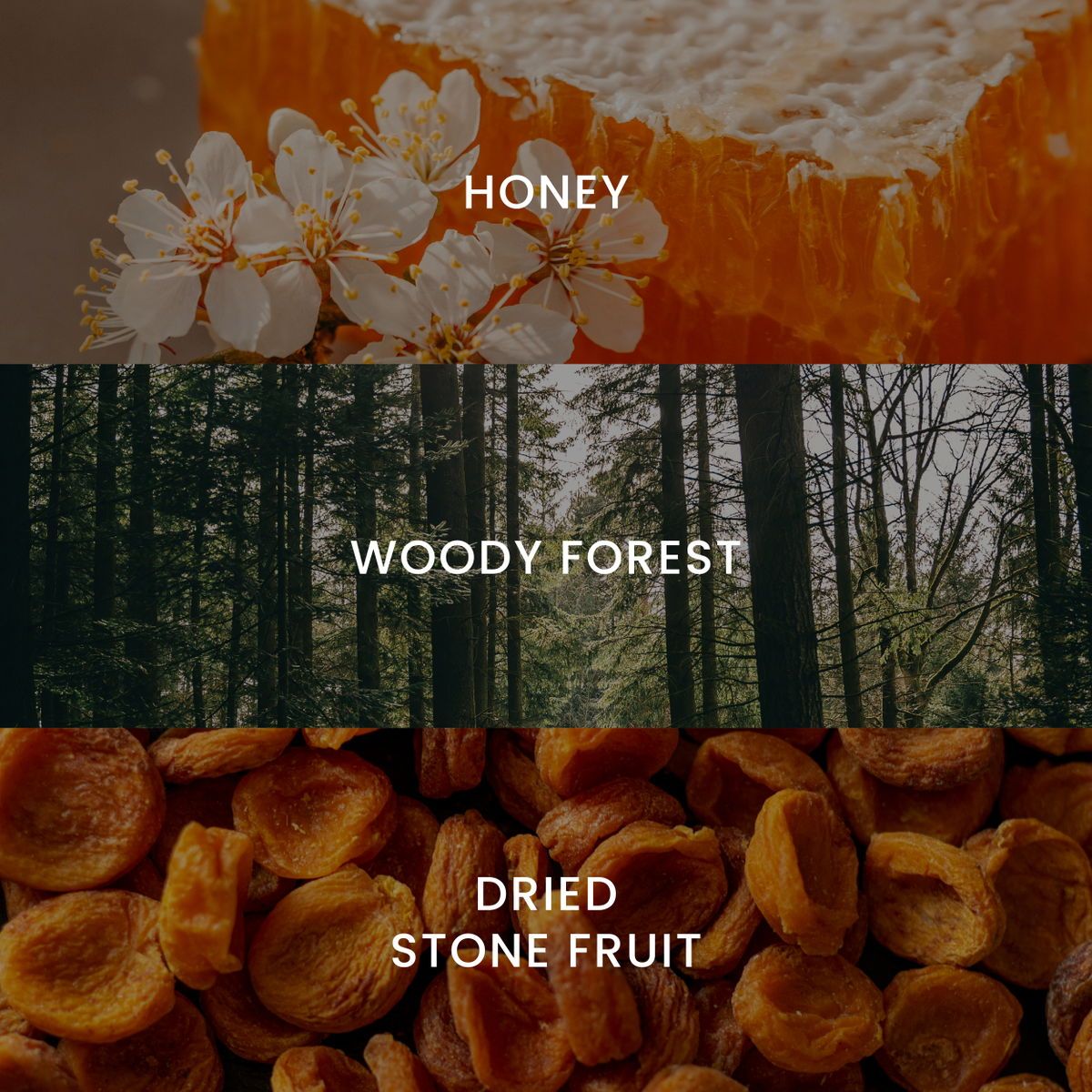
Common tasting notes across different batches and origins include dried stone fruits like plum and apricot, dark berries, honey, and sometimes a subtle hint of flowers or even a very light wine-like quality. The mouthfeel is typically full and round rather than sharp or astringent. The finish is long, with a sweetness that stays at the back of the throat well after the cup is empty.
Ancient tree leaves also contain higher concentrations of certain amino acids, particularly theanine, which contributes to the smooth, almost velvety texture that experienced drinkers associate with gushu teas. This is not a coincidence. Older trees with deeper root systems draw from a larger volume of soil, accumulating more of the minerals and organic compounds that end up in the leaf and ultimately in the cup.
Each spring batch from wild trees will also taste slightly different from the year before, shaped by the particular weather, rainfall, and temperature of that season. This variability is considered a quality of the tea rather than an inconsistency.
Wild Tree Red Tea and the Dubai Tea Market
Finding wild tree red tea in Dubai requires a bit more intention than picking up a generic loose leaf blend, but it is entirely possible for those who know where to look.
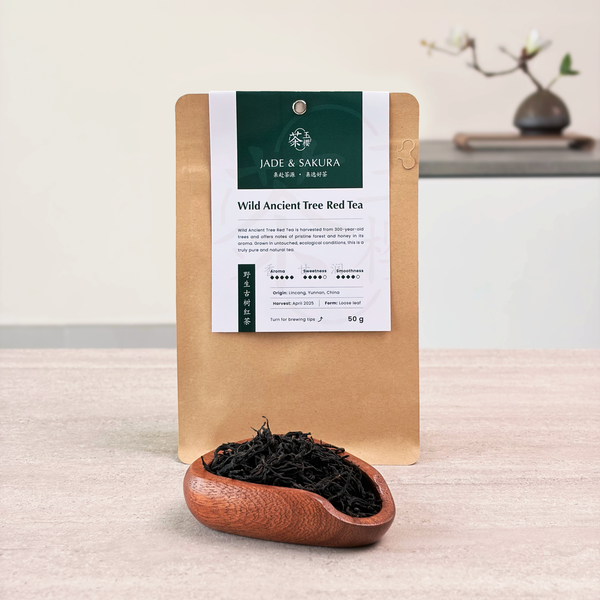
The growth of Dubai's specialty tea market over the last several years has created space for small, quality-focused suppliers who source directly from farmers in Yunnan and other Chinese tea regions. Jade and Sakura, based in the UAE, are one of those suppliers. Their 2025 Wild Ancient Tree Red Tea is produced from old-growth trees in Yunnan, sourced directly from trusted farmers, and is available online with delivery across the UAE. For tea drinkers in Dubai who want to try a genuine wild tree red tea without sourcing it internationally, this is one of the most straightforward options currently available locally.
2025 Wild Ancient Tree Red Tea
From 65 AED
When buying any wild tree red tea, whether from a UAE-based seller or elsewhere, a few things are worth checking. Genuine wild tree or ancient tree teas should have clear origin information, ideally specifying the mountain, region, and harvest date. Spring harvest is typically the most complex and aromatic. Sun-dried processing is worth seeking out for its cleaner, brighter character. And pricing should reflect the reality that these teas are harvested by hand from difficult terrain in limited quantities. Very cheap "wild tree" teas are almost always not what they claim to be.
How to Brew Wild Tree Red Tea Properly
Wild tree red tea from Yunnan brews best with the Gongfu method using a small gaiwan or clay teapot, around 100 to 150ml.
Use about 5 grams of tea per 100ml of water. Water temperature should be around 90 to 95 degrees Celsius. A quick rinse at the start, five seconds, and then discard, opens the leaves and prepares them for the first proper infusion.
For the first steeping, brew for 15 to 20 seconds only. Pour completely and drink. Add 10 seconds per round for subsequent infusions. A quality wild tree red tea will hold for six to ten infusions, with the flavor profile shifting noticeably across rounds. Early infusions tend to be more floral and aromatic. Middle rounds develop more body and fruit depth. Later rounds become softer and quieter but still pleasant.
If you prefer Western-style brewing, use 3 grams per 200ml and steep for two to three minutes at 90 degrees Celsius. You get fewer infusions this way, but a simpler and very satisfying cup.
Filtered or still bottled water makes a meaningful difference. Dubai's tap water is heavily treated and tends to flatten the subtler notes of a delicate wild tree tea.
Final Thoughts
Wild tree red tea is one of the more honest arguments for why tea origin actually matters. The difference between a leaf grown in good conditions from an ancient tree on a Yunnan mountainside, and a leaf from a pruned plantation hedge, is not subtle once you have tasted both side by side.
For anyone in Dubai curious about what tea can actually be, this category is worth starting with. Brew it slowly, use clean water, and pay attention to each infusion. The tea tends to reward that kind of attention more than most.
Share this article