
- Puerh Tea
- Ripe Pu-erh
- Tea Education
Xinhui Tangerine Tea in the UAE: The Story Behind Xiao Qing Gan and Why It Is Worth Knowing
Some teas are interesting because of their flavor. Some are interesting because of their history. Xinhui tangerine tea is interesting because of both, and also because of its form: a whole, hollowed young tangerine packed with ripe puerh leaves and dried until the fruit and the tea have become one inseparable thing. It is one of the most distinctive products in Chinese tea culture, and it is becoming increasingly available in the UAE for anyone curious enough to look for it. This guide covers what Xinhui tangerine tea actually is, where the two ingredients come from, how the combination is made, what it tastes like, and why people who discover it tend to keep coming back to it.
Two Ingredients, One Tea
Xinhui tangerine tea goes by several names. Xiao Qing Gan, which is the most precise Chinese term, translates directly as small green tangerine. Gan Pu Cha, or Chenpi Puerh, is the more general category name covering tangerine peel combined with puerh in various forms. In English, it is most often called tangerine puerh or mandarin puerh.
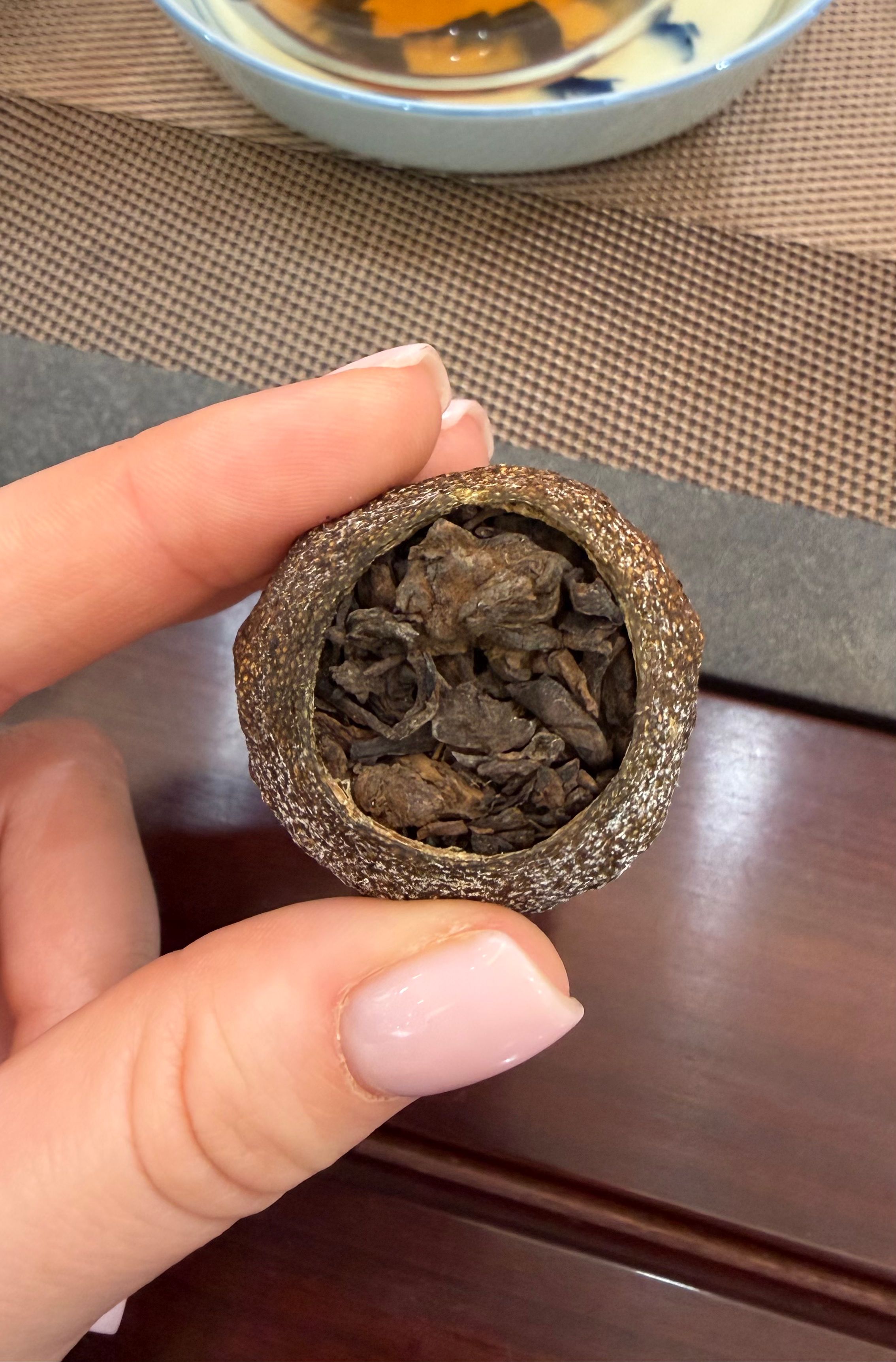
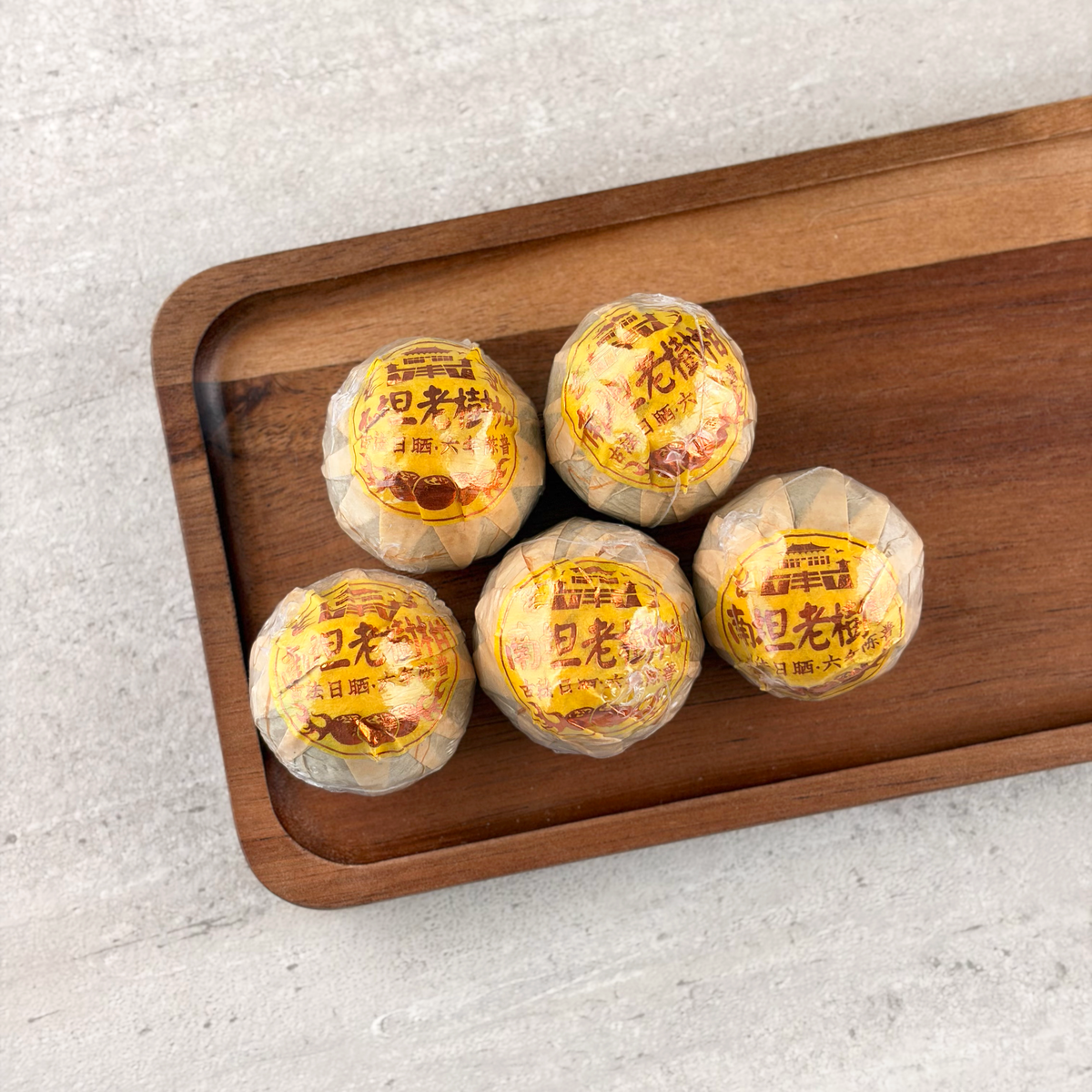
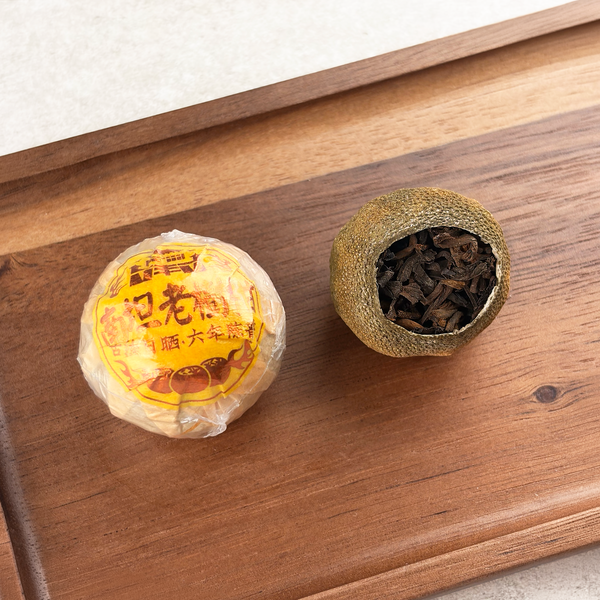
The tea is exactly what it sounds like: a small whole tangerine, harvested while still young and green before it ripens, is hollowed out carefully by hand. The removed fruit is dried separately, sometimes repurposed as juice. The empty shell is then filled tightly with ripe puerh tea leaves from Yunnan Province. The filled tangerine is then dried, either in the sun over several days or in a low-temperature drying oven, until the peel has hardened around the packed tea inside. The result is a small, firm, dark ball about the size of a golf ball that can be stored whole and broken open when it is time to brew.
To drink it, you break or cut the dried tangerine and use the peel and the tea together. The two have spent their drying and aging time in close contact, and their flavors have merged into something that neither ingredient could produce alone.
2024 Tangerine Ripe (Shou) Pu'er
79 AED
Why Xinhui Specifically
Not just any tangerine peel qualifies for this tea. The specific ingredient that defines Xiao Qing Gan is the chenpi from Xinhui District in Jiangmen City, Guangdong Province, and this distinction is taken seriously enough that only puerh stuffed into Xinhui tangerines can legitimately carry the Xiao Qing Gan name.
Xinhui has been cultivating its local Chazhigan tangerine variety for over 700 years. The district sits in a subtropical climate zone with rich alluvial soil, abundant rainfall, and warm temperatures that suit the local citrus cultivar. The peel of the Xinhui tangerine is uniquely dense in volatile essential oils and flavonoids, compounds that are concentrated in the oil cells visible as tiny raised dots on the surface of the dried peel. These compounds are what give the peel its medicinal properties and its complex, layered fragrance.
Historically, Xinhui chenpi, which is the general name for Xinhui dried tangerine peel, was recorded in the classic Chinese medical text Bencao Gangmu by Li Shizhen during the Ming Dynasty as superior to chenpi from all other regions. It became a tribute item during the Ming and Qing dynasties, meaning it was considered valuable enough to present to the imperial court. In traditional Cantonese culture, it is listed as one of the Three Treasures of Guangdong alongside aged ginger and rice straw, a designation that reflects its deep integration into the food, medicine, and daily life of the region.
The five core villages within Xinhui that produce the highest quality tangerines for this purpose are Chakeng, Tianma, Meijiang, Dongjia, and Xijia. Tea from tangerines grown in these specific areas commands the highest prices and the most collector attention.
The Two Harvesting Stages and What They Produce
Xinhui tangerines used for tea are harvested at two different stages of ripeness, and each produces a noticeably different product.
Xiao Qing Gan, the green tangerine, is harvested in summer while the fruit is still small, firm, and unripe. At this stage, the peel is thin and dense with volatile oils, producing a particularly sharp, zesty, intensely citrus character. The aroma is fresh and almost herbal, with a brightness that contrasts beautifully with the earthy depth of the ripe puerh inside. This is the format most widely associated with the Xiao Qing Gan name and the one most commonly available outside China.
Da Hong Gan, or red tangerine, is harvested in autumn or winter after the fruit has fully ripened. The peel is thicker, the essential oils have mellowed and become more complex, and the dried peel carries a sweeter, warmer fragrance. The resulting tea is fuller-bodied and gentler than the green version, with a more integrated citrus-puerh character. This format is rarer and typically more expensive.
Fresh chenpi from young tangerines also ages beautifully over time. A Xiao Qing Gan stored properly over several years develops progressively more complex, sweeter, and more layered peel characteristics as the sharp volatile oils mellow and the deeper aromatic compounds develop. This is why collectors invest in older vintages and why some Xinhui chenpi, without any tea inside at all, can command prices comparable to premium aged puerh.
What It Tastes Like
Xinhui tangerine tea produces a cup that is unlike anything else in the tea world. The puerh base provides the smooth, dark, earthy body that good shou puerh always delivers. The Xinhui peel wraps around it with a warm citrus note that is not sharp or acidic but soft, fragrant, and lingering.
The combination in the cup is simultaneously warming and refreshing. The earthiness of the puerh grounds the citrus brightness of the peel, and the citrus lifts the heaviness of the puerh. The two balance each other in a way that feels intentional rather than arbitrary, which is part of why this combination has survived in Chinese tea culture for centuries.
Common tasting notes include warm dried citrus, gentle earth, dark wood, honey, and sometimes a faint spice note. The aftertaste is long and sweet, with the citrus fragrance rising through the finish in a way that distinguishes it clearly from plain puerh. The liquor color is a deep amber-red.
Aged versions, particularly those stored for three or more years, develop even more integration between the peel and the tea, with the citrus quality becoming deeper and less sharp and the overall profile gaining warmth and complexity.
Health Properties That Have Been Used for Centuries
Xinhui tangerine tea brings together the documented health properties of both its ingredients.
Ripe puerh on its own is associated with digestive support, fat metabolism, and cardiovascular health through its fermentation-derived polyphenols, including theabrownins. In traditional Chinese medicine, it is warm in nature and used specifically to support the stomach and digestive system.
Xinhui chenpi adds its own significant layer. The two main bioactive compound groups in the peel are volatile essential oils and PMF flavonoids, particularly hesperidin and nobiletin. Hesperidin has been studied for anti-inflammatory effects and cardiovascular support. Nobiletin, found in high concentrations in Xinhui chenpi specifically, has attracted research interest for its effects on metabolism and brain function. Traditional Chinese medicine uses chenpi to regulate qi, resolve phlegm, support digestion, and relieve respiratory congestion. The records of its medicinal use in authoritative texts go back over a thousand years.
The combination of puerh and chenpi has been used in Cantonese folk medicine as a remedy for digestive discomfort, heavy meals, and cold-weather warming for generations. In the UAE, where rich meals and digestive comfort are both everyday concerns, this dual-action profile makes the tea genuinely useful alongside its considerable pleasures as a beverage.
How to Brew Xinhui Tangerine Tea
One tangerine is typically one serving. To brew it, use a puerh pick or knife to carefully break the dried tangerine into pieces. Do not try to squeeze the whole ball into a small teapot. Breaking it opens the peel and allows the tea inside to expand freely.
Place the broken pieces, peel and tea together, into a gaiwan or small clay teapot. Use fully boiling water at 95 to 100 degrees Celsius. Start with a rinse: pour boiling water over the pieces, wait ten seconds, and discard. This first rinse is particularly important for tangerine puerh because it removes any loose surface material and begins waking up both the peel and the packed tea leaves.
First infusion: 20 to 30 seconds. Pour completely and drink. The early infusions will be more intensely citrus-forward. Add 15 seconds per round. As the session progresses, the citrus brightness softens, and the puerh's earthy character becomes more prominent. A quality tangerine puerh gives eight to twelve comfortable infusions before the flavor fades, and a good one can go much further.
If you would rather keep the tangerine whole, there is another way the farmer we buy from in Xinhui showed us. Pour the hot water into the small hole at the top, then circle the kettle around the outside of the tangerine so the water draws flavor from the peel as well as the leaves.
For a simpler approach, simmer the pieces in a small pot of water at low heat for five minutes. This produces a full-bodied, deeply warming cup that works particularly well in cooler weather or as an after-dinner digestive tea.
Where to Find It in the UAE
At Jade and Sakura we carry the 2024 Tangerine Ripe (Shou) Pu'er. Each piece is one whole Xinhui tangerine from the Chazhi Gan cultivar, packed with ripe puerh and aged together, bought directly from a farmer in Xinhui who has been making them for years. It comes in a pack of five for AED 79, with delivery across Dubai and the UAE. The dry fruit smells very sweet, but the cup is brighter and cleaner than you expect, a clean orange note sitting over the woody shou underneath.
When evaluating any Xiao Qing Gan before buying, two things matter most. First, confirm the Xinhui origin for the tangerine peel. Generic Chinese tangerine peel without specific Xinhui labeling is typically a lower-grade product with a different chemical profile. Second, confirm that the puerh inside is shou, or ripe puerh, from Yunnan Province. Some products use raw puerh or non-Yunnan tea, which produces a significantly different and usually less harmonious result.
Sun-dried tangerines are worth seeking out over oven-dried versions. The slower drying process preserves more of the volatile essential oils in the peel and produces a more aromatic and complex cup.
2024 Tangerine Ripe (Shou) Pu'er
79 AED
Final Thoughts
Xinhui tangerine tea is one of those products that sounds unusual until you actually try it, and then it makes complete sense. The combination of Guangdong's most prized citrus peel and Yunnan's most accessible dark tea is not a gimmick. It is a pairing that has been refined over centuries of use in both medicine and daily life, and it delivers something that neither ingredient produces alone.
For anyone in the UAE exploring Chinese tea beyond the standard categories, Xiao Qing Gan is one of the more rewarding detours you can take.
Share this article