
- White Tea
Shoumei White Tea in Dubai
Most people who discover Chinese white tea start with Silver Needle or White Peony. They are the celebrated names, the ones written about in tea books and displayed prominently in specialty shops. What gets far less attention, and often far more loyal daily drinkers, is Shoumei. It is the fourth and most robust grade of Fuding white tea, picked later in the season from more mature leaves, and it has a character that Silver Needle simply does not have: boldness, body, and a capacity to age into something deeply complex and genuinely remarkable. In Dubai, where specialty Chinese tea is increasingly available, Shoumei is worth knowing not as a second choice but as a category worth exploring on its own terms.
The Name and What It Means
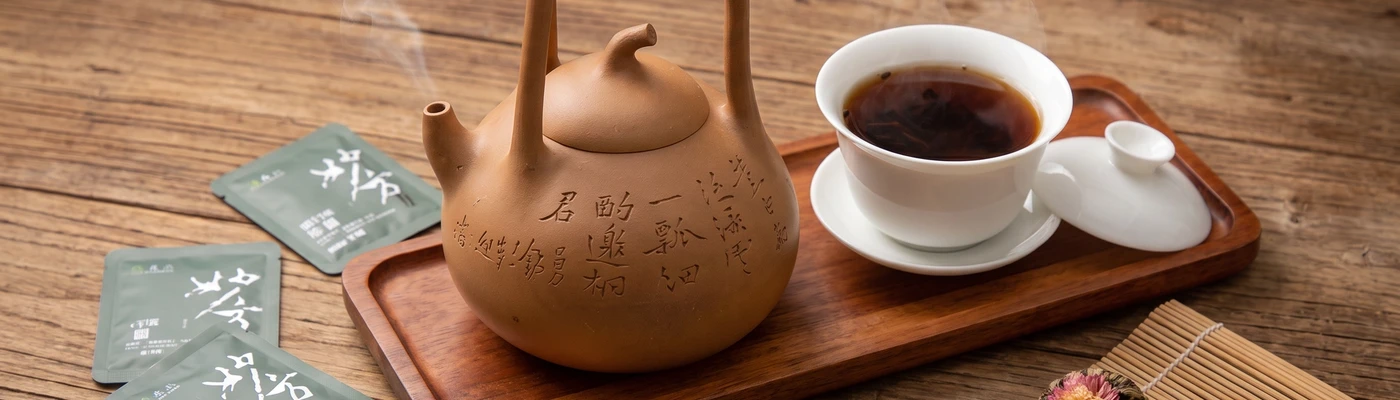
Shoumei is written as 寿眉 in Chinese. Shou means longevity, a word that carries significant cultural weight in Chinese tradition and is associated with health, long life, and prosperity. Mei means eyebrow. The name comes from the curved, arching shape of the mature dry leaves, which were said to resemble the long, full eyebrows of a healthy elderly person, a shou xing or longevity star in Chinese folk iconography.
In the dialect of Fuding, the city in Fujian Province most closely associated with white tea production, Shoumei goes by another name: , which translates roughly as rough tea mother-in-law. It is not a flattering nickname, but it reflects something honest about the tea's origins.
Before it became a collector's item and a specialty product, Shoumei was the daily working tea of the tea farmers themselves. Before heading into the mountain gardens at dawn, farmers would brew a pot of Shoumei, pour it into a flask, and carry it with them to drink throughout the day. It was practical, robust, abundant, and genuinely satisfying. That character is still there in every good batch.
Where Shoumei Sits in the White Tea Hierarchy
Understanding where Shoumei fits in the Fuding white tea system helps explain what it is and why it behaves the way it does.
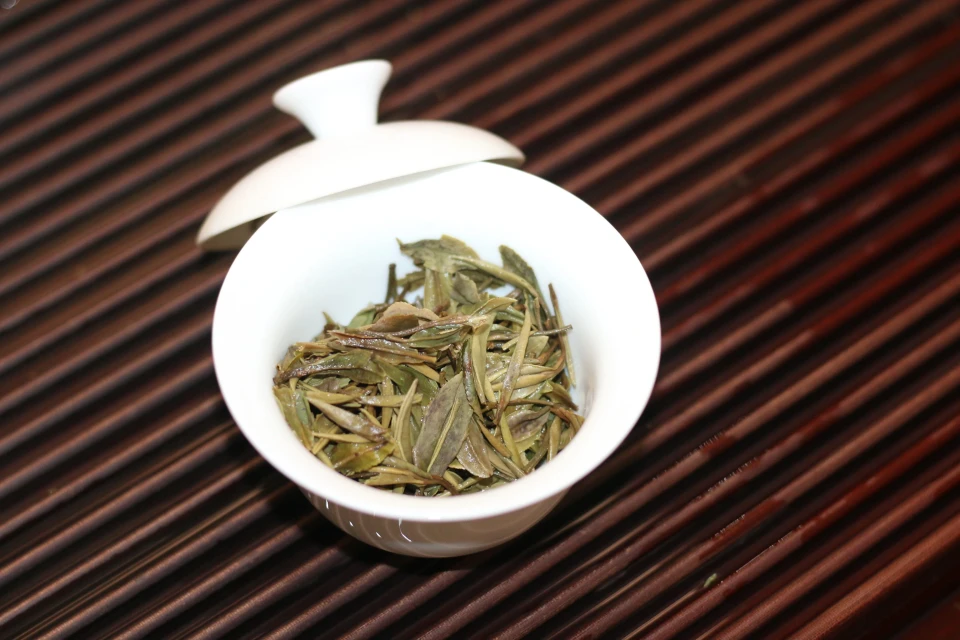
Fuding produces four main grades of white tea based on when during the growing season the leaves are picked and how many buds are included. Silver Needle uses only the single, unopened spring bud, picked at the very start of the season. White Peony picks one bud with two young leaves, slightly later. Gong Mei, which means tribute eyebrow, uses one bud with more than two leaves. And Shoumei, at the bottom of the grade hierarchy, uses mature leaves with few or no buds, harvested later in spring or in autumn after the premium grades have already been picked.
Accounting for over 50 percent of total Chinese white tea production, Shoumei is the most produced white tea in the country. It's relatively relaxed picking standard means yield is significantly higher than Silver Needle or White Peony, and the price reflects this. What it sacrifices in delicacy it more than compensates for in strength of character, depth of flavor, and crucially, aging potential.
How Shoumei Is Processed
The processing of Shoumei follows the same minimal approach as all Fuding white teas. After picking, the leaves are spread in a single layer on bamboo drying trays and allowed to wither naturally. This withering process takes 36 to 72 hours, depending on the weather, temperature, and humidity. During this time, moisture evaporates from the leaf, and slow enzymatic activity begins transforming the raw compounds inside.
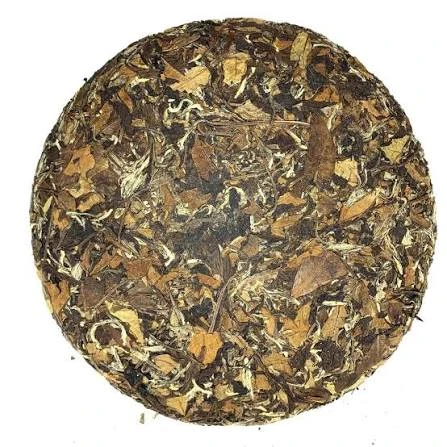
No pan-firing happens. No rolling. No shaping. The leaves are allowed to take their natural form, which is why dried Shoumei looks loose and slightly rough compared to the neat, flat leaves of Longjing or the tight spirals of Biluochun. After withering, a gentle low-temperature drying step stabilizes the remaining moisture and prepares the tea for storage.
:strip_icc():strip_exif()/2020_Shoumei_1-01KQA4BPS6W0YTPZJ1CJTTCBF1.png)
2020 Fuding Shoumei White Tea
29 AED
Because the enzymes responsible for oxidation are not deactivated by heat during processing, they remain active in dried Shoumei leaves. This is the key to white tea's aging potential. Those active enzymes continue working slowly over months and years, gradually transforming the compounds in the leaf and changing both the flavor and the health properties of the tea over time.
Shoumei is also the white tea most commonly pressed into cake form. Compression into round cakes or bricks using steam and stone molds is the traditional format for aging, borrowed from Pu-erh culture. The compressed environment slows oxidation in the center of the cake slightly differently than loose leaf storage, creating a distinct aging profile that dedicated collectors specifically seek out.
What Shoumei Tastes Like Fresh
Fresh Shoumei, from the spring or autumn harvest within its first year, has a character that surprises people who expect white tea to be uniformly delicate.
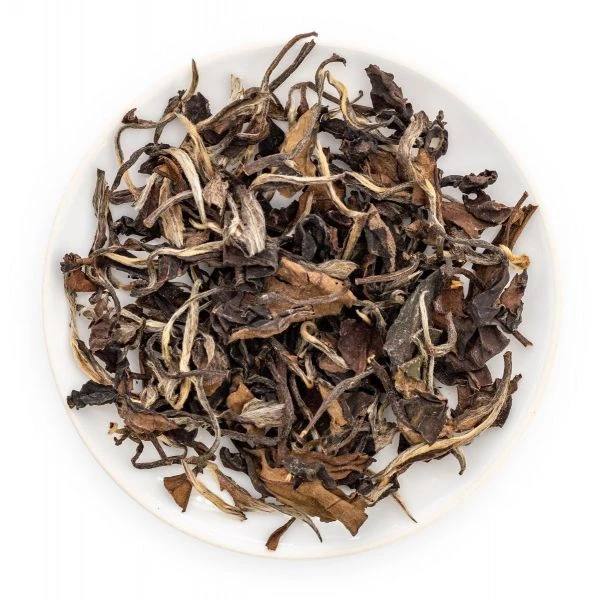
The liquor is a clear golden-yellow, brighter and more vivid than you might expect. The aroma is clean and fresh with herbal notes, something between dry hay and wildflowers, earthier and less floral than Silver Needle but still distinctly pleasant. The taste is smooth and naturally sweet with no bitterness, and the body is noticeably fuller than Silver Needle or even White Peony. There is a robustness to Shoumei that makes it feel more substantial in the cup, a quality that comes directly from the more mature leaves.
:strip_icc():strip_exif()/White_Tea_2017_1-01KPTKAF1HCVE0YM34DVAXK8G1.png)
2017 Fuding Shoumei White Tea
39 AED
Autumn Shoumei is worth mentioning separately. The cooler temperatures of the autumn growing season produce leaves with a different character from spring: a slightly stronger, warmer flavor profile with more pronounced herbal notes and a deeper natural sweetness. Many regular Shoumei drinkers actually prefer the autumn harvest specifically because of this added warmth, and it tends to be priced more affordably than spring grades as well.
What Aged Shoumei Tastes Like
This is where Shoumei becomes genuinely interesting for collectors and serious drinkers.
After three to five years of proper storage, the fresh herbal notes of young Shoumei give way to something warmer and richer. The liquor deepens to a warm amber. Dark honey appears in the taste, along with dried fruit, most distinctly jujube, the Chinese red date that appears throughout traditional Chinese medicine and cuisine. The mouthfeel thickens and becomes almost syrupy. The astringency that some fresh batches carry disappears entirely.
:strip_icc():strip_exif()/2018-gong-mei-1-01KQD3PH50EFJ234RTD8EAQ5ZR.png)
2018 Fuding Gong Mei White Tea
29 AED
After seven years or more, the transformation is more dramatic still. The liquor darkens toward deep amber or reddish-brown. Medicinal herb notes develop, the kind of warm, slightly woody depth that traditional Chinese medicine teas carry. Some well-aged batches develop notes of cinnamon, caramel, and dried flowers alongside the jujube. The aftertaste, the hui gan or returning sweetness, becomes long and deeply warming.
A 2003 Shoumei cake that has been stored correctly through two decades represents something genuinely remarkable: a tea whose entire character has transformed from the robust everyday brew it was when picked into something that rewards every sip with layers of complexity. These older cakes are collectibles in the truest sense and are treated as such by the people who seek them out.
Health Properties Across Fresh and Aged Versions
Shoumei's health profile shifts noticeably with age, and understanding both versions is useful.
Fresh Shoumei is rich in polyphenols and catechins, the same antioxidants studied extensively in green tea research. These compounds support cardiovascular health, help manage cholesterol, and protect cells from oxidative damage. The caffeine content of Shoumei is typically lower than that of Silver Needle or White Peony because mature leaves contain less caffeine than young buds, making it a reasonable choice for people who are sensitive to caffeine or want a lower-stimulation daily drink. Estimates place Shoumei at roughly 14 to 61mg of caffeine per 240ml cup, compared to 80 to 150mg in a typical coffee.
Aged Shoumei carries a different but related health profile. As polyphenols break down during aging, the antioxidant content decreases somewhat, but new compounds form that have their own documented properties. The brownines, which increase significantly during aging, have been associated with anti-inflammatory effects and support for gut health. The increased soluble sugars and reduced bitterness make aged Shoumei notably gentler on the stomach and easier to drink on an empty stomach than most other teas.
In traditional Chinese medicine and Fuding folk practice, aged white tea, including aged Shoumei, has long been used to reduce fever and relieve sore throat, to support liver function, and to aid digestion after heavy meals.
Shoumei in Dubai and the UAE
Finding genuine Shoumei in Dubai requires knowing where to look. It is not as commonly stocked as green tea or oolong in most shops, but specialty Chinese tea suppliers do carry it.
Jade and Sakura carry Shoumei as part of their Chinese white tea range, with sourcing from Fujian Province and UAE delivery. For buyers who want confirmed Fuding origin and both fresh and aged options, this is one of the more direct local sources.
When buying Shoumei, the most important things to check are the origin and storage history. Confirmed Fuding or Zhenghe origin matters more with Shoumei than with some other teas because the terroir and cultivar contribute directly to the flavor and aging potential. For aged Shoumei specifically, look for sellers who can confirm the production year and describe how the tea was stored between production and sale.
Loose-leaf and pressed cake formats are both worth trying. Fresh Shoumei is most commonly available loose. Aged Shoumei is more often found in cake form, which is how most producers choose to store it for long-term aging.
How to Brew It
Young Shoumei brews best at 85 to 90 degrees Celsius using a gaiwan or small teapot. Use 4 to 5 grams per 100ml and steep for 20 to 30 seconds on the first infusion, increasing by 10 to 15 seconds per round. Young Shoumei gives five to seven good infusions.
Aged Shoumei can handle fully boiling water and benefits from it. The more mature compounds in an aged leaf open better with heat. Use 5 grams per 100ml, start with a 10-second rinse and discard, then steep for 20 to 30 seconds on the first round, increasing from there.
Simmering is worth trying for aged Shoumei aged five years or more. Place 5 grams in 500ml of cold filtered water, bring to a boil, then simmer for three minutes. This produces a rich, full-bodied cup with deep honey and jujube notes that the quick steeping method does not always pull out completely. In colder months, especially, a simmered cup of aged Shoumei is genuinely one of the more warming things you can drink.
:strip_icc():strip_exif()/Box_Main_2-01KQF0F0PH6E89FZMH4H5RX6SD.png)
Discovery Box
89 AED
Dubai tap water flattens the sweetness of good Shoumei noticeably. Filtered or still bottled water makes a real difference.
Final Thoughts
Shoumei is the tea that rewards loyalty. Drink it fresh, and you find a robust, naturally sweet everyday companion that is easier on the body than coffee and more satisfying than most generic teas. Store it carefully for a few years, and you find something richer and warmer. Store it for a decade, and you find something that collectors spend real money chasing.
2018 Fuding Gong Mei White Tea
29 AED
For anyone in Dubai who takes Chinese tea seriously, Shoumei is worth exploring as its own category rather than treating it as a budget alternative to Silver Needle. It is a different tea entirely, and on its own terms, one of the most interesting in the entire world of white tea.
Share this article