2025
2025 Da Hong Pao
Qualifies for free shipping
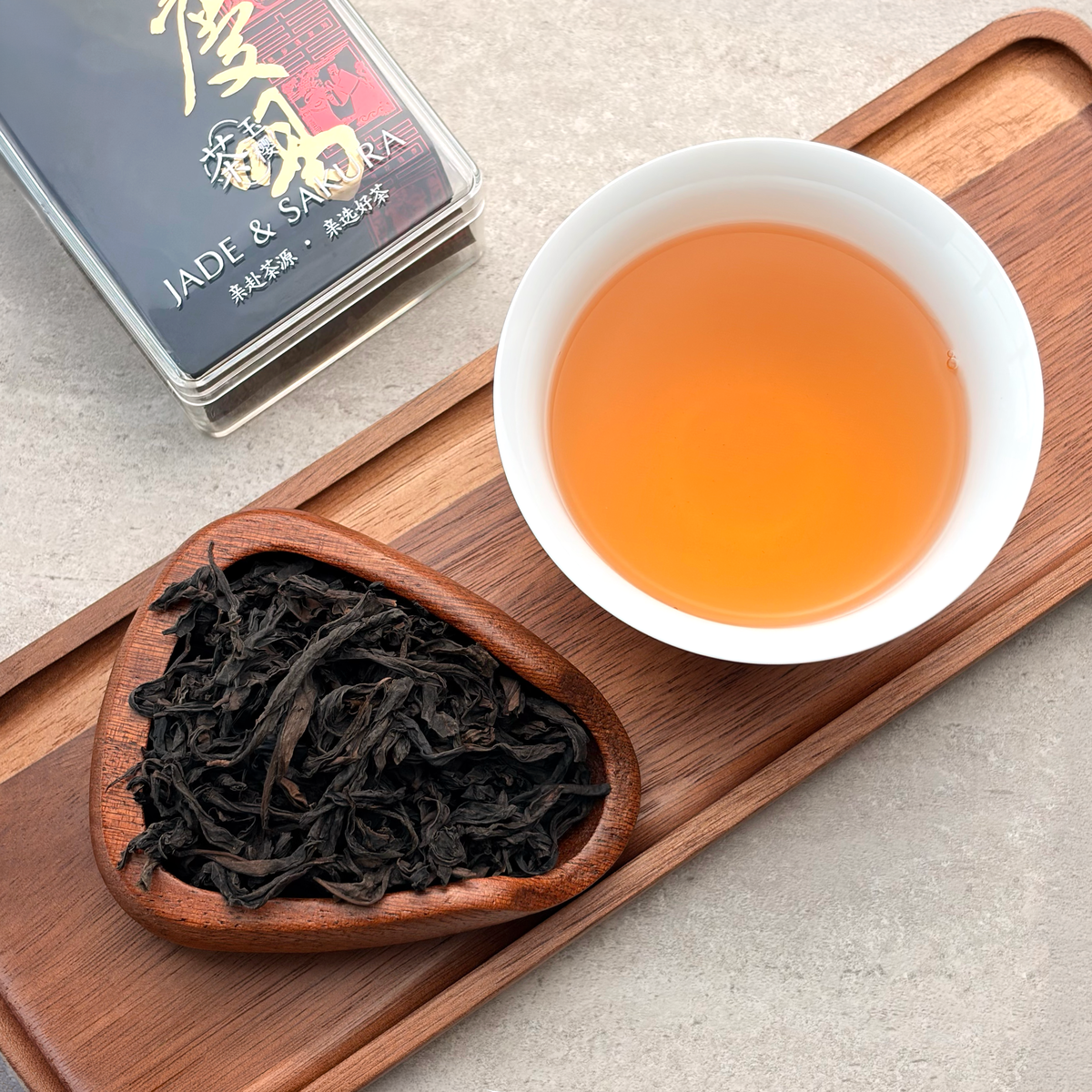
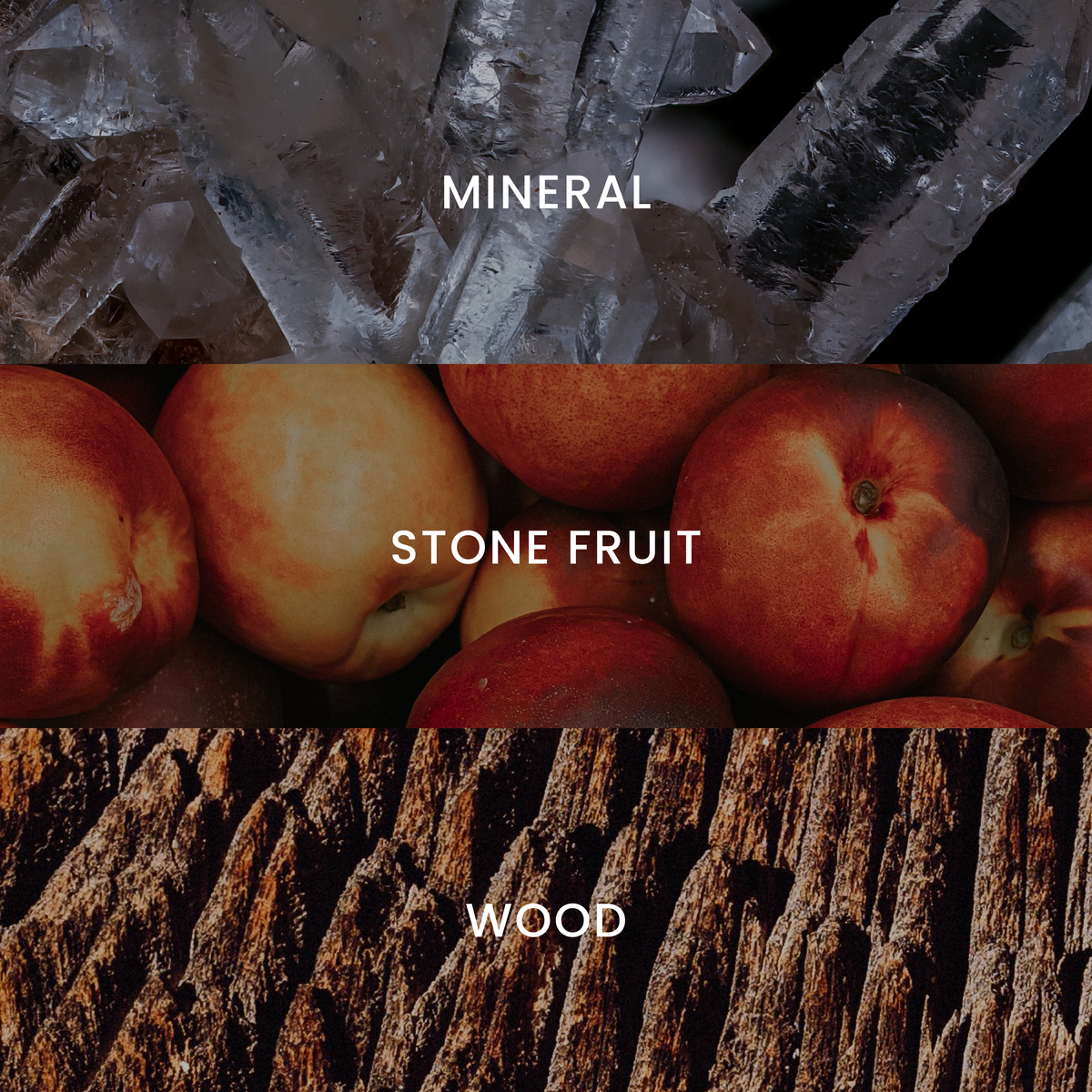
A medium-roast Wuyi rock oolong from inside the protected zhengyan area on Wuyishan. Mineral, woody, with dark stone-fruit on the finish.
Questions? Message us on WhatsAppDirect from the farm
Bought in person from the farmer who made it, on a yearly sourcing trip to China.
Tasted before bought
We taste every lot ourselves before we buy, often against alternates from the same village.
Small lots, single origin
Every tea is named by its village, farmer, and harvest year. Never a warehouse blend.
What is Da Hong Pao?
Da Hong Pao means "Big Red Robe," after the legend of a few mother bushes on the Wuyi cliffs that supposedly cured an emperor's mother. Most Da Hong Pao on the international market is grown well outside Wuyishan and over-roasted to fit the name. The lots worth drinking come from inside the Wuyi Shan protected area, called the zhengyan or true-cliff zone, where the rocks themselves end up in the cup.
This is one of those. Grown and processed inside the protected area, charcoal-finished at a medium roast, and rested afterwards to let the fire settle.
Our Note
Honestly I went into Wuyi thinking we might not bring back a Da Hong Pao at all. Most of what we'd tasted on the trip was over-roasted and not much else, the same thing you get on a restaurant menu. This one was lower-roast than I expected. The third steep was when I noticed the rock sitting at the back of the throat, and Alisa caught it at the same time. We bought it before we got up from the table.
- Daniil
Why this tea
- 01
From inside the Wuyi protected area
Grown and processed in the zhengyan zone, where the mineral character actually comes from the rock. Most commercial Da Hong Pao is grown outside the protected area and finished to fit the name.
- 02
The Da Hong Pao behind the name
Most people only meet this tea on restaurant menus, where it's a generic dark roasted oolong. This is the version the name was originally about.
Tasting Notes
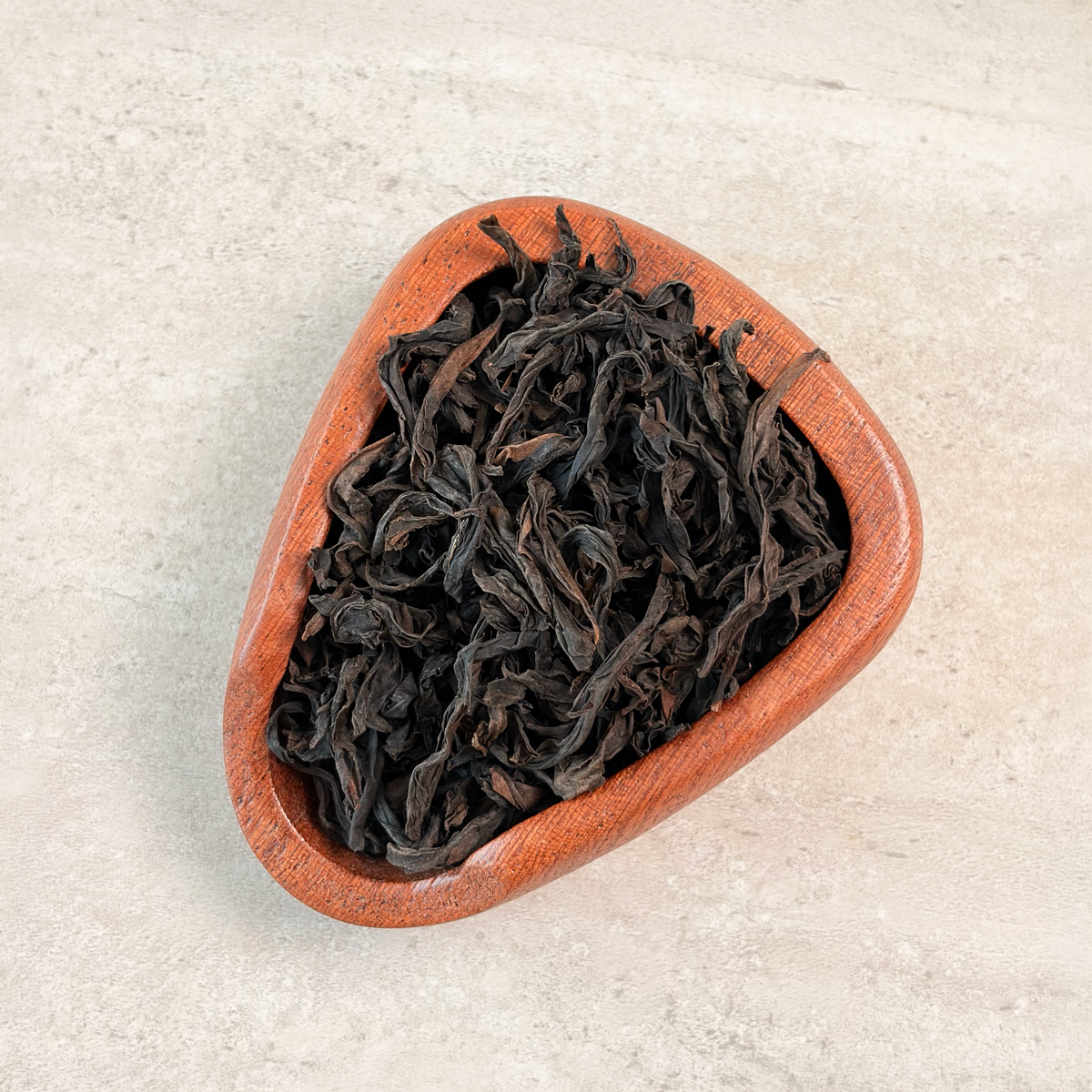
Dark amber in the cup. The dry leaf smells like a campfire and warm wood; once brewed, the cup is mineral and dark stone fruit, with a finish that sits low in the throat. The third and fourth steeps are usually the best.
Oxidation
Stimulation
Fermentation
Body
Brewing Instructions
- Amount
- 5 gper 200 ml
- Temperature
- 95–99°C203–210°F
- Infusion Time
- 5 sec
- Infusions
- Up to 10
Rinse the leaves once with hot water before the first steep.
Aging & Storage
Keep sealed in a cool dark cupboard, away from heat, light, and anything strong-smelling. Roasted oolongs are more forgiving than green or light styles, but the roast keeps settling for the first six months. The cup at month four often differs from the cup at month one, in a good way.
Origin
Origin
Wuyishan, Fujian
Cultivar
Pin pei
Elevation
500 meters
We went to Wuyishan in March 2026 to look at rock teas and at Lapsang. The same area produces both — they're a short drive apart inside the protected zone. Most of what we tasted on the trip was the heavily roasted commercial Da Hong Pao that dominates Western menus, and most of it wasn't worth selling.
This one came from a smaller producer whose family has been making yancha on this part of the mountain for generations. The cup had the mineral bite the rocks give the bushes here, with the dark-fruit length you only get from real zhengyan leaf. We bought what we tasted at the table.
From the same mountain
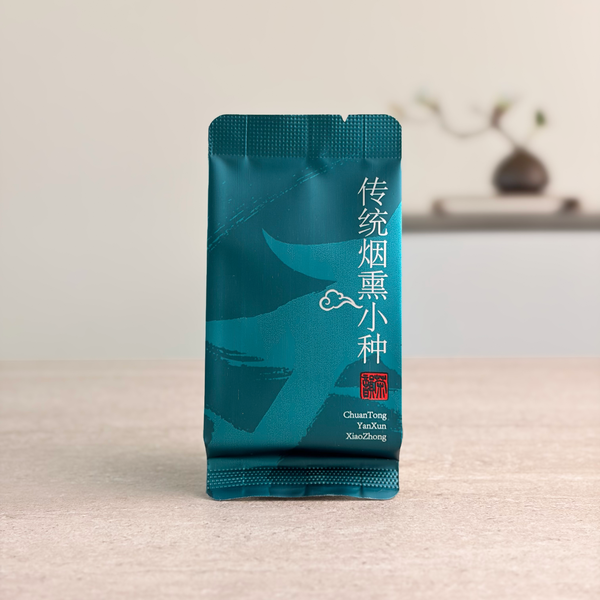
2025 Smoked Lapsang Souchong
Wuyishan's other famous tea, made inside the same protected area. The Lapsang is hand-smoked over pinewood; the Da Hong Pao is charcoal-roasted. Same geography, two very different cups, both worth drinking back to back.
See it